Bio
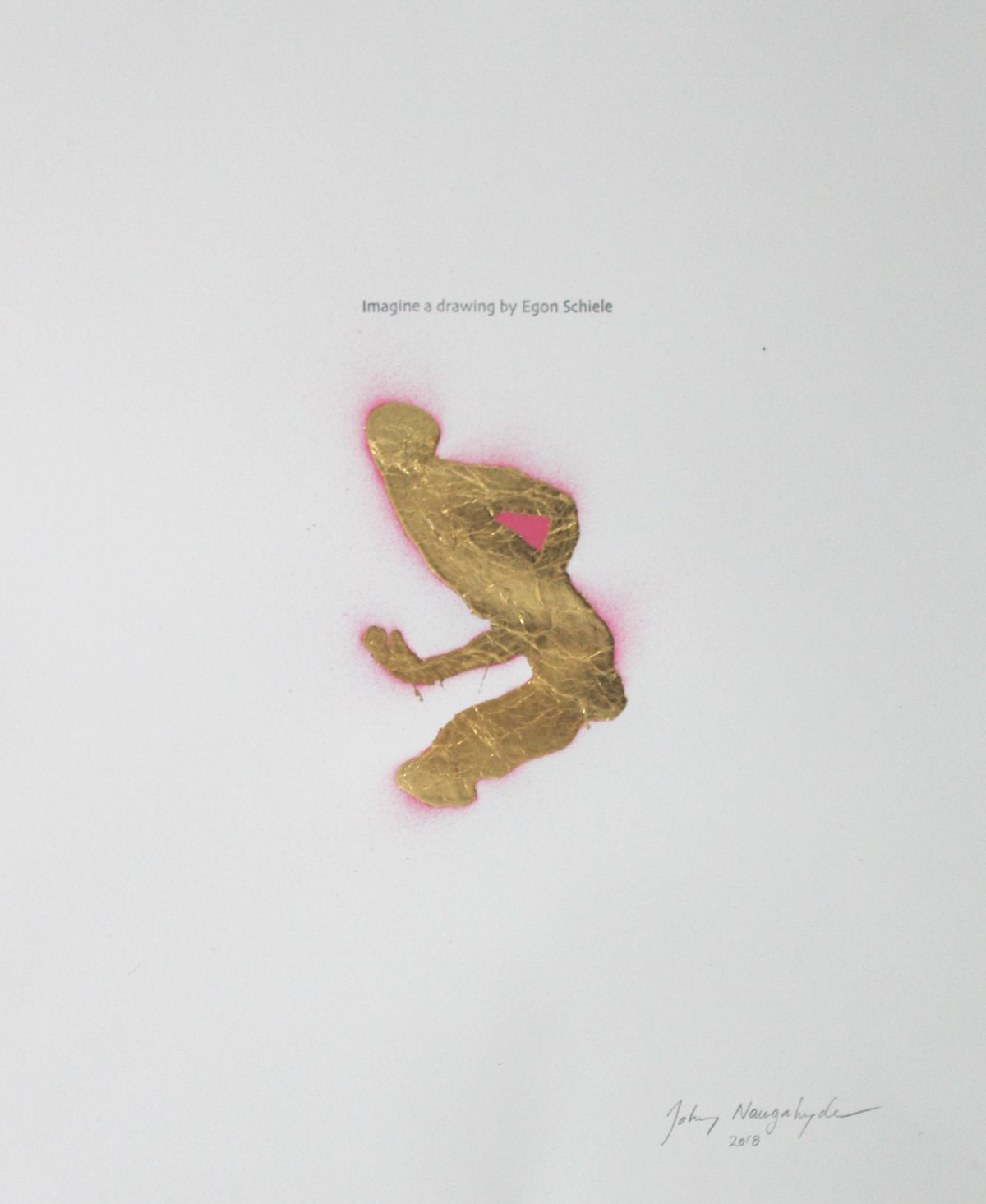
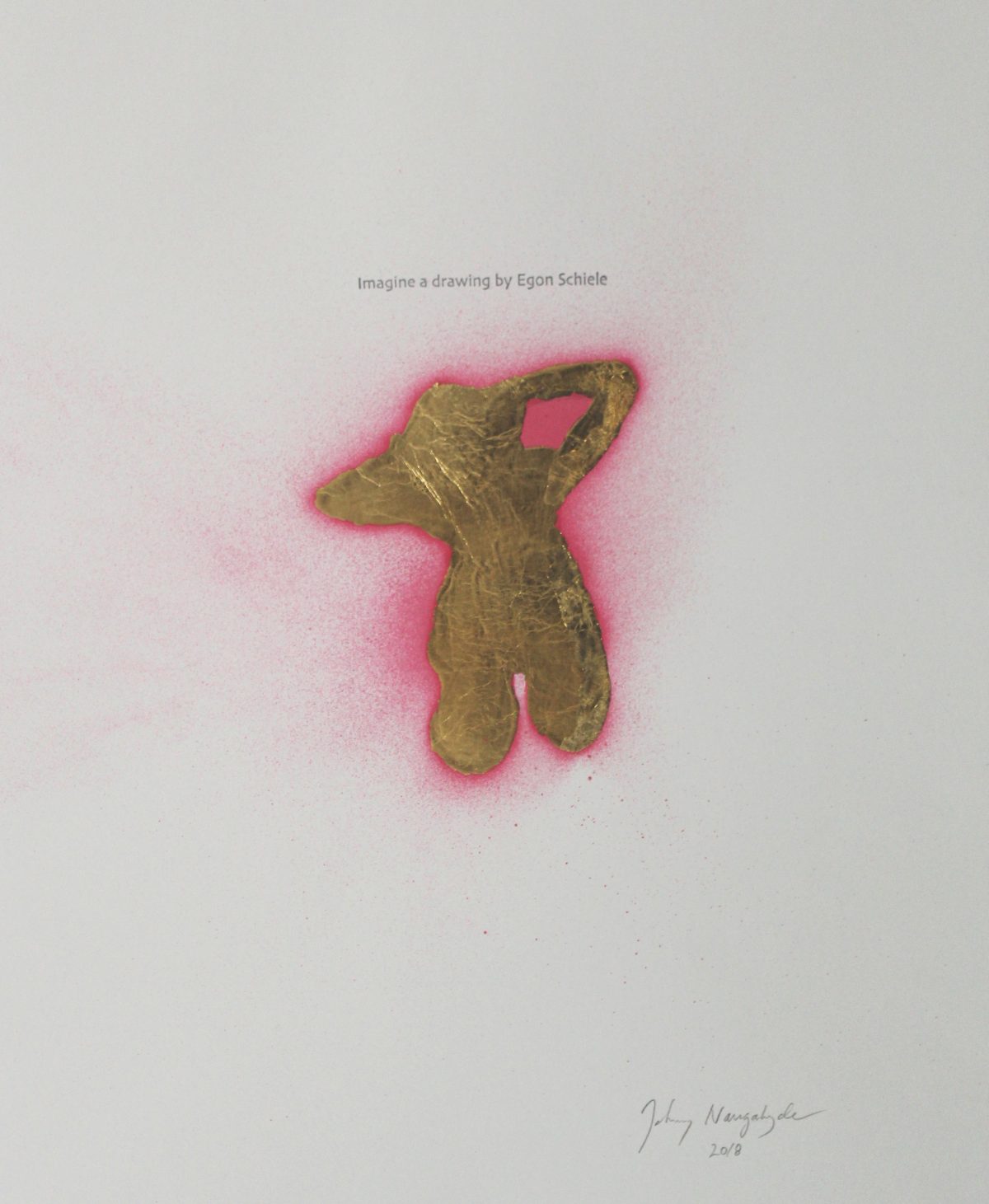
Johnny Naugahyde is the artistic alter ego of Kansas City artist Mark Spencer, a persona he created in 1986 and has maintained for four decades. Working across collage, printmaking, photography, drawing, sculpture, textiles, film, installation, mail art, writing, and public projects, Naugahyde has developed an idiosyncratic practice built around humor, fictional biography, art history, cultural detritus, and the pleasures of deliberately confusing fact with invention.
The name itself establishes the terms of the project. Spencer coined "Johnny Naugahyde" in 1986 to separate his artistic identity from his professional life. Naugahyde—the synthetic leather—is, as the artist has noted, obviously fake, durable, quintessentially American, and was manufactured near his Wisconsin hometown. The artist announced the birth of his new identity on June 11, 1986, through a postcard mailed to his everyday self. What might initially have functioned as a pseudonym gradually developed into something more elaborate: a sustained fictional identity through which Spencer could make art, construct histories, communicate with other artists, and move freely among media without the expectations attached to a conventional artistic career.
Naugahyde is largely self-taught as an artist. His last formal studio art class was in high school, but an extensive knowledge of art history became central to his practice. Early interests in sculpture eventually expanded into collage, printmaking, photography, textiles, mail art, video, writing, and installation. He moved to Kansas City in 1994 and became closely associated with the city's developing contemporary art community.
Humor is fundamental to Naugahyde's work, but it rarely functions simply as a punch line. His images and texts operate through puns, deadpan captions, invented histories, improbable connections, deliberately bad ideas, art-world jokes, and situations that hover somewhere between absurdity and melancholy. He treats the history of art as an enormous archive available for continued conversation, frequently inserting Johnny into imagined relationships with artists both living and dead. Marcel Duchamp and John Baldessari provide obvious conceptual precedents, but Naugahyde's practice is ultimately less about stylistic influence than about an irreverent conviction that art history remains unfinished and available for revision.
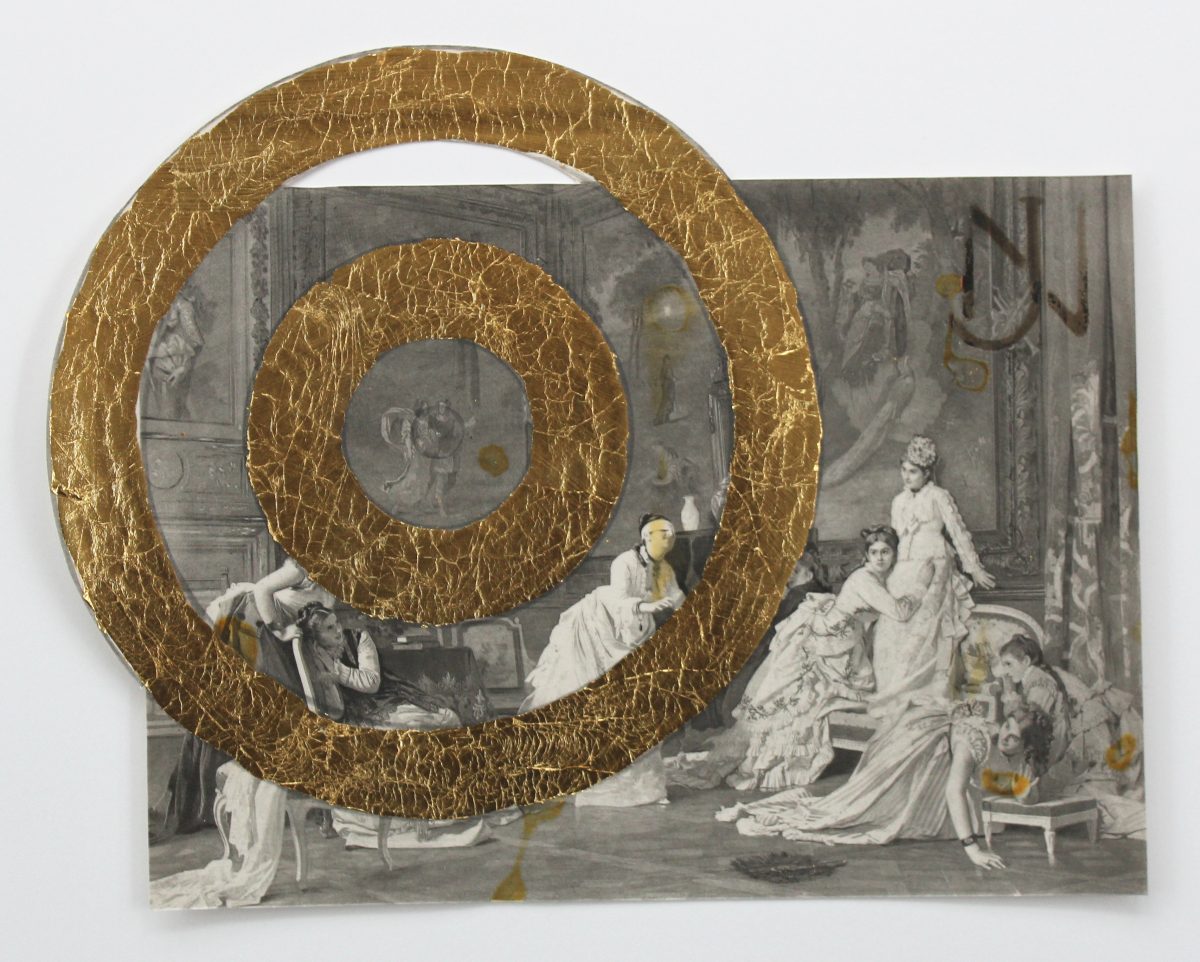
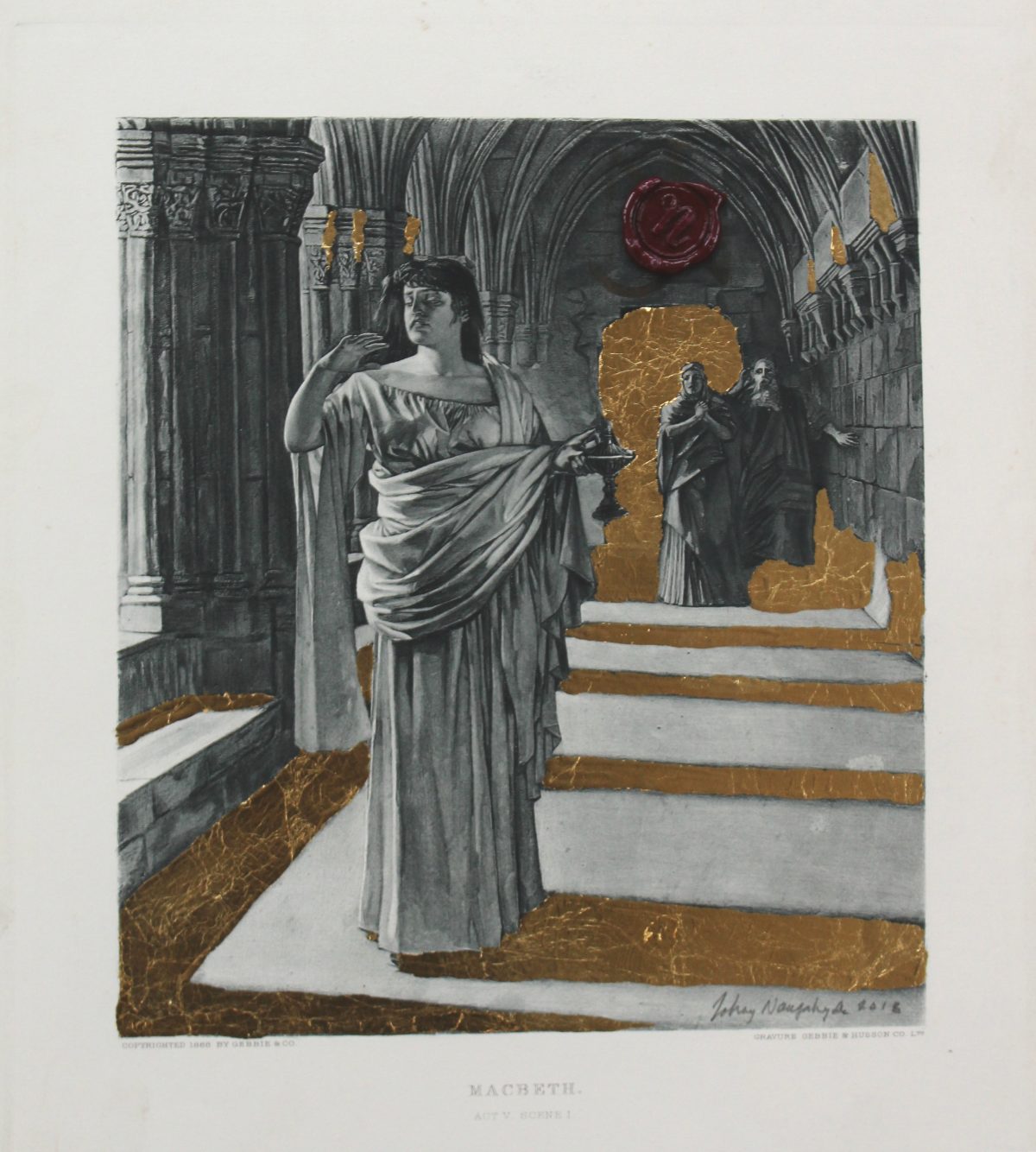
Appropriation and collage provide natural tools for this approach. Naugahyde brings together found photographs, printed ephemera, stamps, fragments of text, historical imagery, popular culture, and handmade elements to create fictional relationships among otherwise unrelated things. The resulting works often resemble evidence from stories whose plots have gone missing. Viewers are given enough information to suspect a narrative but rarely enough to resolve it.
This strategy was especially apparent in The Soviet Pen Pals of Johnny Naugahyde (2014), a series of twenty small collages combining American and Soviet imagery from the 1950s and 1960s. Lenin, military officers, suburban families, fashionable women, medical illustrations, passport photographs, Cyrillic text, and apparently mailed envelopes coexist within an invented correspondence between Cold War worlds. Writing in The Kansas City Star, Tanya Hartman described the exhibition as both mysterious and melancholy, noting how its fragmentary narratives encouraged viewers to construct connections among the images themselves.
The fictional autobiography surrounding Johnny is as important as any individual medium. Exhibition titles including The Imaginary Biographies of Johnny Naugahyde, The Distant Relatives of Johnny Naugahyde, The Little White Lies of Johnny Naugahyde, The Hypothetical Work of Johnny Naugahyde, and The Soviet Pen Pals of Johnny Naugahyde repeatedly position the artist himself as an unreliable character within the work. The accumulating stories create a parallel history in which biography becomes another artistic material.
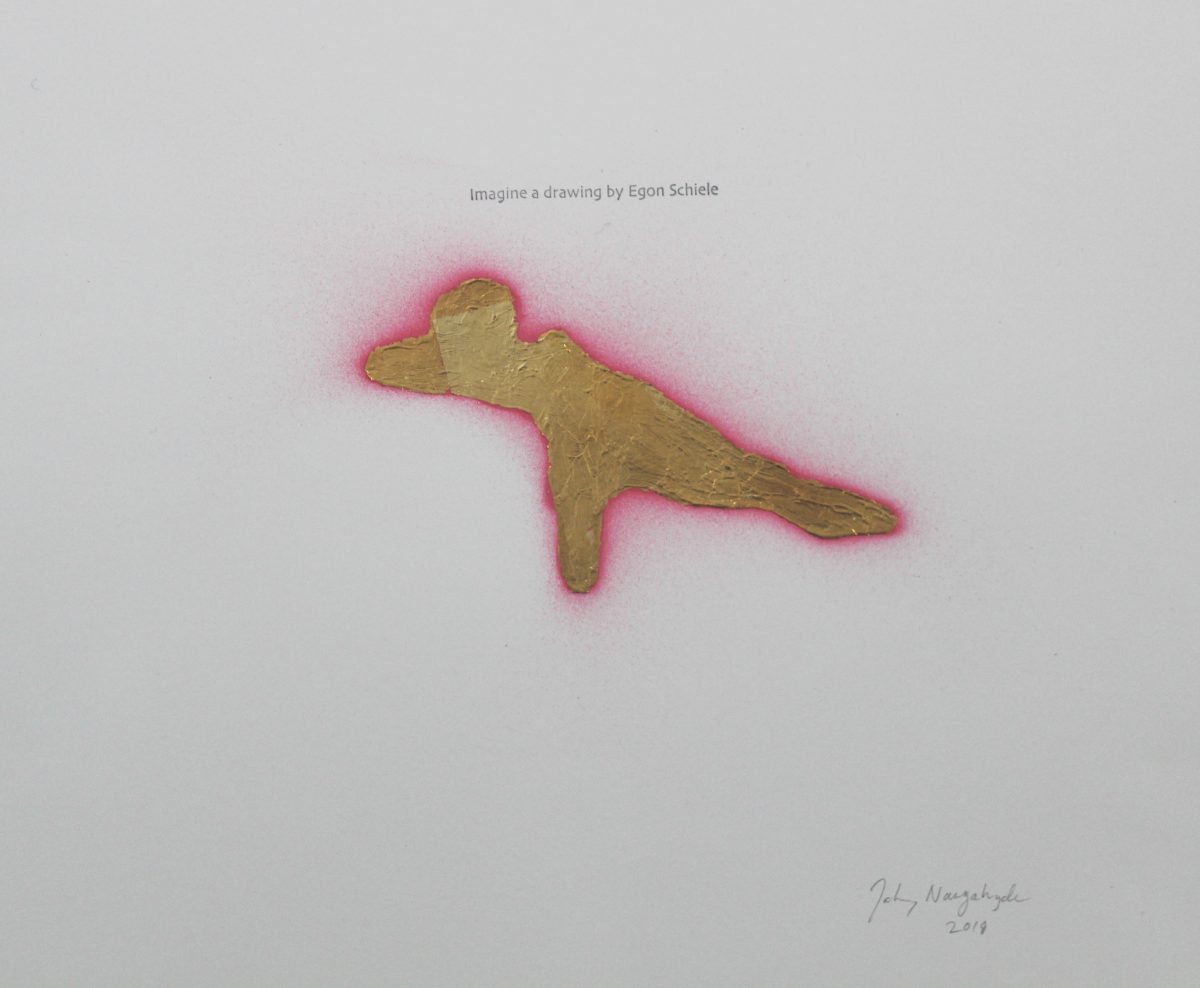
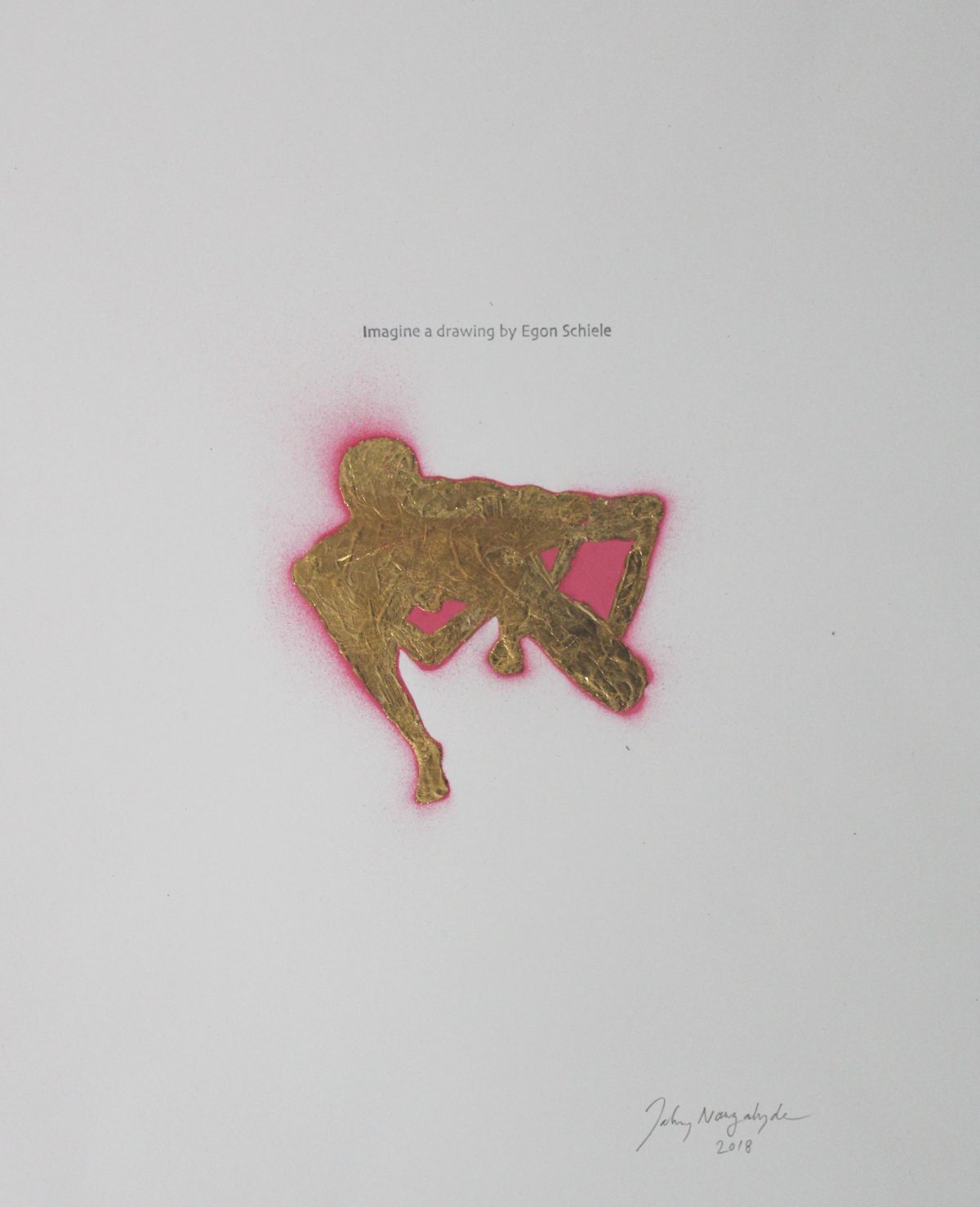
Naugahyde also regularly enters into imaginary conversations with other artists. Projects such as Johnny Does a Chihuly and the recent Johnny Does a Christo appropriate the language of homage while gently puncturing the seriousness with which artistic authorship is often treated. Other works invent exchanges with figures such as Ana Mendieta and Mark Rothko, allowing humor to edge into darker territory involving mortality, tragedy, reputation, and the mythology surrounding famous artists.
The small physical scale of much of Naugahyde's work contrasts with the breadth of the practice. He has produced a novella and short films, designed artwork for theatrical productions, created print portfolios, participated in mail-art networks, appeared as a nonsinging extra in opera productions, and developed installations in unconventional settings. His ongoing Woodland Adventure, for example, is a multiyear installation situated on private property in the Wisconsin woods.
Public art has provided another setting for Naugahyde's fictional world. For Kansas City's Avenue of the Arts in 2003, he created Rainbow House, a miniature reinterpretation of a famously eccentric house that once stood near Ward Parkway and 80th Street. Bits of information incorporated into the structure offered the artist's fictionalized stories about its occupants, turning a piece of local architectural folklore into an invented narrative monument. The project was selected through the city's competitive Avenue of the Arts program.
Naugahyde's work has been exhibited throughout the Midwest and beyond since the early 1990s. Solo exhibitions include The Imaginary Biographies of Johnny Naugahyde at Dolphin Gallery, Kansas City (1999); The Distant Relatives of Johnny Naugahyde at Gallery 210, University of Missouri–St. Louis (2002); The Hypothetical Work of Johnny Naugahyde at the University of Central Missouri (2005); The Little White Lies of Johnny Naugahyde at the Albrecht-Kemper Museum of Art (2008); Johnny Naugahyde: Just in Case at the University of Wisconsin–Milwaukee's INOVA galleries (2009); The Soviet Pen Pals of Johnny Naugahyde at 1522 St. Louis in Kansas City (2014); and Johnny Naugahyde: Play at the Library at Johnson County Library (2015).
The 2008 Albrecht-Kemper Museum of Art exhibition functioned as a retrospective of Naugahyde's work to that point. Characteristically, the entire output of more than two decades could be contained within a single gallery—a reflection not of limited activity but of an artist whose practice has often favored modest scale, ephemeral projects, works on paper, and ideas over monumentality.
At Haw Contemporary, Naugahyde presented the solo exhibition The Domestication of Johnny Naugahyde in 2019. The exhibition continued his longstanding movement among media and his use of the Johnny persona as both author and subject, bringing together the visual jokes, fictional narratives, cultural references, and art-historical mischief that have characterized the project since the 1980s.
His work has also appeared in numerous group exhibitions, including presentations at the Contemporary Art Museum St. Louis, Kansas City Art Institute's H&R Block Artspace, Kansas City Artists Coalition, Rockhurst University, La Esquina, Paragraph Gallery, Pierogi in Brooklyn, and the True/False Film Festival. He has been a recurring participant in the Kansas City Flatfile project at the H&R Block Artspace, including its 2025 edition.
In 2021, Naugahyde's work was included in re/collections at the H&R Block Artspace, an exhibition drawn from the institution's twenty-one-year archive. His work appeared alongside artists including Vito Acconci, Ghada Amer, Jeremy Deller, Jenny Holzer, Kara Walker, Dan Perjovschi, and Mel Ziegler and Kate Ericson. In 2023–24, his video Nixon and FDR Play the Ponies was included in the Artspace exhibition Selections from the Archive: On the Road Again.
Naugahyde's work is held in the collection of the Albrecht-Kemper Museum of Art as well as corporate and institutional collections including Boulevard Brewing Company, Citibank, and the Pony Express Museum, in addition to private collections.
In 2026, the fortieth anniversary of the Johnny Naugahyde persona, KC Studio published a substantial profile by Brian Hearn examining the artist's unusual position within Kansas City's cultural history. Hearn characterized Naugahyde as a Kansas City icon whose practice has threaded through several generations of the city's contemporary art scene while remaining deliberately independent, unpredictable, and resistant to conventional career structures.
Naugahyde has described his work as a personal journal through which viewers might learn something about the artist, the world around them, and perhaps themselves. That description captures the peculiar mixture of autobiography and fiction at the center of the practice. Johnny Naugahyde is simultaneously an artist, an artwork, a pseudonym, a character, and a forty-year conceptual project. Behind the jokes and improbable stories is a sustained investigation of how artists construct identities, how art history becomes mythology, and how ordinary objects and images can acquire entirely new lives when somebody invents the right story for them.
Gallery Exhibitions
- The Domestication of Johnny Naugahyde 1/11/2019 – 2/12/2019