Bio
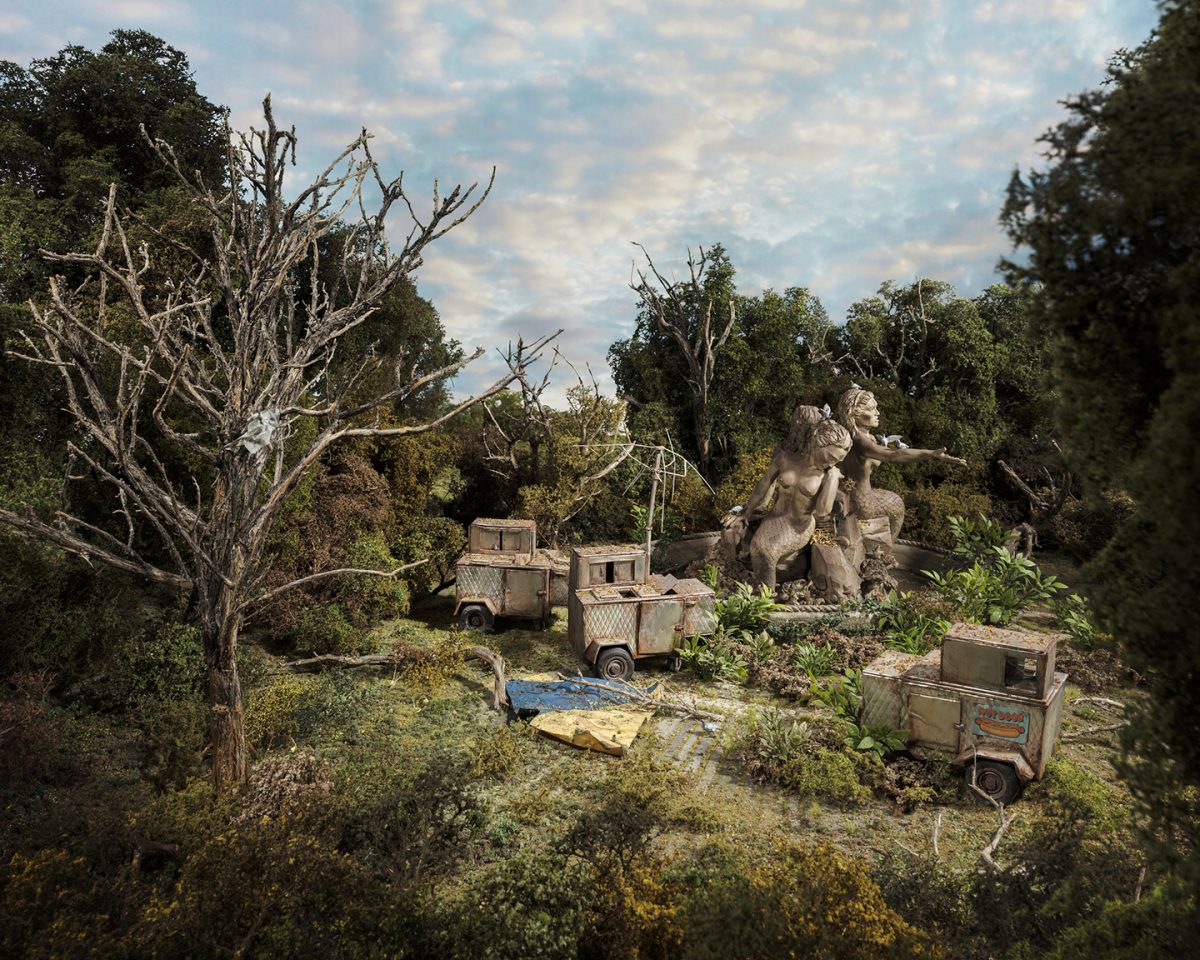
Lori Nix (b. 1969, Norton, Kansas) is an American photographer known for meticulously constructed miniature environments that blur the boundaries between photography, sculpture, model-making, and fiction. For more than two decades, she has collaborated with artist Kathleen Gerber to build elaborate dioramas by hand and photograph them as though they were full-scale places. Their images depict landscapes altered by disaster, abandoned cultural spaces, and imagined worlds in which human presence is conspicuously absent. What initially appears to be documentary photography gradually reveals itself as complete fabrication.
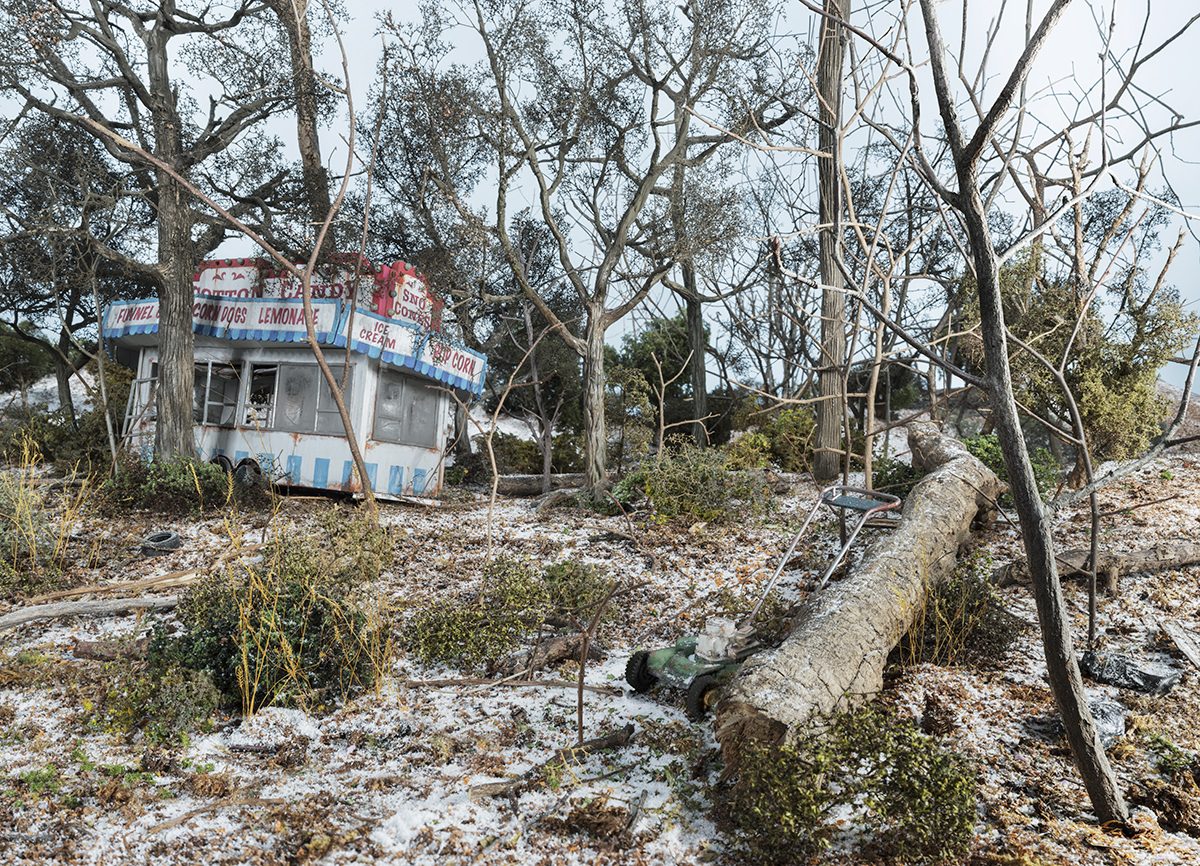
Nix grew up in rural western Kansas, where tornadoes, floods, blizzards, drought, and other extreme weather were recurring features of life. Those experiences helped shape a fascination with disaster that has remained central to her work, alongside influences ranging from disaster films of the 1960s and 1970s to Romanticism and the Hudson River School. The sublime landscapes of Caspar David Friedrich and Thomas Cole provide an art-historical precedent for images in which beauty, awe, danger, and human vulnerability coexist.
Nix and Gerber construct their subjects rather than seek them in the world. Working with foam, cardboard, paper, paint, glue, plaster, found materials, and an extraordinary range of improvised techniques, they create environments that can take many months—and occasionally more than a year—to complete. Nix then carefully lights and photographs the finished model. The final photograph, rather than the model itself, is the artwork; after an image is completed, much of the diorama is dismantled and its materials recycled into future constructions.
The artificiality of these scenes is essential to their effect. Nix describes herself as a "faux landscape photographer," creating images that borrow photography's appearance of truth while depicting places that have never existed. The handmade nature of the sets introduces small irregularities and visual clues that reward close looking. Scale is intentionally difficult to determine, allowing a tabletop construction to become psychologically and visually monumental.
Her early series Accidentally Kansas drew directly upon memories of the landscape and weather of her childhood. Miniature scenes of tornadoes, floods, insect infestations, snowstorms, and other calamities combine catastrophe with the deadpan humor familiar to anyone accustomed to living in a place where disaster can arrive without warning. Later projects including Lost and Unnatural History expanded these concerns into abandoned landscapes and institutional environments, often imagining a world in which nature has begun to reclaim human constructions.
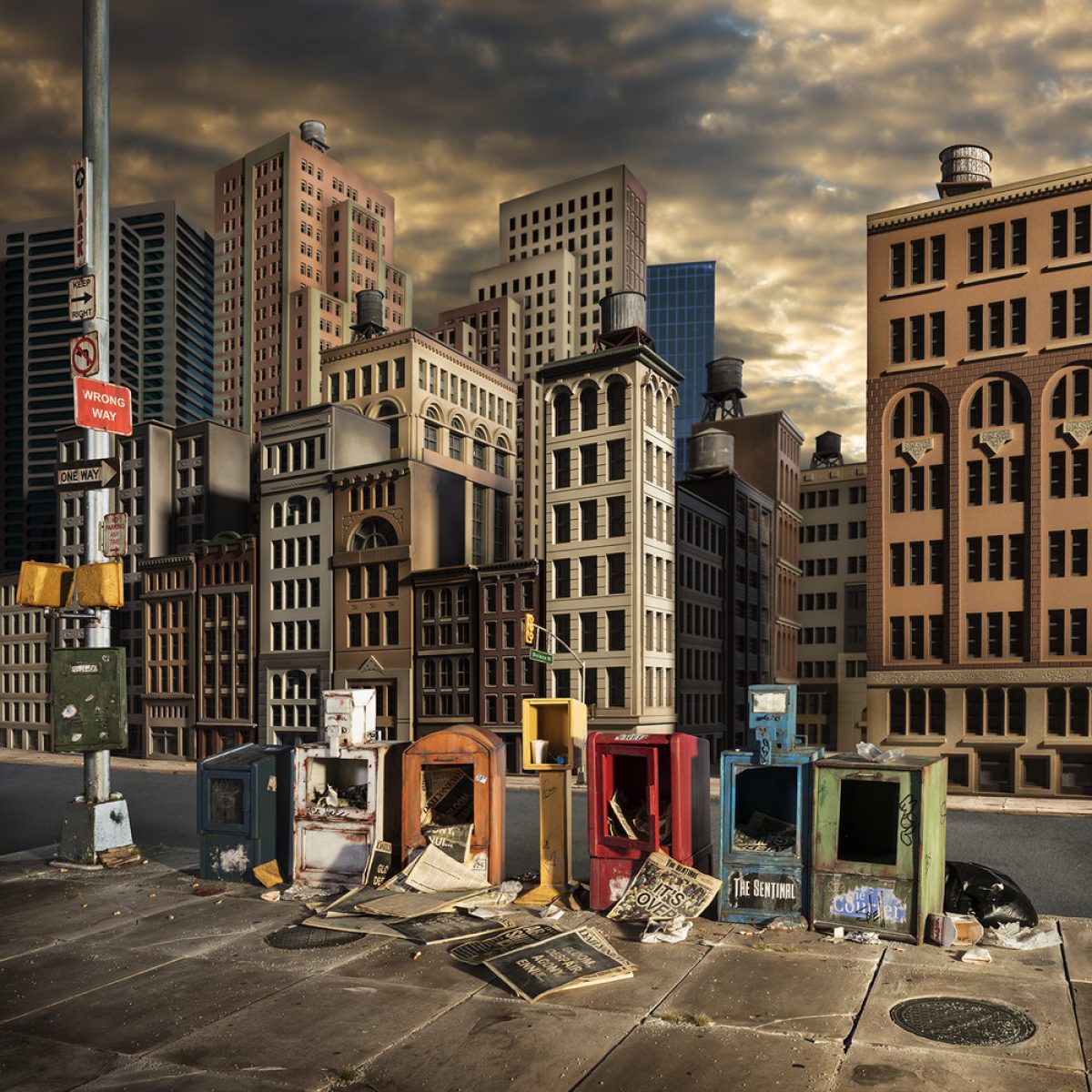
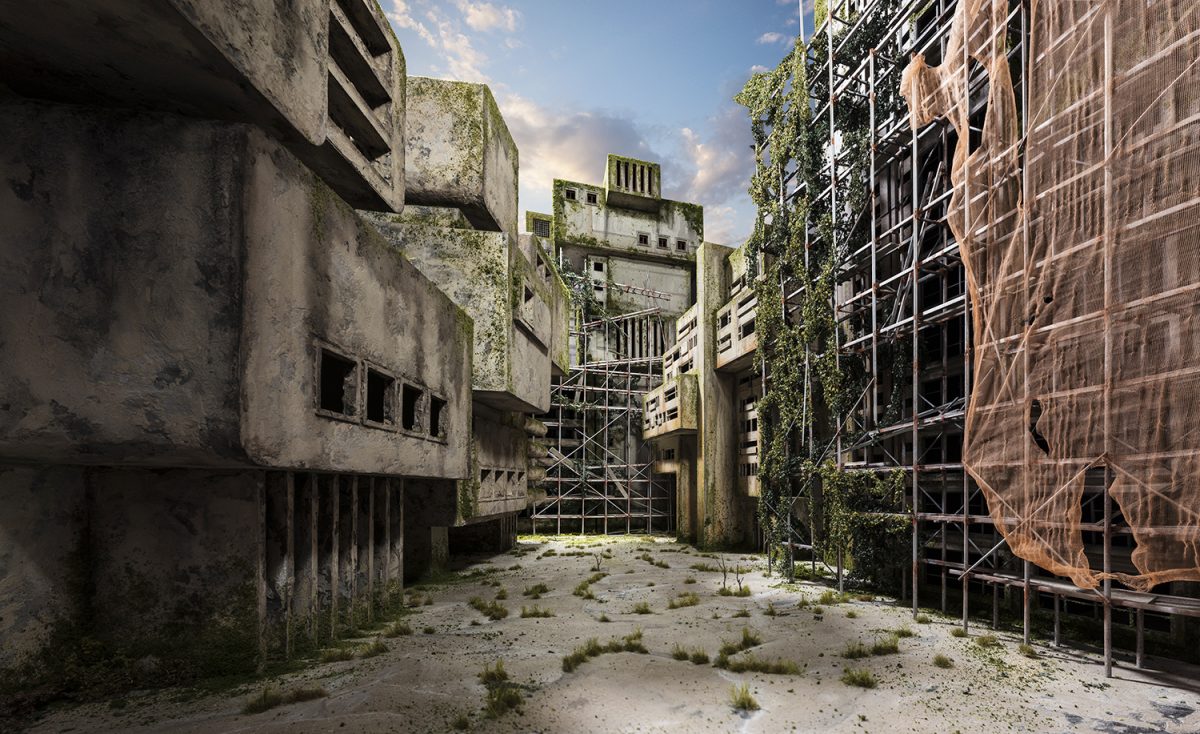
Nix's acclaimed series The City, begun in 2005, pushed this idea toward an elaborate post-human future. Libraries, museums, laundromats, control rooms, beauty shops, aquariums, theaters, subway cars, and other urban interiors stand empty while plants, weather, decay, and geological forces slowly dismantle the built environment. There are no people in these photographs, but evidence of human ambition is everywhere. Cultural institutions intended to preserve knowledge, art, technology, and history become ruins themselves. The images can be ominous, melancholy, absurd, and unexpectedly beautiful, imagining nature continuing long after the systems people created have disappeared.
Gerber's role in creating these worlds became increasingly central over the course of their collaboration. A sculptor and model-maker with a background in glass, she and Nix have worked together since 2000, and shortly after the Nerman Museum's 2016 exhibition of The City, they began formally co-crediting their work. With the subsequent series Empire, they emerged explicitly as the collaborative artist duo NIX/GERBER.
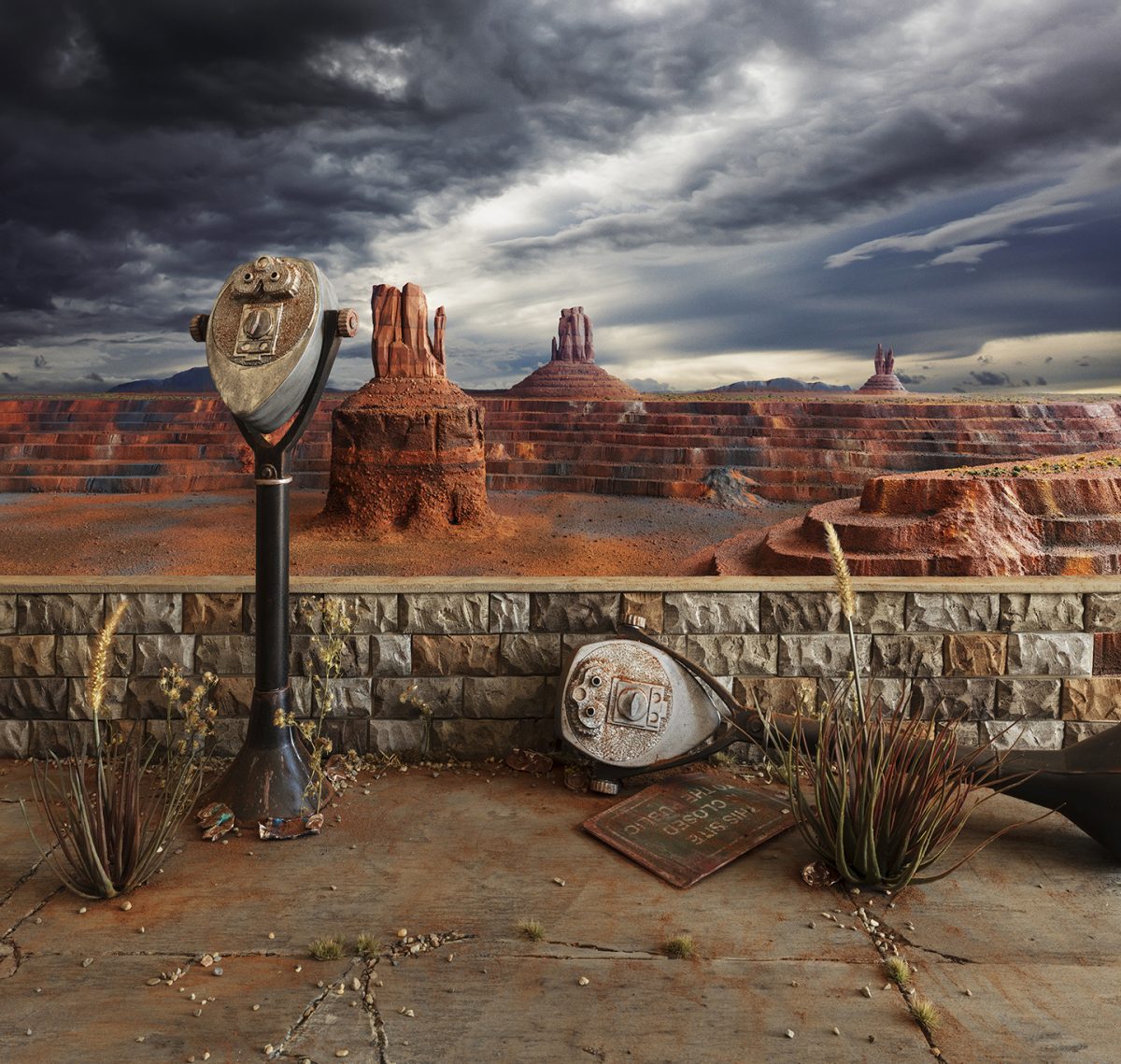
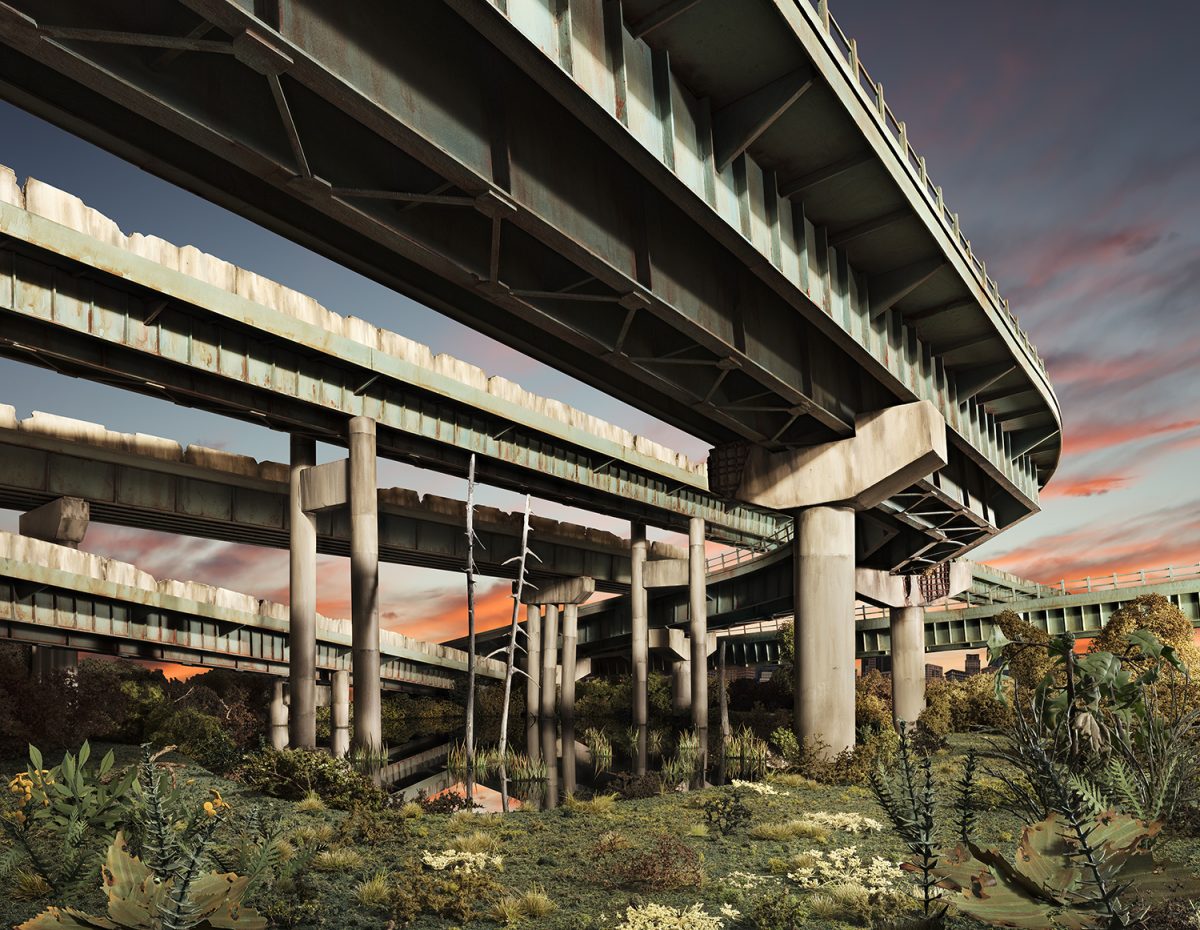
In Empire, Nix and Gerber move beyond abandoned interiors toward a broader imagined landscape of monuments, infrastructure, and architectural remnants. Works such as Arch, Rift, Overpass, Utopia, and Sentinel suggest the remains of an unidentified civilization without explaining what happened to it. The photographs resist a specific narrative of apocalypse, instead using ruins to consider impermanence, environmental change, and the recurring human assumption that what we build will endure.
Nix and Gerber's work has been exhibited extensively in the United States and internationally. Solo museum and institutional exhibitions have included the Toledo Museum of Art; Nerman Museum of Contemporary Art, Overland Park; Museum Schloss Moyland, Germany; Academy of Natural Sciences of Drexel University, Philadelphia; University of Maine Museum of Art; California Museum of Photography; CEPA Gallery, Rochester; and Light Work, Syracuse. Their work has also appeared in exhibitions at the Museum of Arts and Design, New York; George Eastman Museum, Rochester; Katonah Museum of Art; International Museum of Glass; Fotografiska Stockholm; and other institutions throughout the United States and Europe.
Their photographs are held in significant museum and institutional collections including the Smithsonian American Art Museum, Washington, D.C.; Museum of Fine Arts, Houston; George Eastman Museum, Rochester; Worcester Art Museum; Santa Barbara Museum of Art; Henry Art Gallery, Seattle; El Paso Museum of Art; Spencer Museum of Art, Lawrence; Hood Museum of Art at Dartmouth College; Museum Schloss Moyland, Germany; and Harvard Business School's Schwartz Art Collection, among others. Their work is also represented in prominent private and corporate collections including the Sir Elton John Photography Collection and Microsoft Art Collection.
Nix received a John Simon Guggenheim Memorial Foundation Fellowship in Photography in 2014. Publications devoted to the work include Waiting to Happen (Light Work, 2002), Another World (2013), The City (Decode Books, 2013), The Power of Nature (Wienand Verlag, 2015), and Unnatural History (Peanut Press, 2021).
Nix earned BFA degrees in Photography and Ceramics and a BA in Art History from Truman State University in Kirksville, Missouri, before completing graduate study in photography at Ohio University. The combination of photography and object-making established during her education remains fundamental to a practice in which the physical construction of an imaginary world is inseparable from the photograph ultimately made from it.
Museum & Institutional Exhibitions
- In Bloom, Fotografiska, Stockholm, Sweden 2023 (Group)
- Journey Around My Room, Institute of Contemporary Art, Maine College of Art, Portland, ME 2023 (Group)
- PhotOH: Photographers in the Heartland, Miami University Art Museum, Oxford, OH 2022 (Group)
- Buchwelten, Museum Sinclair-Haus, Bad Homburg, Germany 2017–2018 (Group)
- Feel Big, Live Small, The Mini Time Machine Museum of Miniatures, Tucson, AZ 2016 (Group)
- Lori Nix · The City, Nerman Museum of Contemporary Art, Overland Park, KS 2016
- In the Garden, George Eastman House, Rochester, NY 2015 (Group)
- Of Time and Buildings, George Eastman House, Rochester, NY 2014 (Group)
- Theatre of Illusion, Lori Nix and Lisa Stinner, Gallery 44 Centre for Contemporary Photography, Toronto, Canada 2007 (Two-Person)