Bio
Wilbur Niewald (1925–2022) was an American painter whose uncompromising commitment to direct observation placed him within a long tradition of artists who understood painting as a sustained encounter with the visible world. Over a career spanning more than seven decades, he produced landscapes, still lifes, portraits, drawings, and watercolors distinguished by their structural clarity, directness, and extraordinary attention to color and form.
Born in Kansas City, Missouri, Niewald began his relationship with the Kansas City Art Institute remarkably early. At age ten, he won an elementary-school drawing contest whose prize was a year of Saturday classes at KCAI. He later enrolled full-time, interrupted his studies to serve as a pilot in the U.S. Naval Air Corps during World War II, and returned to earn his BFA and MFA. He began teaching at KCAI in 1949 and remained on the faculty for more than four decades, including twenty-eight years as chair of painting.
Niewald's artistic development encompassed a remarkable shift from abstraction to representation. During the 1950s and 1960s, he worked within the language of postwar abstraction, using landscape as a starting point for increasingly expansive compositions of rhythmic lines, broad gestures, and saturated color.
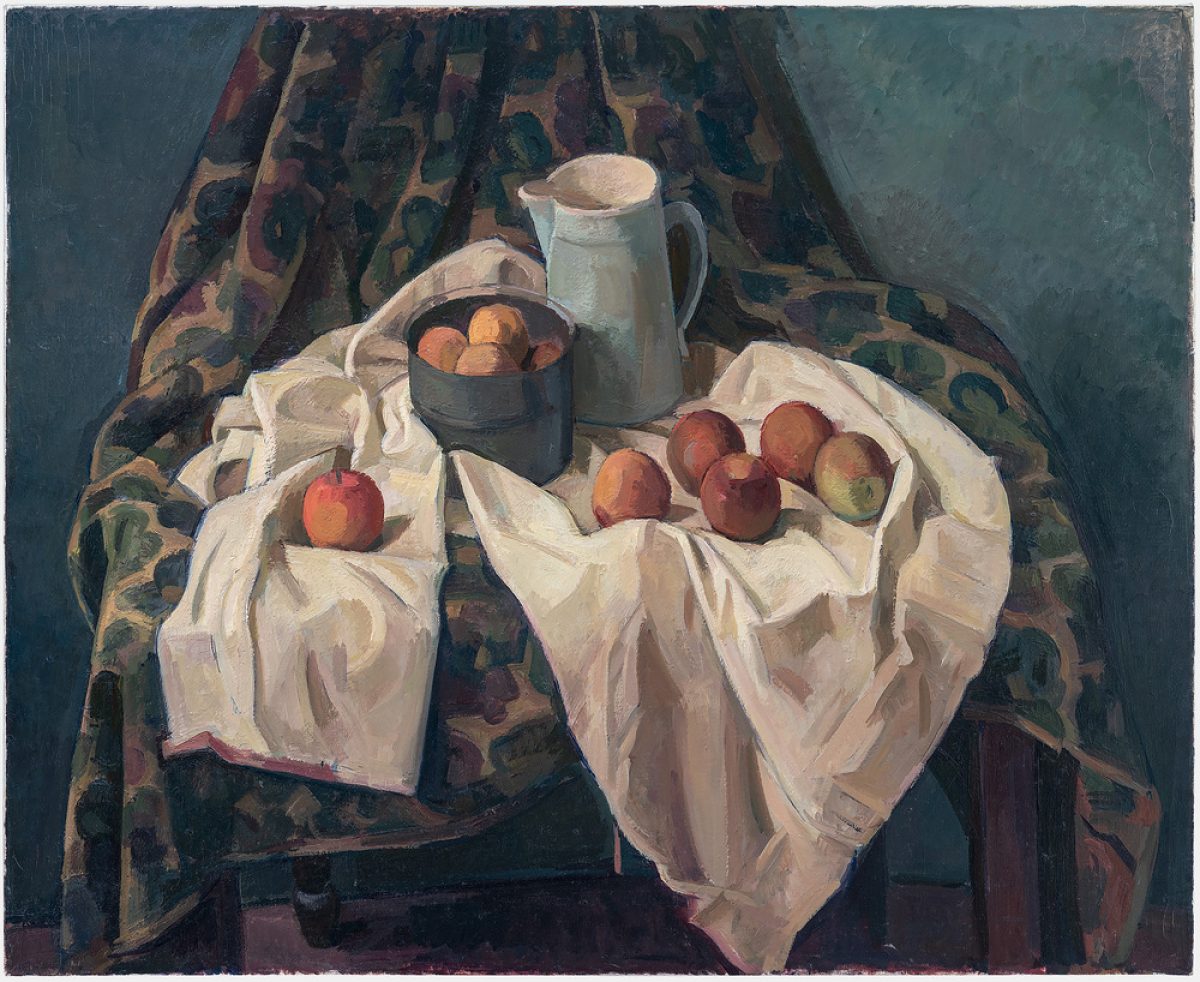
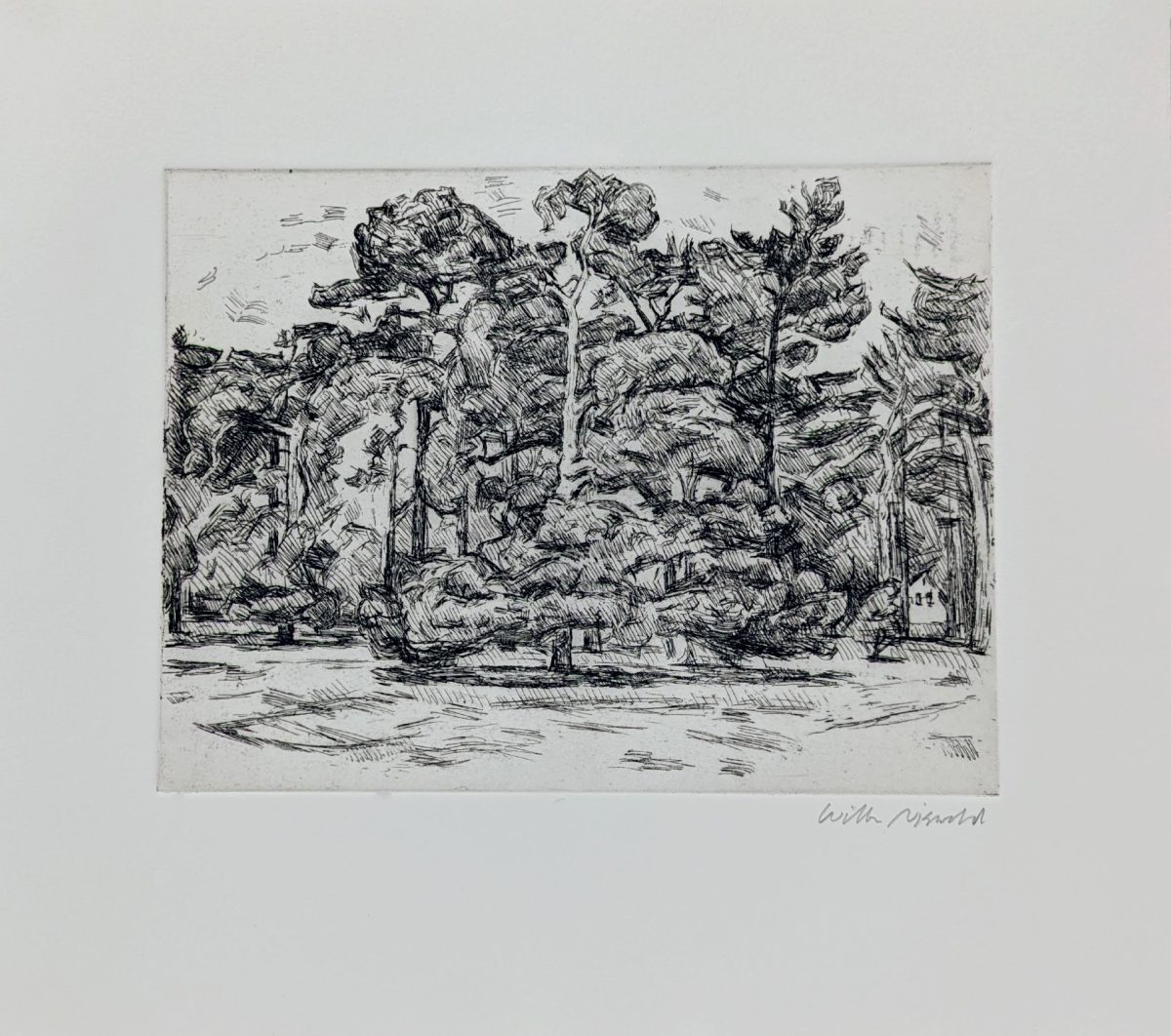
Around 1970, Niewald made a decisive turn toward direct observation. For the remaining half-century of his career, he returned again and again to a deliberately concentrated group of subjects: the landscape around Kansas City, arrangements of objects in his studio, and portraits of family members and friends. Repetition was essential. Niewald might paint the same group of trees, stretch of park, or objects over many years, not to reproduce an earlier image but to discover how a familiar subject changed through season, light, weather, age, and the act of looking itself.
Landscape became particularly central. Niewald regularly worked outdoors in Kansas City in heat, cold, rain, and snow, becoming a familiar presence in Loose Park and Penn Valley Park. These recurring subjects became a visual record of both place and time while allowing him to pursue the fundamental problems of painting—space, structure, color, light, and perception—with extraordinary concentration.
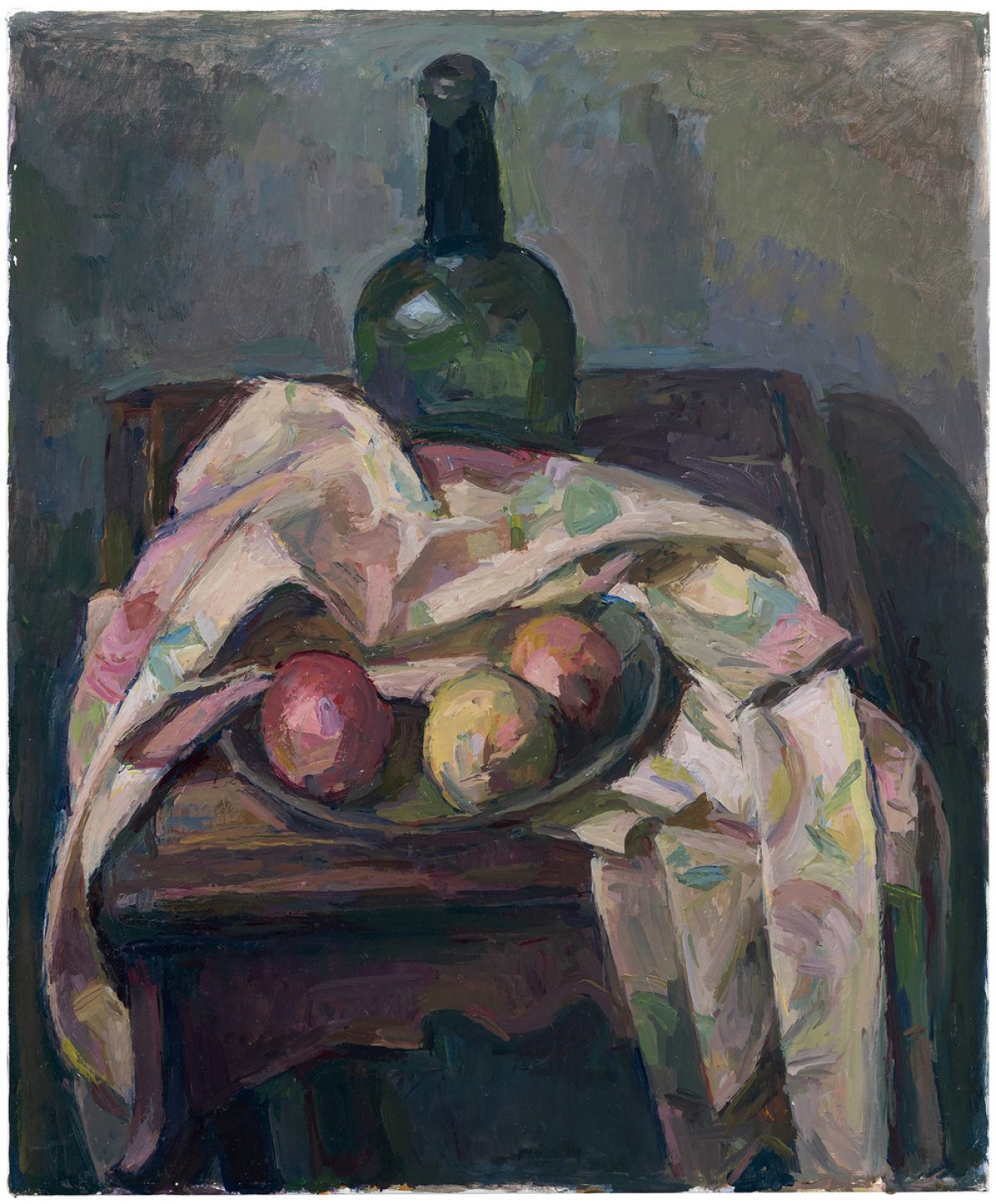
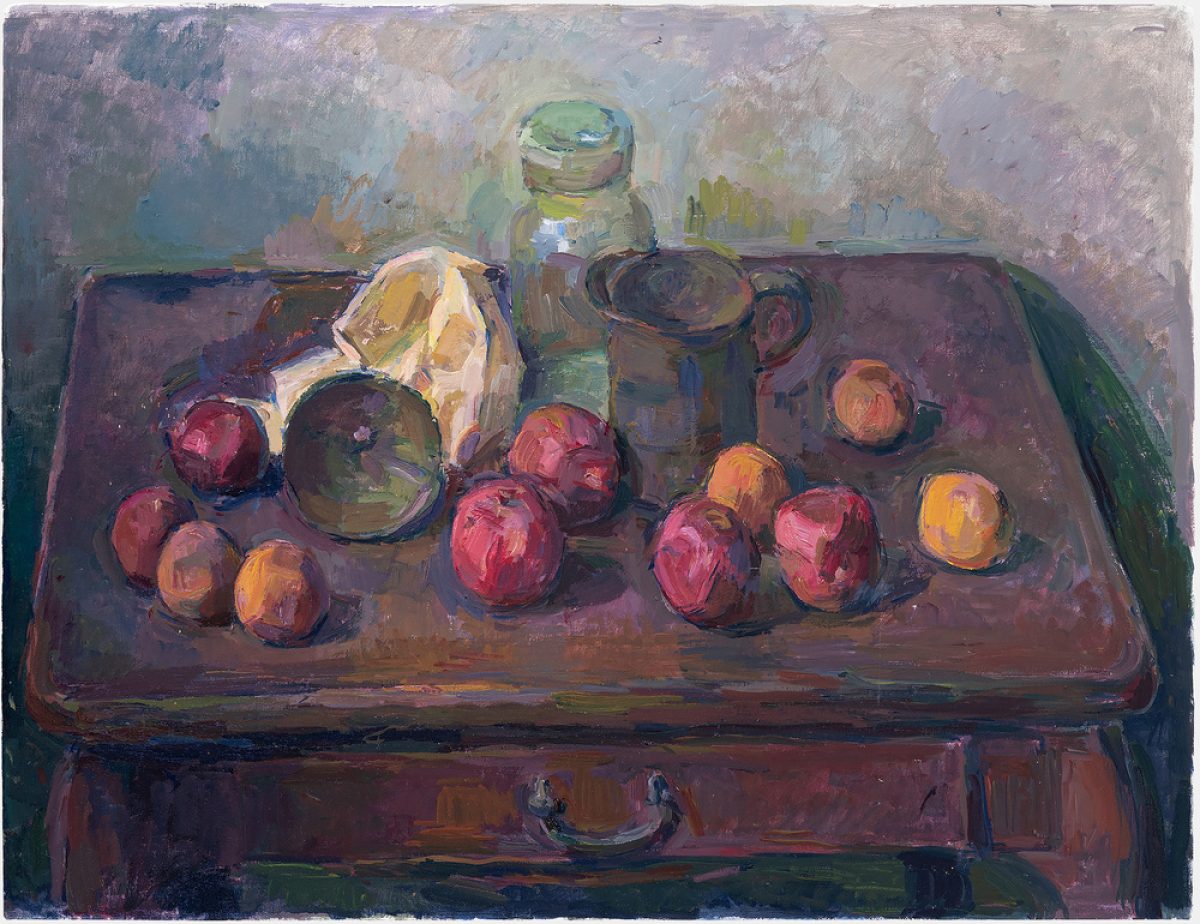
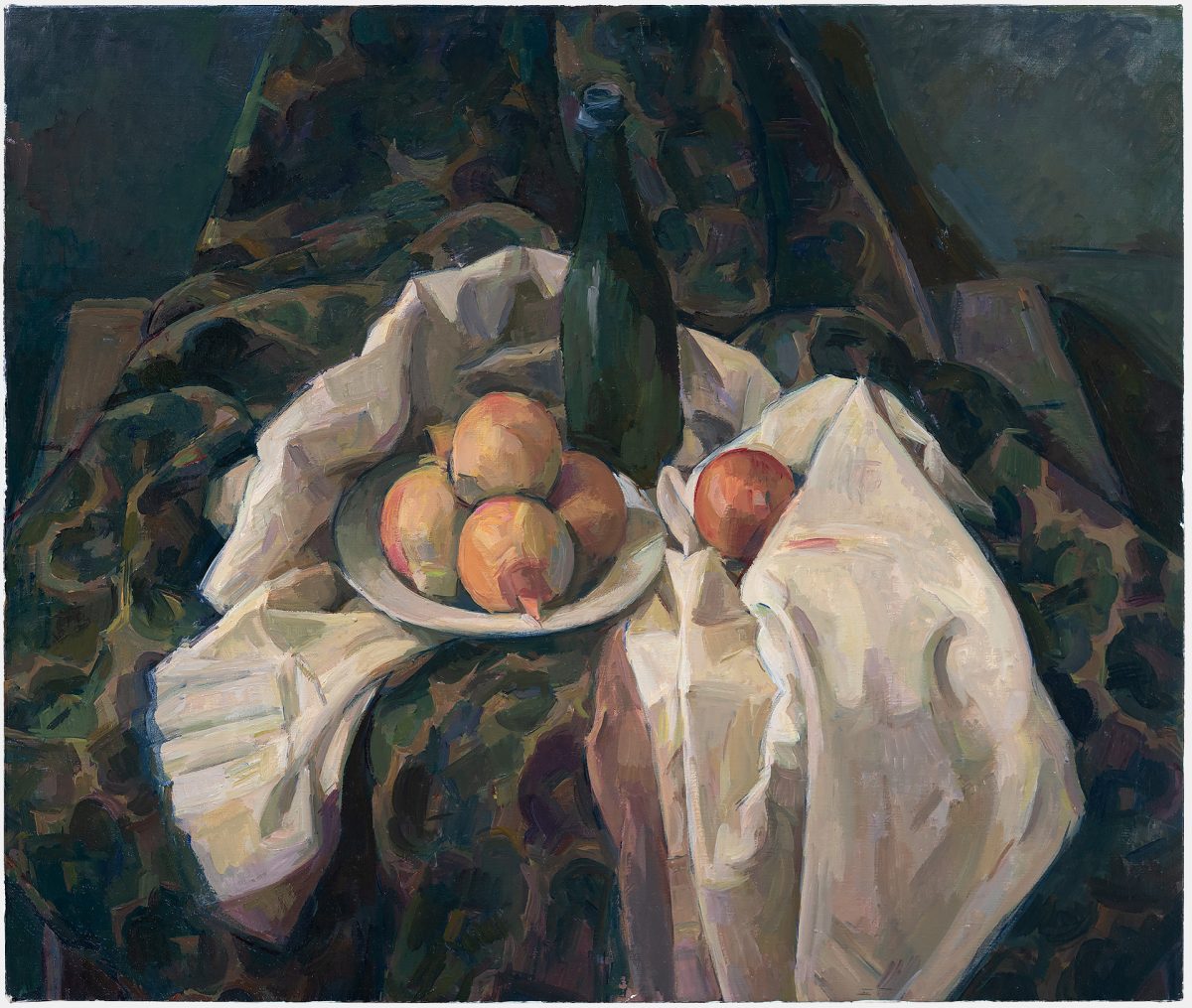
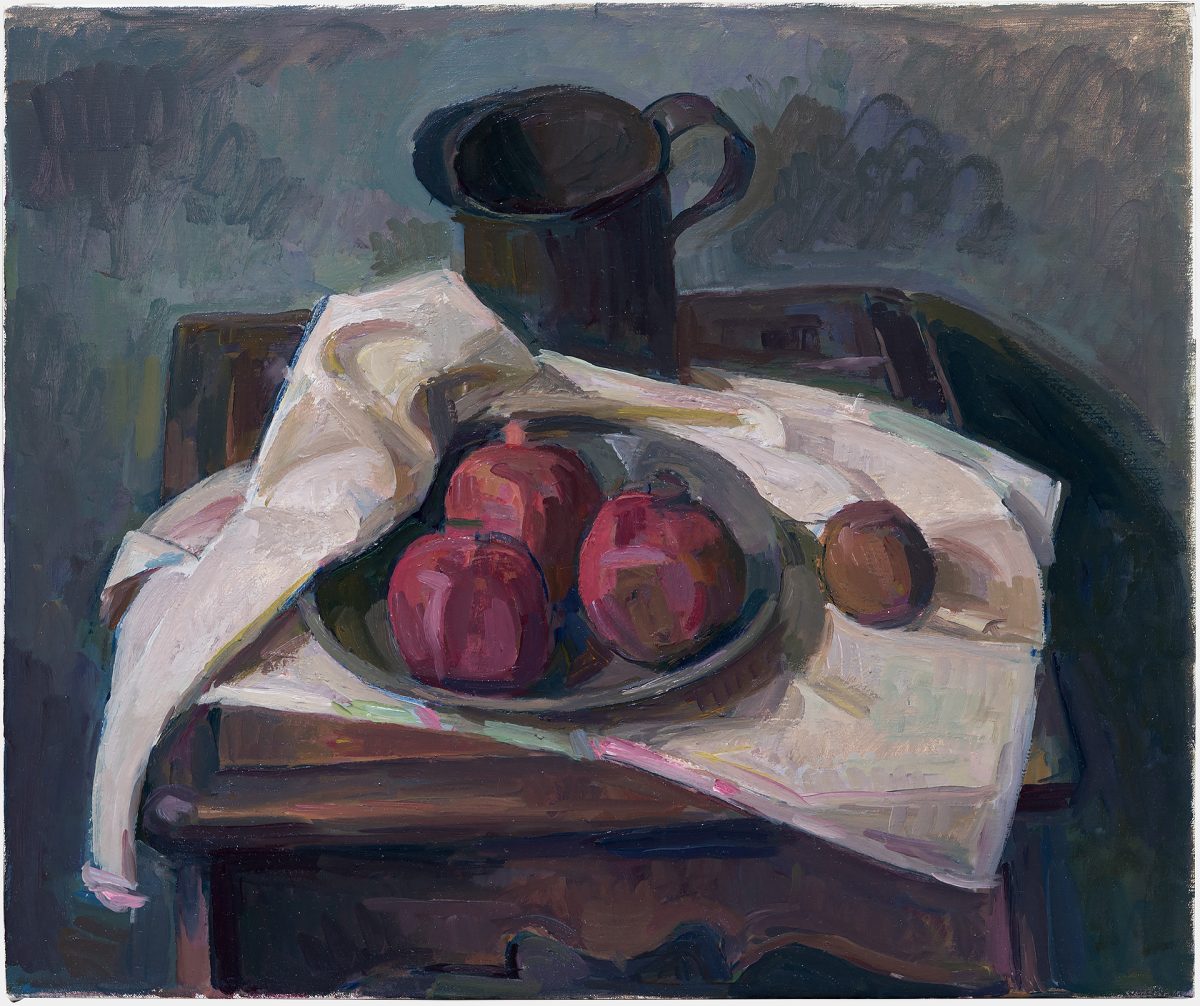
His still lifes and portraits brought the same intensity of observation indoors. Ordinary objects—bottles, bowls, pitchers, onions, apples, flowers—were arranged and painted repeatedly, while portraits of people close to him avoided theatricality in favor of sustained looking.
Niewald's influence was amplified by an equally distinguished career as an educator. During more than four decades at the Kansas City Art Institute, he helped shape generations of artists and contributed substantially to the development of one of the country's important undergraduate painting programs.
Haw Contemporary presented Still Life – Figure – Landscape in 2014. In 2017, the gallery mounted the simultaneous exhibitions Works from the '50s & '60s and Recent Paintings, placing his early abstraction directly beside his mature observational practice. Watercolors and Drawings followed in 2019. After Niewald's death, Haw presented Still Life in 2022, and in 2025 the gallery marked what would have been his hundredth birthday with JUBILEE 2025: A Centennial Celebration of His Painting.
Niewald's work is held in significant museum collections including the Metropolitan Museum of Art, Nelson-Atkins Museum of Art, Kemper Museum of Contemporary Art, Nerman Museum of Contemporary Art, and Albrecht-Kemper Museum of Art.
His honors included a John Simon Guggenheim Memorial Foundation Fellowship, the College Art Association's Distinguished Teaching of Art Award, the Charlotte Street Foundation Lifetime Achievement Award, and election to the National Academy of Design.
Niewald continued painting well into his nineties. He died in 2022 at the age of ninety-seven, leaving behind an extraordinary body of work and a profound legacy as both painter and teacher.
Gallery Exhibitions
- JUBILEE 2025: A Centennial Celebration of His Painting 2/7/2025 – 3/12/2025
- Still Life 6/30/2022 – 7/30/2022
- Watercolors and Drawings 11/8/2019 – 12/11/2019
- Recent Paintings 4/7/2017 – 5/11/2017
- Works from the '50s & '60s 4/7/2017 – 5/11/2017
- Still Life - Figure - Landscape 2/28/2014 – 4/5/2014
- OPEN (Group Exhibition) 9/13/2013 – 11/2/2013
Museum & Institutional Exhibitions
- Wilbur Niewald · In the Landscape, Nerman Museum of Contemporary Art, Overland Park, KS 2018–2019 (Solo)
- In the Studio with Wilbur Niewald, Nelson-Atkins Museum of Art, Kansas City, MO 2018 (Solo)
- Wilbur Niewald: The Studio Portrait, Kemper Museum of Contemporary Art, Kansas City, MO 2012 (Solo)
- Abstract · Kansas City, Nerman Museum of Contemporary Art, Overland Park, KS 2011–2012 (Group)
- Wilbur Niewald: A Retrospective, 1951 - 2004, Marianna Kistler Beach Museum of Art, Manhattan, KS 2004 (Solo)