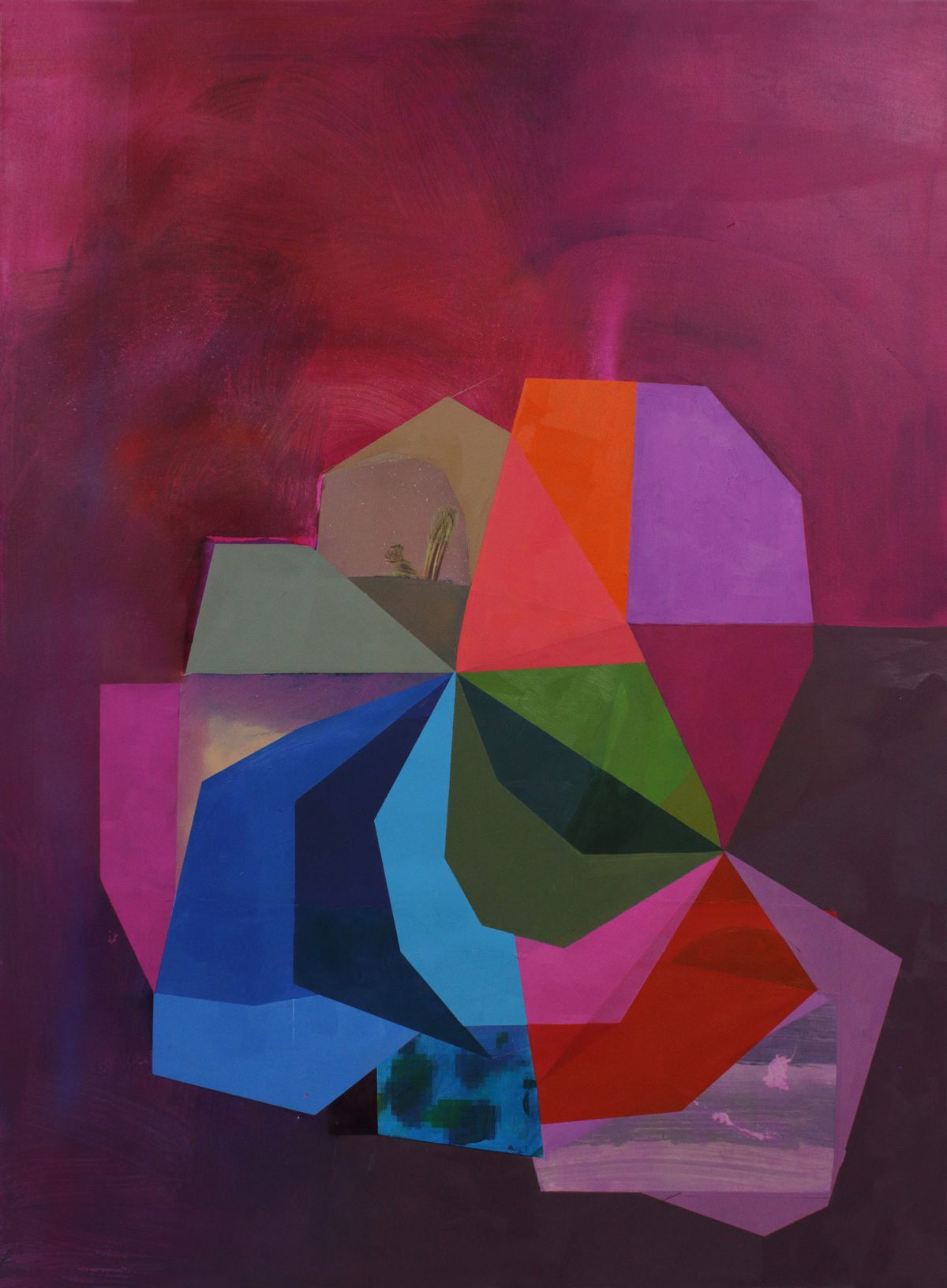
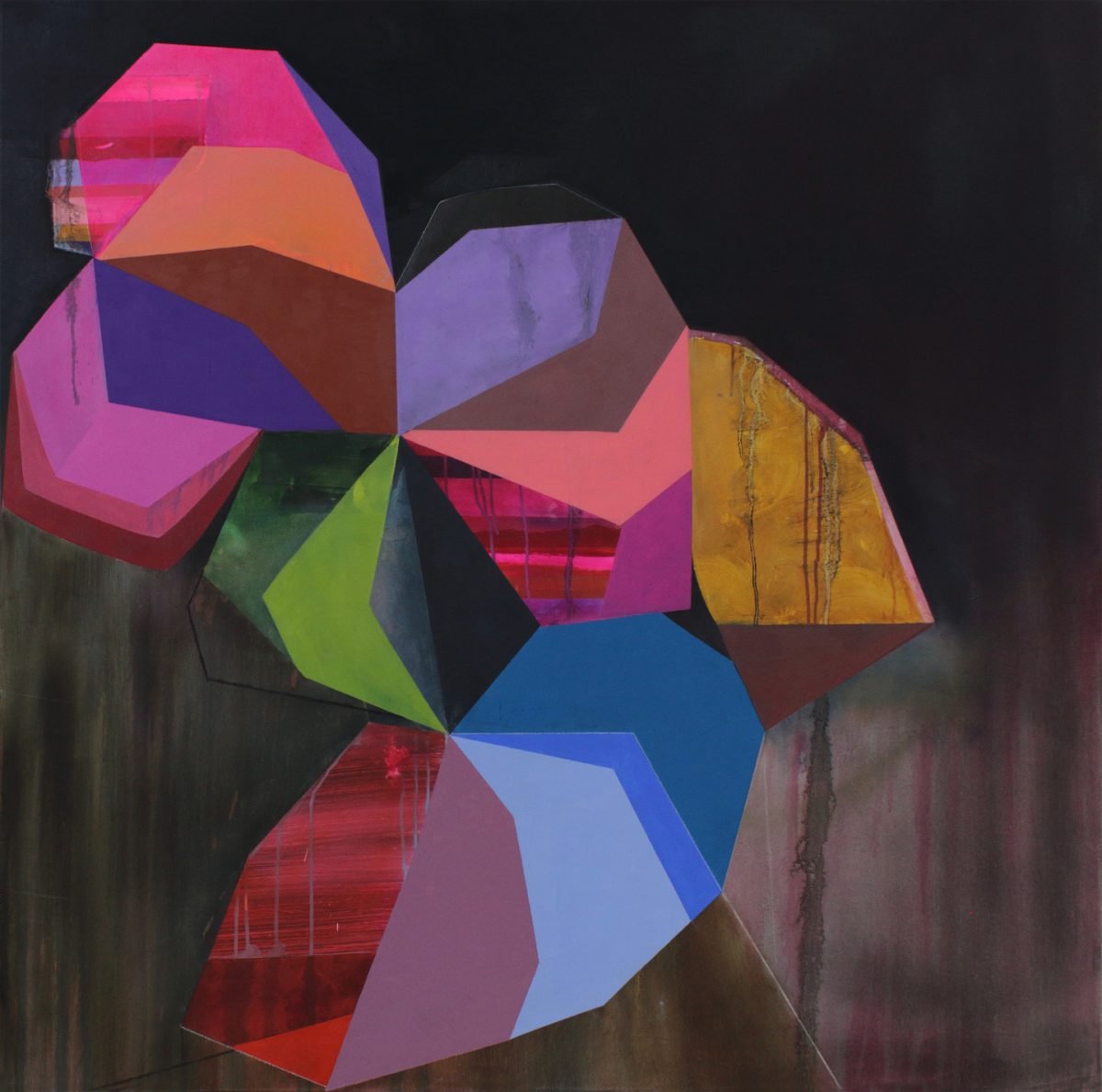
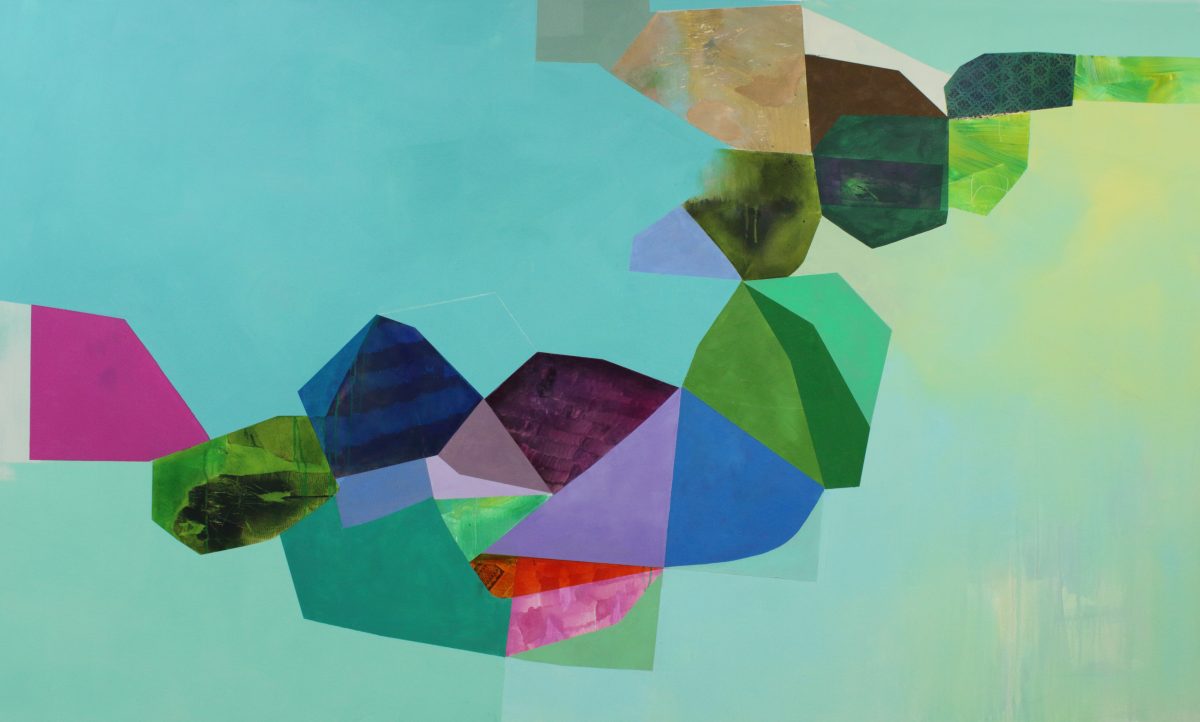
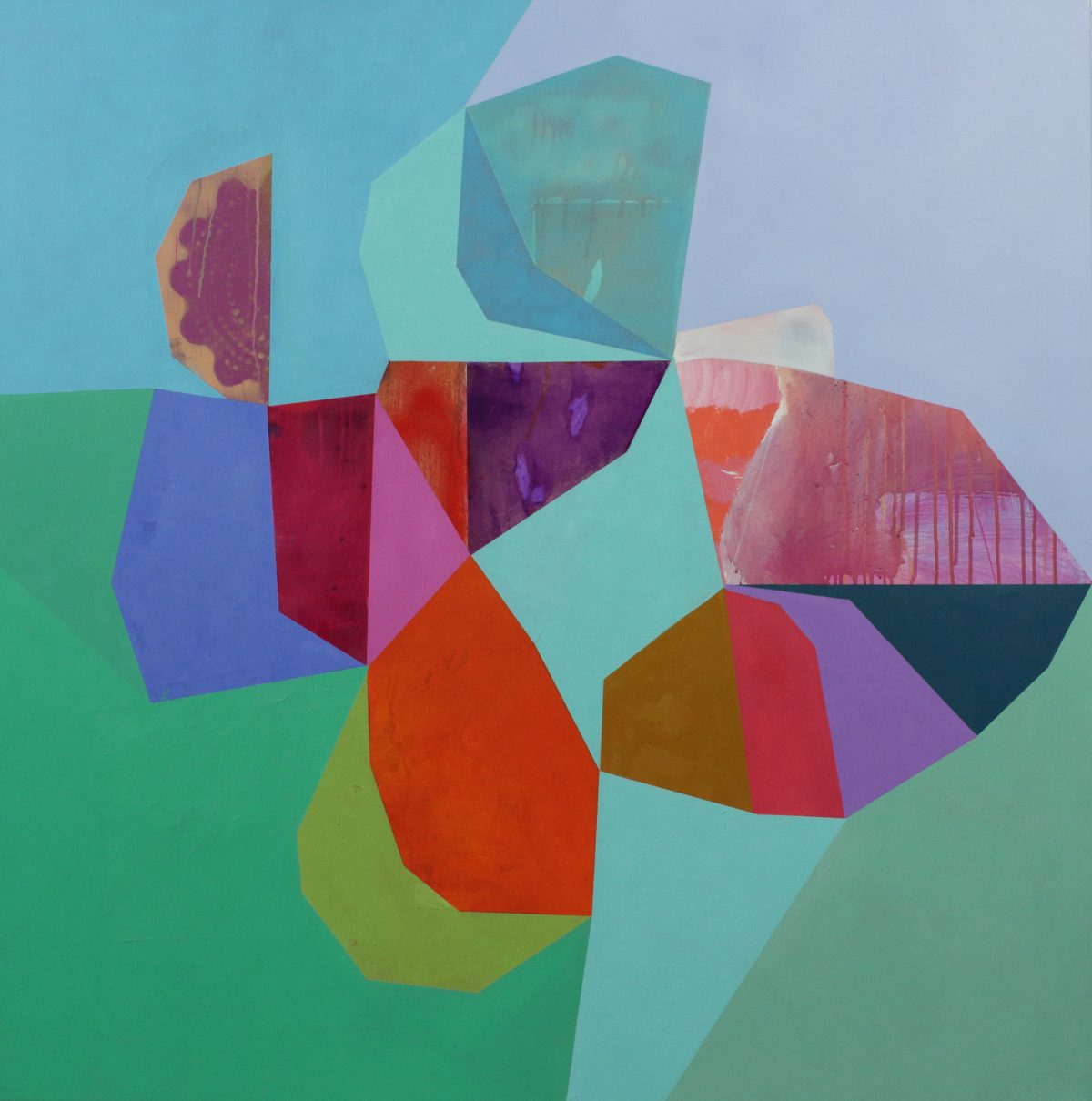
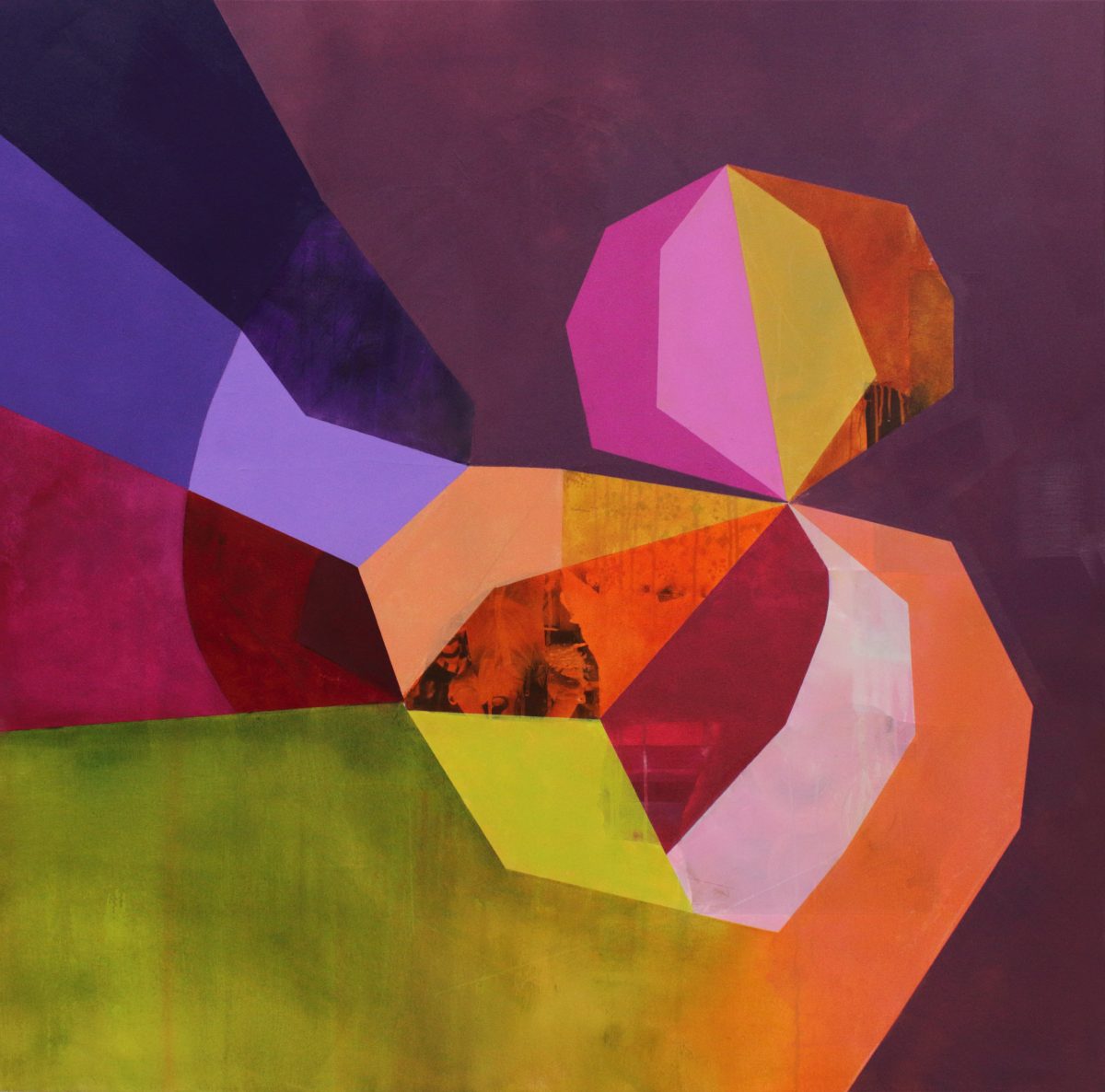
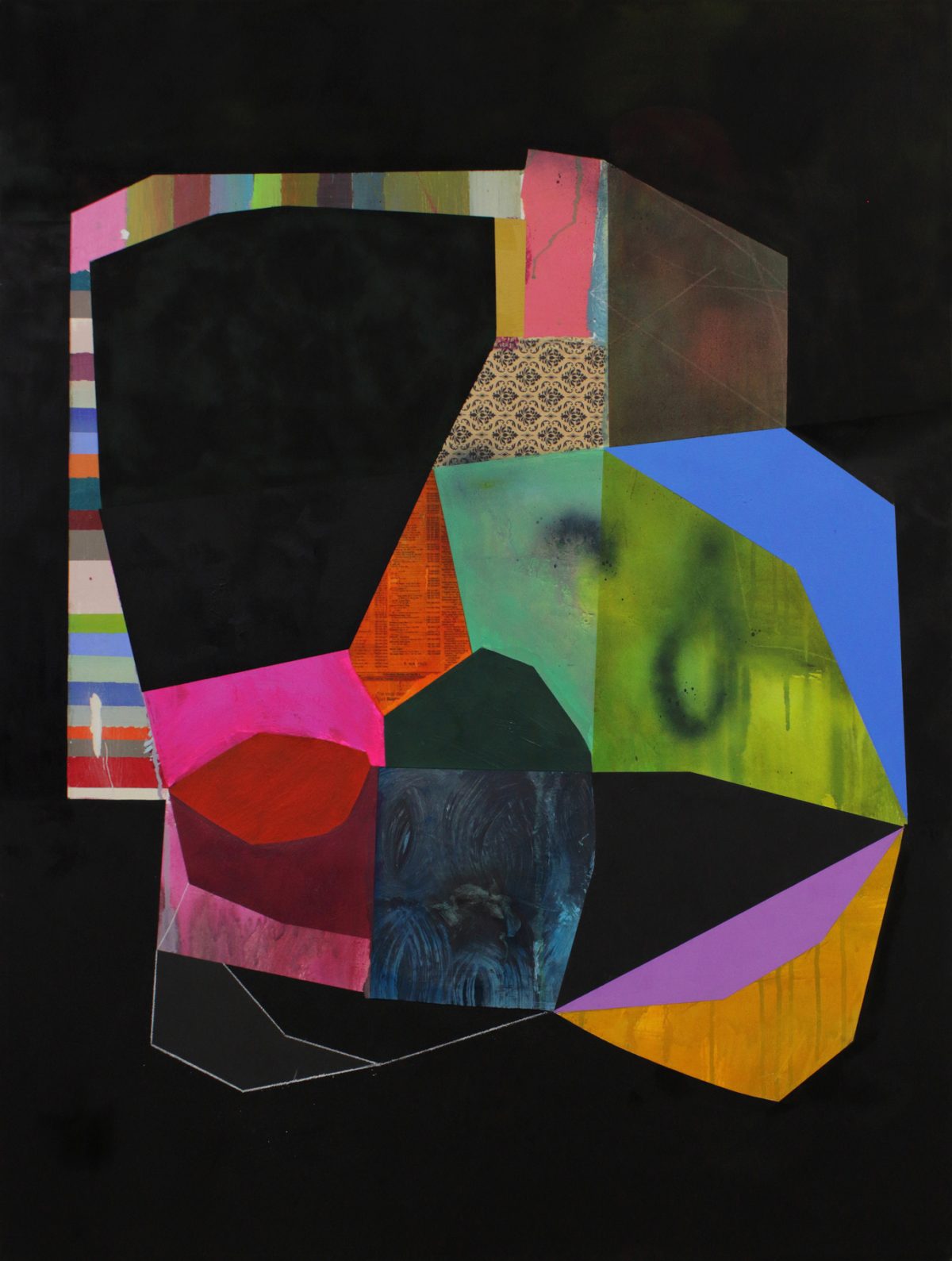
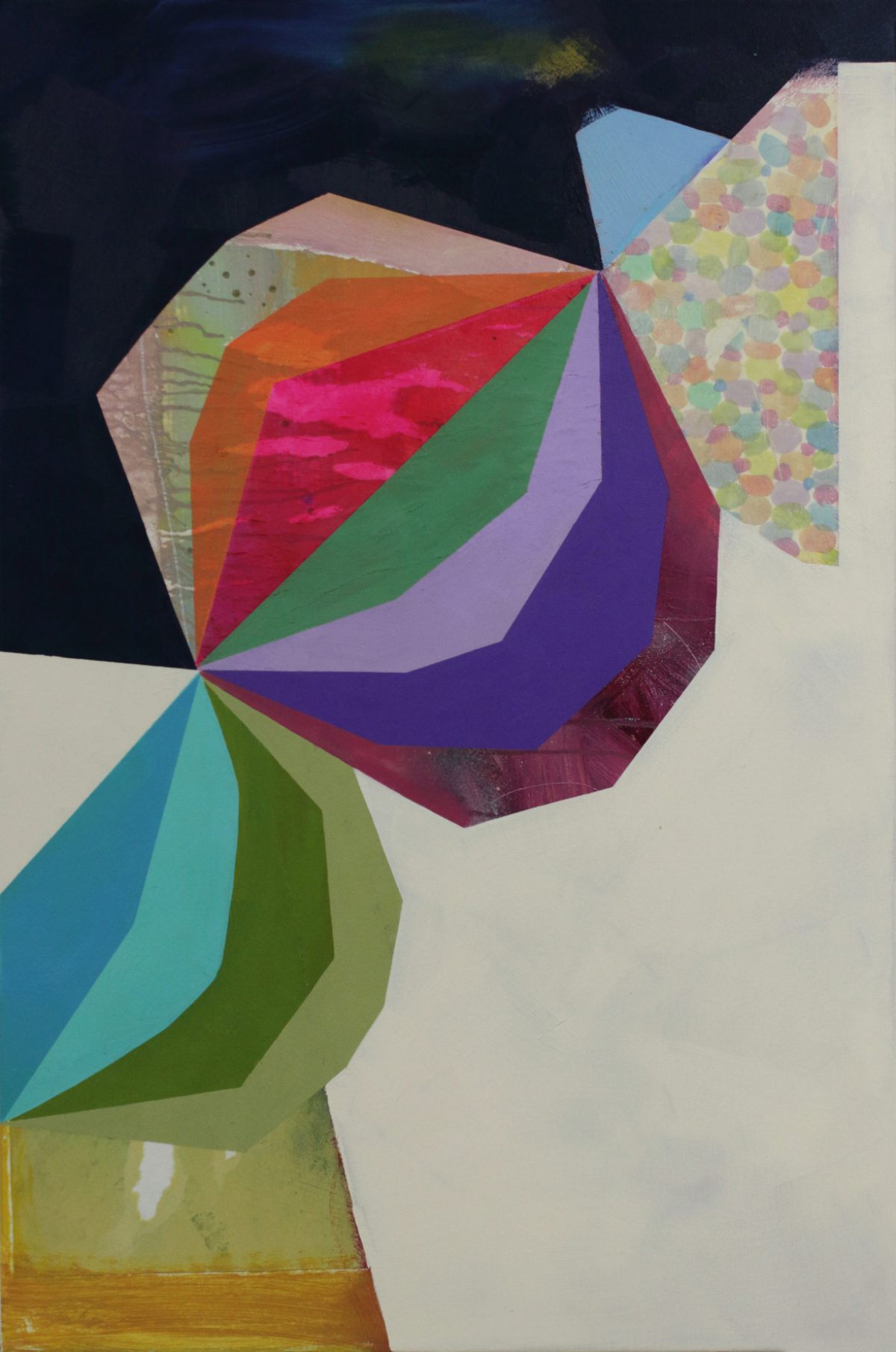
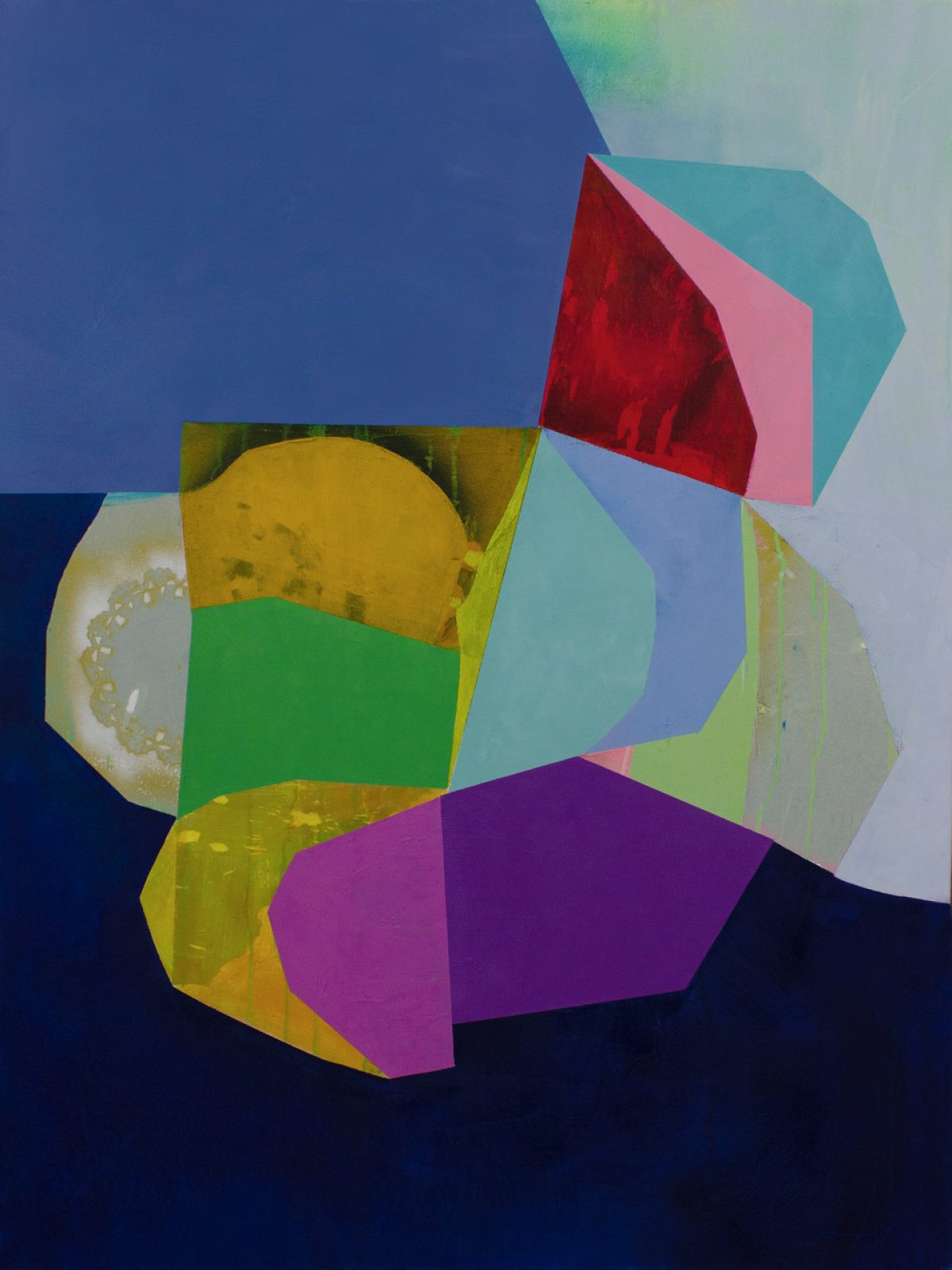
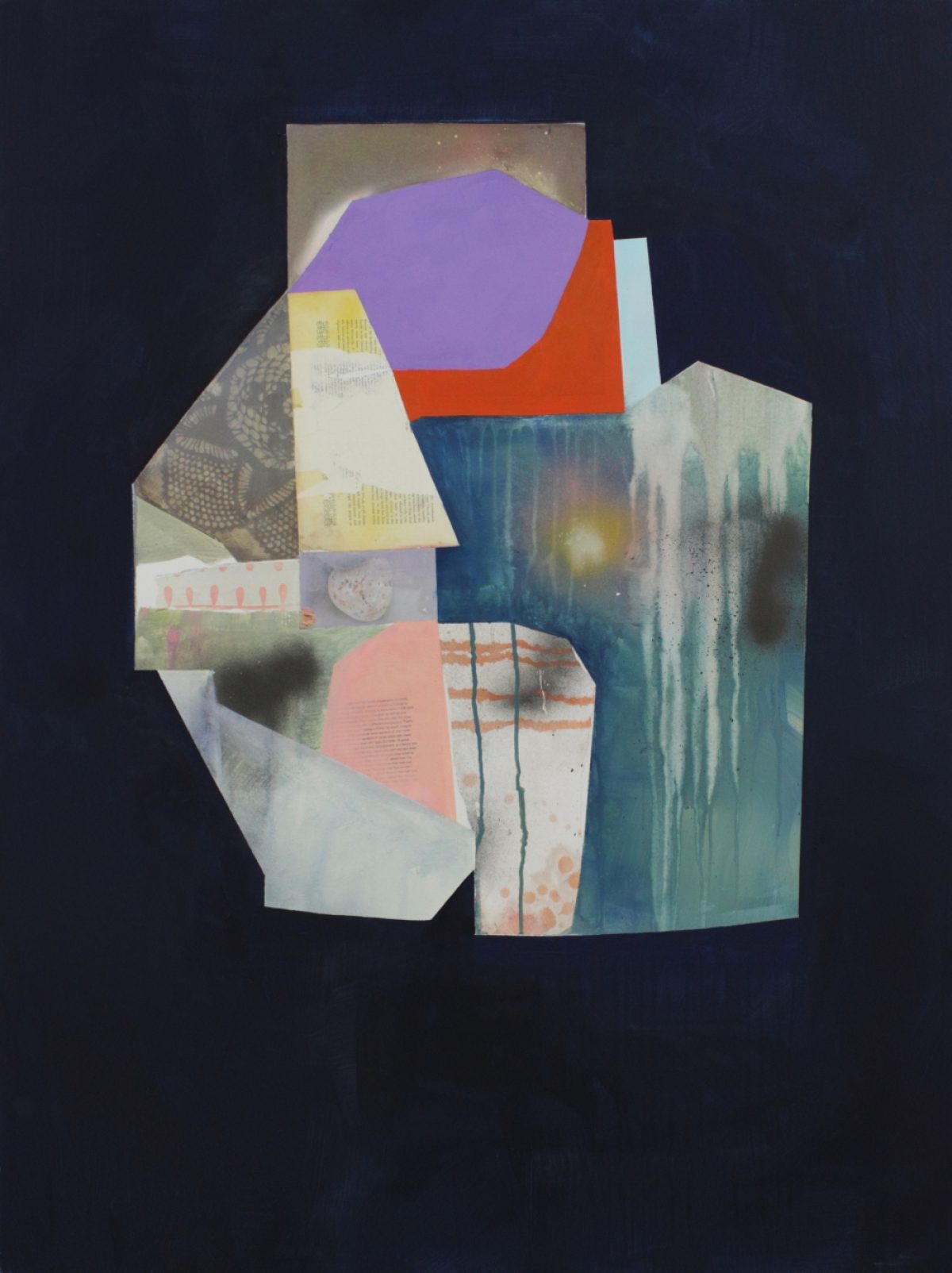
Alayne Spafford is a Canadian abstract artist whose paintings and mixed-media works explore the tension between order and disorder, intuition and control. Built through successive layers of collage, acrylic, drawing, spray paint, and found materials, her compositions balance exuberant color and spontaneous mark-making with a strong underlying sense of structure. The search for equilibrium—between conscious decision and instinctive response, density and openness, organization and chaos—has remained fundamental to her practice.
Spafford grew up on the Canadian prairies, an environment she has identified as an important influence on her understanding of space. The expansive landscape and open horizons of western Canada find an indirect parallel in her compositions, where dense clusters of marks and forms are often held in tension with areas of openness and negative space. Rather than depicting landscape, she translates its spatial qualities into abstraction.
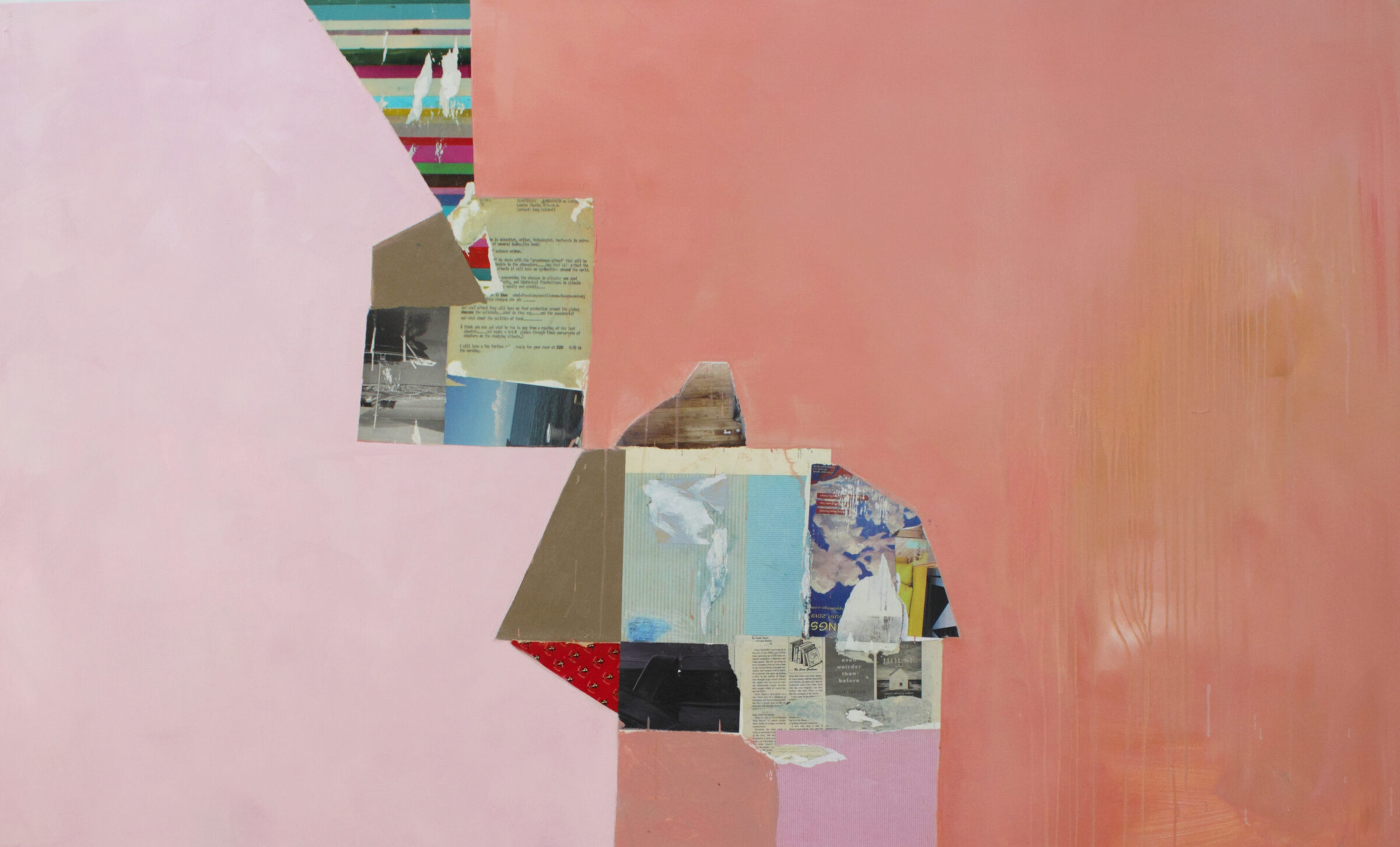
Her paintings typically begin without a fixed composition. Spafford establishes an initial surface through a deliberately loose process involving collage, drips, spray paint, and other spontaneous gestures. Subsequent stages become progressively more deliberate as she identifies shapes, strengthens relationships among forms, obscures earlier passages, and introduces additional layers of color and mark-making. The painting develops through a continual negotiation between accident and intention.
Collage has been particularly important to this process. Spafford incorporates ephemera, newspaper fragments, unfinished art or craft projects, scraps of old wallpaper, and other found materials into the foundations of her paintings. Some fragments remain visible while others are partially or completely buried beneath subsequent layers. These obscured elements create both physical and psychological depth, allowing traces of previous images, words, and histories to persist beneath the final surface.
This process of accumulation and erasure has become central to the meaning of the work. Spafford has described the "lost and forgotten" elements within her paintings as more than compositional devices; they become part of a broader meditation on memory, experience, place, and identity. A finished painting can be understood as an accumulation of decisions and fragments—some visible, some obscured—that mirrors the way personal history itself is constructed.
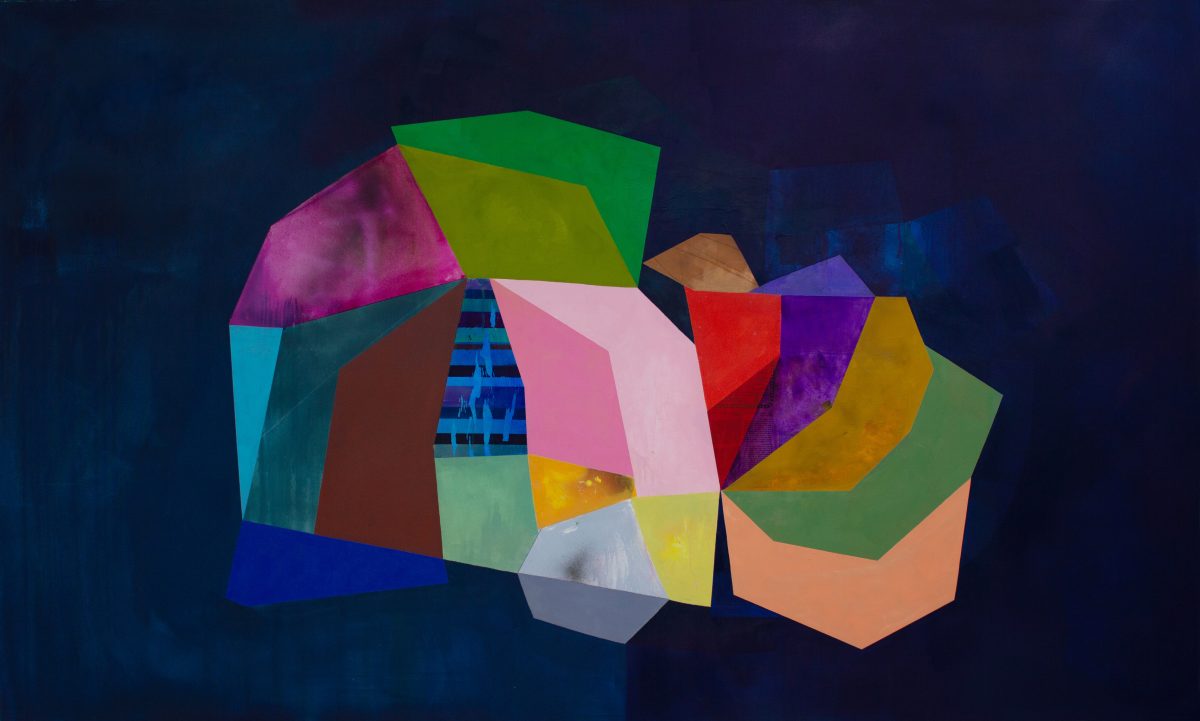
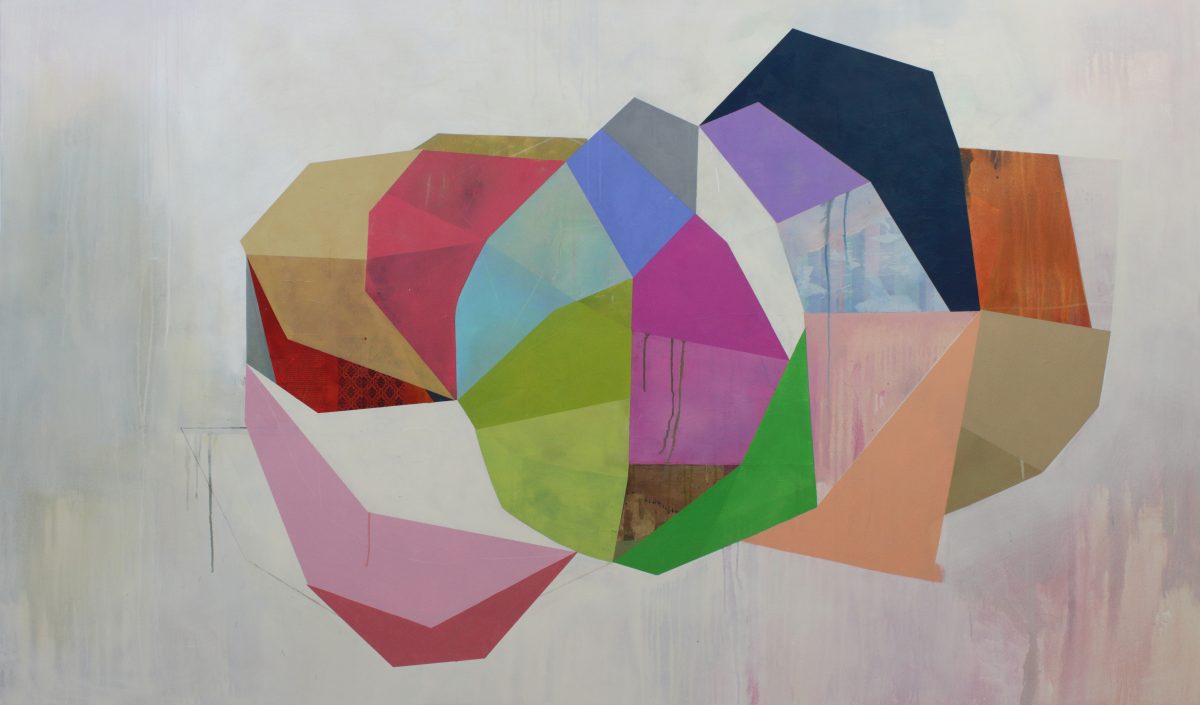
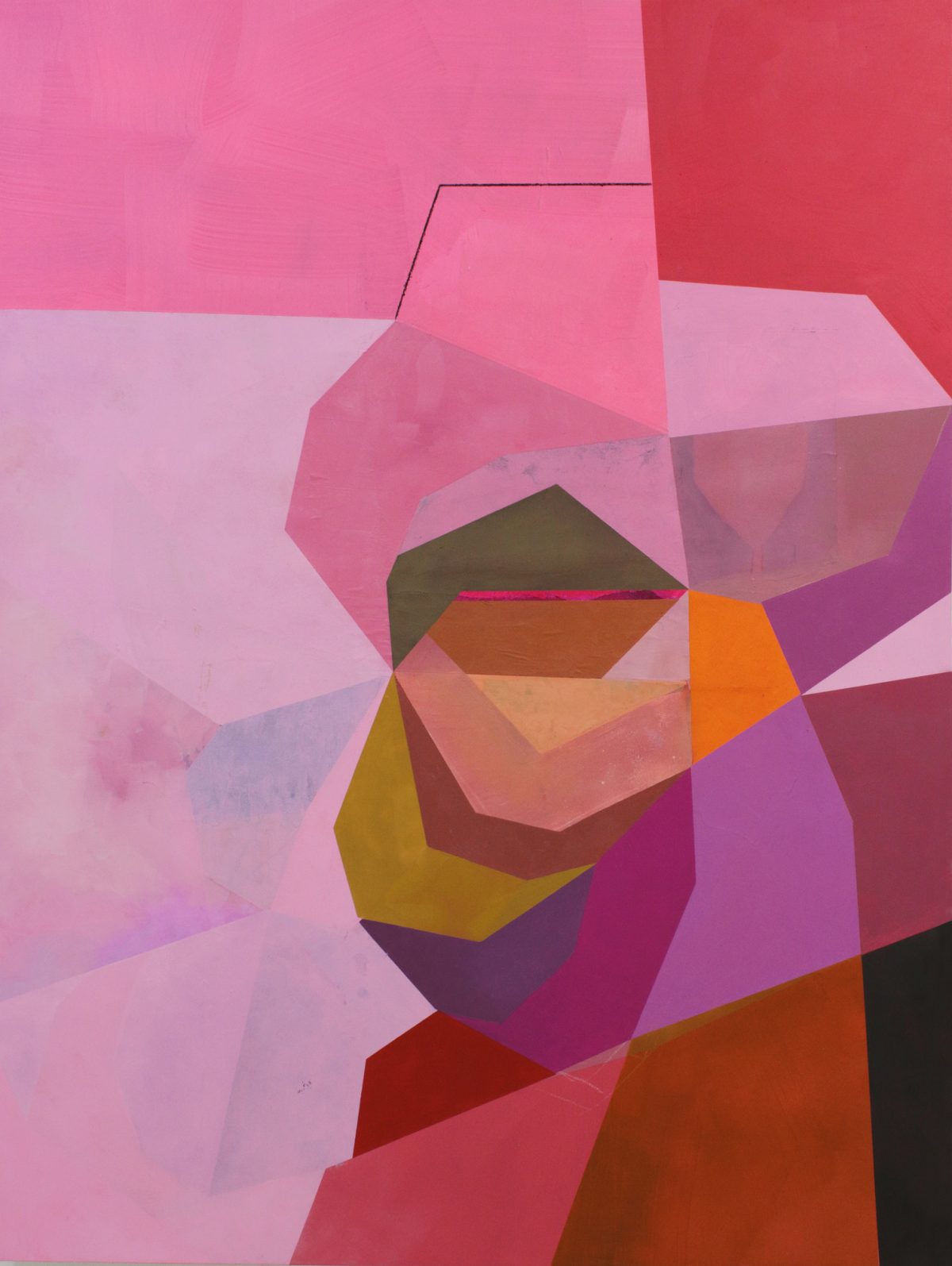
Her formal vocabulary is equally distinctive. Blocks and passages of saturated color interact with looping lines, irregular geometric shapes, graphic marks, fragments of text, and exposed areas of underlying material. Forms appear to be continually assembling and dispersing across the surface. Despite their visual energy, the paintings rarely feel arbitrary: Spafford's instinct for proportion and placement creates an internal architecture capable of holding disparate elements together.
Spafford's background in textiles has had a significant influence on her approach to surface, pattern, and layering. She received her BFA with honors from the University of Saskatchewan before pursuing additional studies in textiles at Concordia University and the Centre des Métiers d'Art en Construction Textile in Montreal. She subsequently worked in the costume department of Cirque du Soleil, an experience that further developed her engagement with fabric, color, surface, and material construction.
In 2013, Spafford and Howard Pruden formed Burn Design Collective, extending her interest in material and surface into collaborative work using shou sugi ban, the traditional Japanese technique of charring wood. The project allowed Spafford to carry concerns familiar from her paintings—layering, pattern, texture, color, and the tension between control and unpredictability—into architectural and three-dimensional contexts.
Spafford has exhibited in Canada and the United States for more than three decades, with solo and group presentations in Edmonton, Saskatoon, Montreal, Toronto, Kelowna, Seattle, New York, Kansas City, and elsewhere. Her work has also been shown at art fairs and in exhibitions devoted to contemporary abstraction and collage. She has twice participated in the Pouch Cove Foundation residency in Newfoundland, first in 2019 and again in 2023.
At Haw Contemporary, Spafford presented Home and Place (Lost and Forgotten) in 2020, an exhibition developed following her first Pouch Cove residency that brought questions of landscape, cultural identity, memory, and accumulated experience more explicitly into her abstract practice. She was included in DECADE, Haw Contemporary's tenth-anniversary exhibition, in 2023, and returned to the gallery for the solo exhibition Over/Under in 2026.
Her work is held in public, institutional, corporate, and private collections, including the Alberta Foundation for the Arts, University of Alberta, University of Saskatchewan, and PCL Corporation.
Spafford lives and works in Edmonton, Alberta. While painting and collage remain at the center of her practice, her background in textiles and continued interest in material experimentation allow the work to move easily across conventional boundaries. Throughout, she maintains a productive tension between freedom and restraint: spontaneous gestures are organized without being subdued, while carefully structured compositions retain the energy and uncertainty of the process through which they were made.