Bio
It’s easy to see why Hendrik Kerstens (b. 1956, The Netherlands) has made his daughter Paula the subject of more than three decades’ worth of photographs. That is, it’s easy to see now. Looking through images of her arresting face across the years, you may wonder: in 1994, with the early portrait Chair, could the artist possibly have glimpsed what that implacable gaze might become in adulthood?
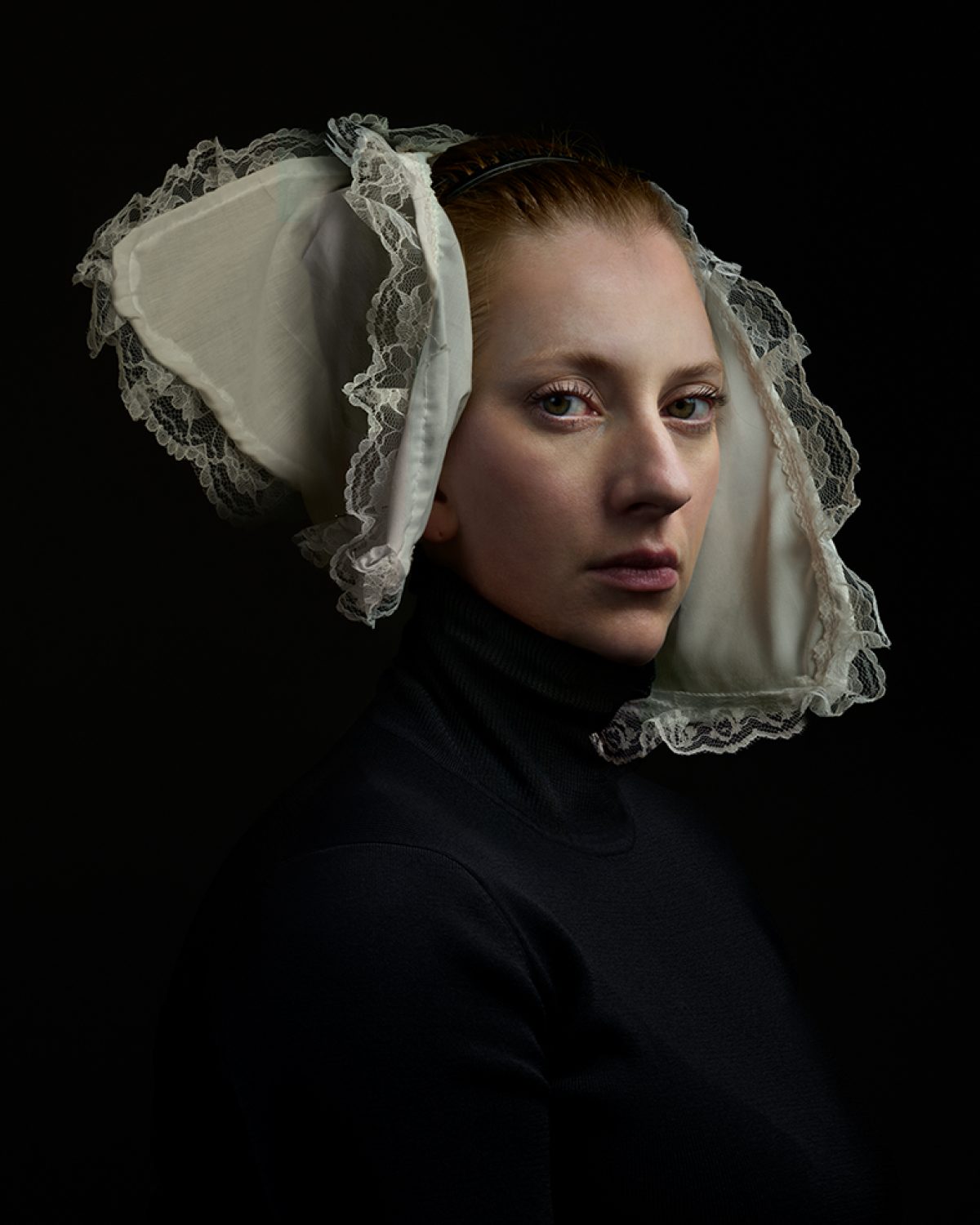
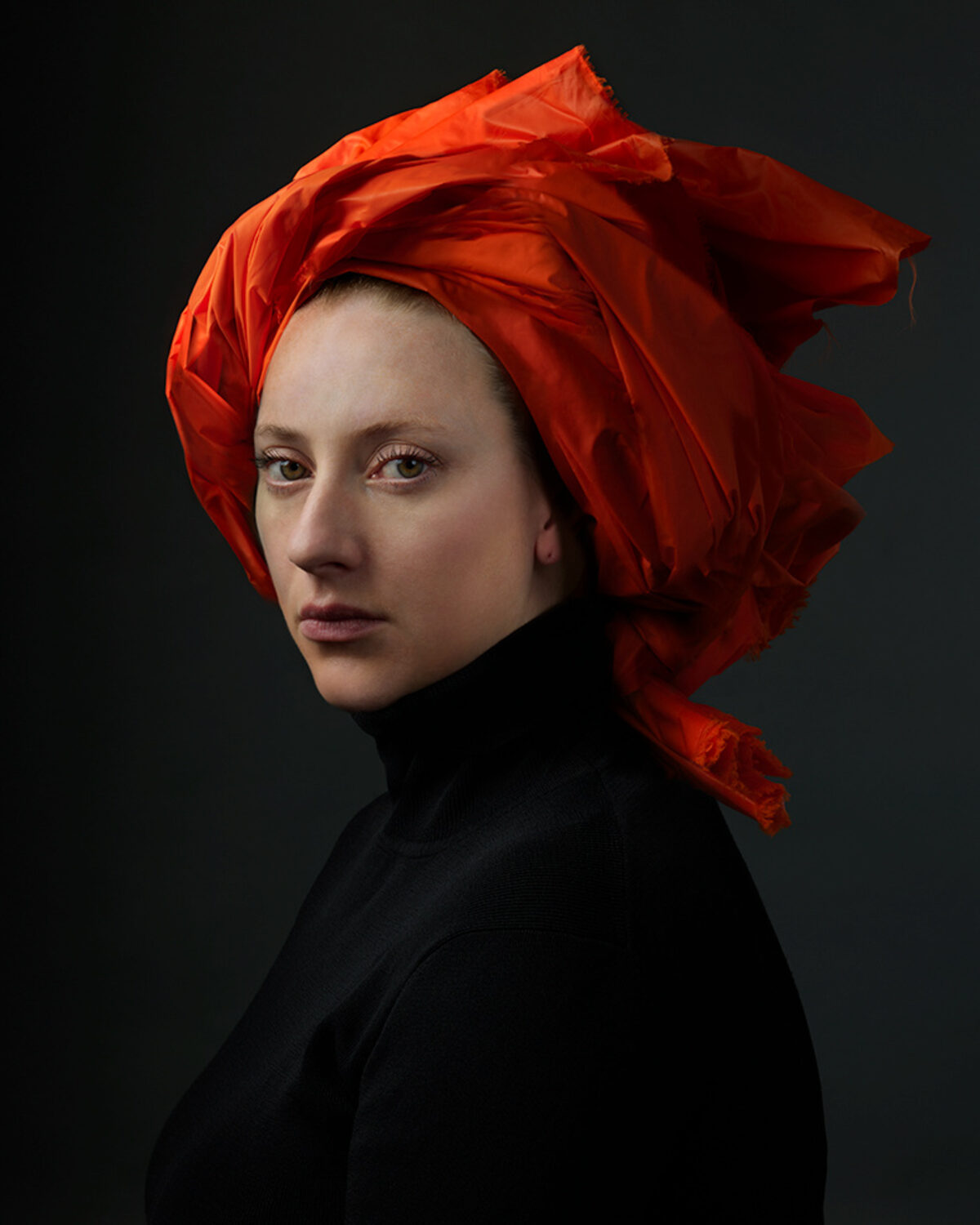
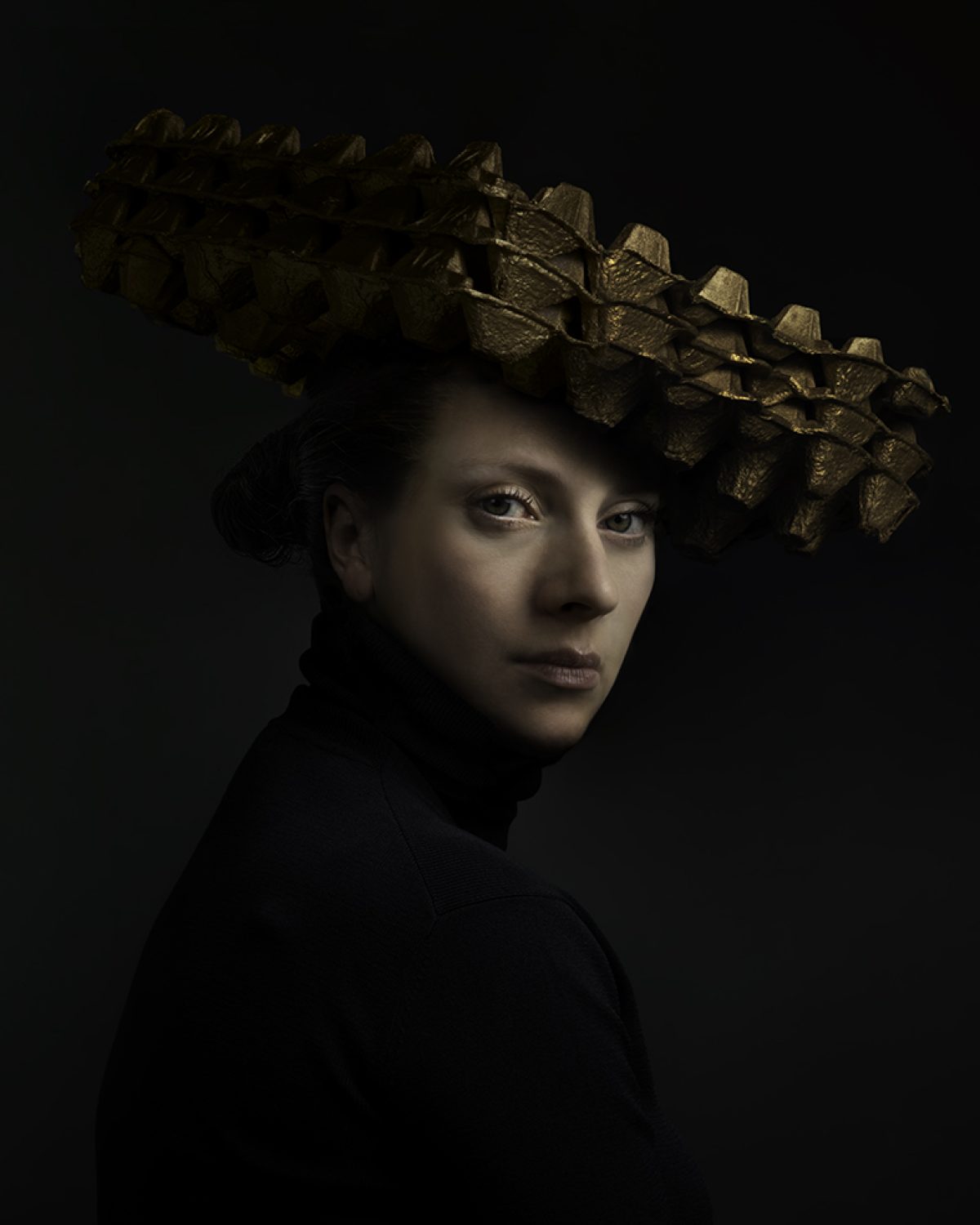
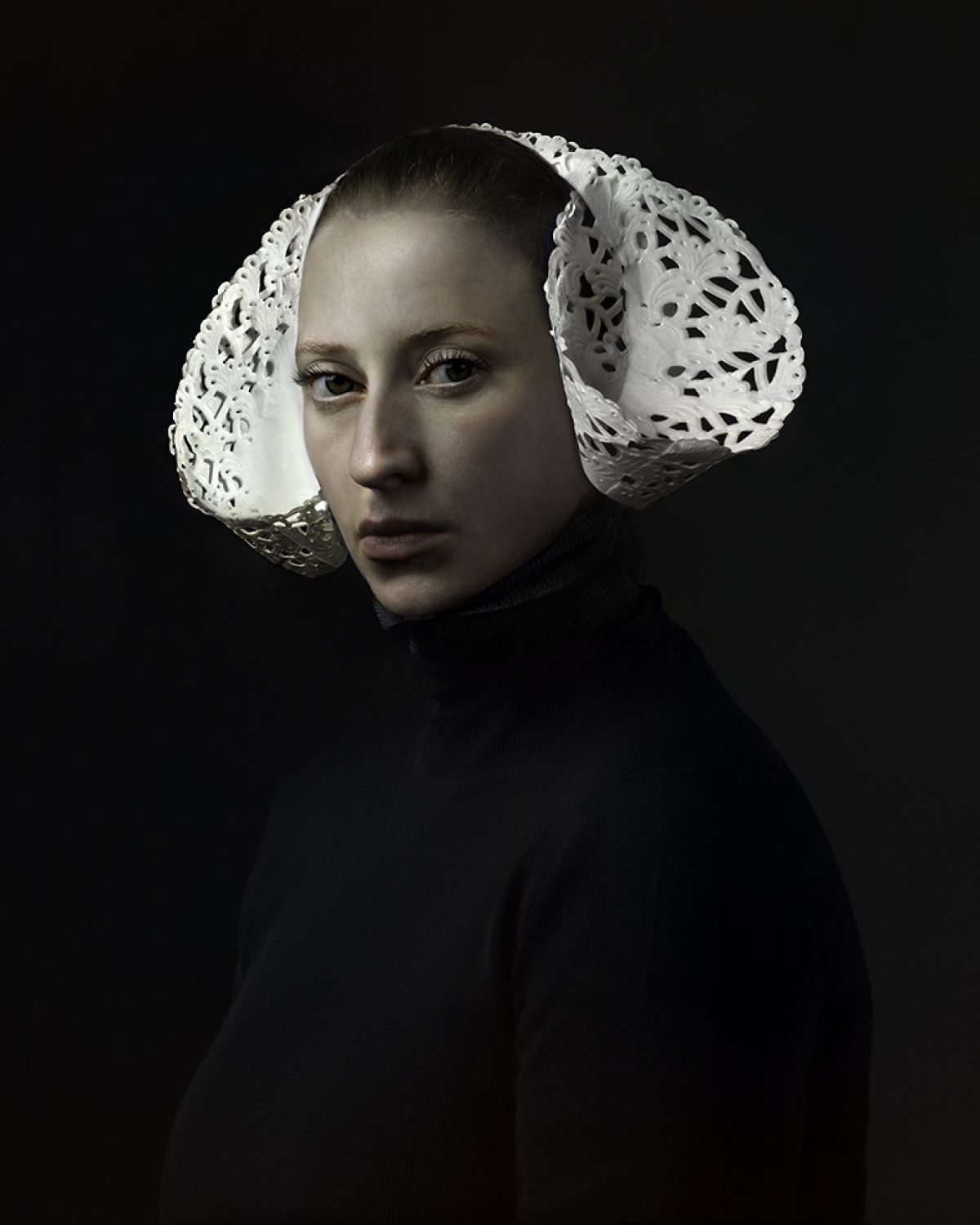
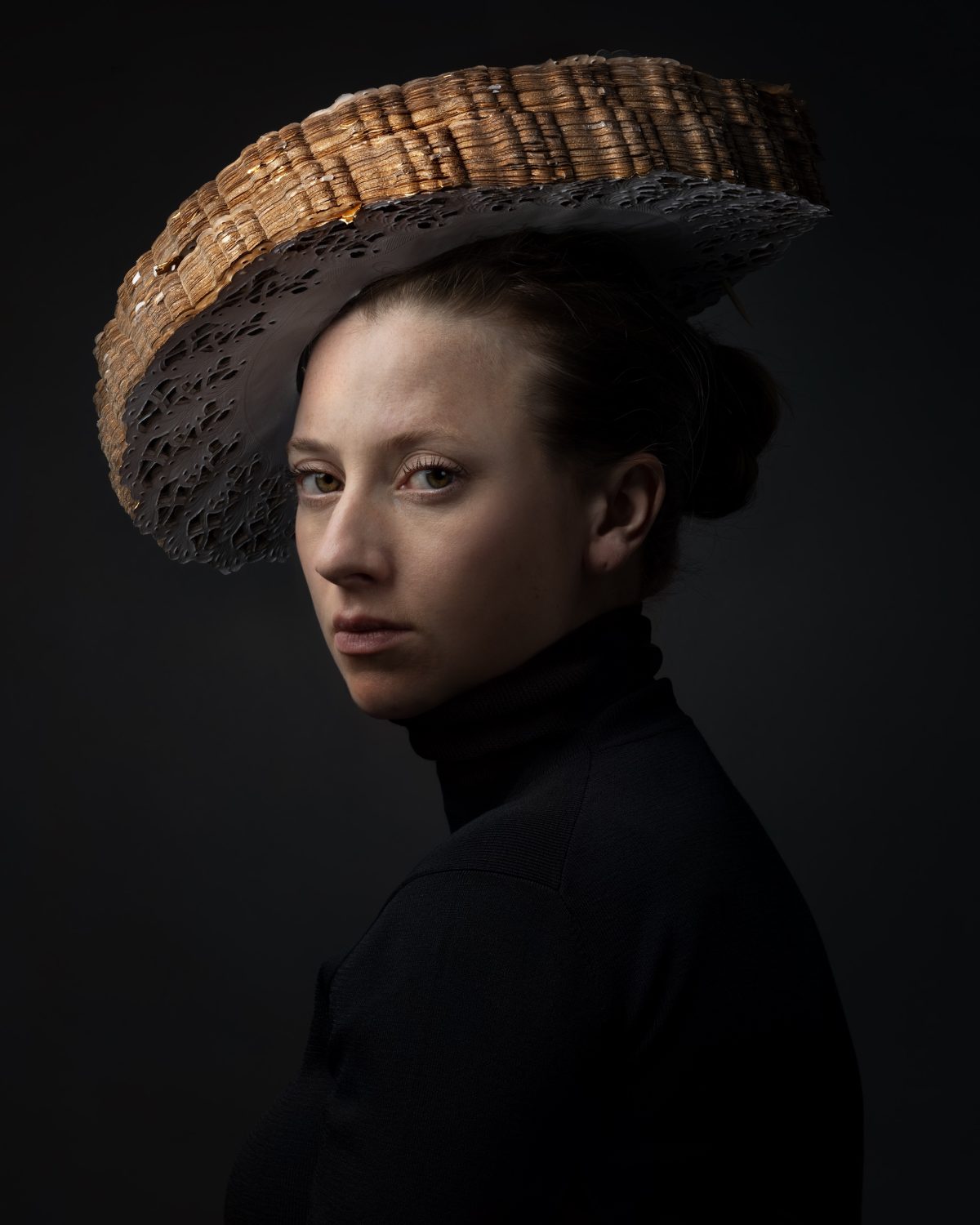
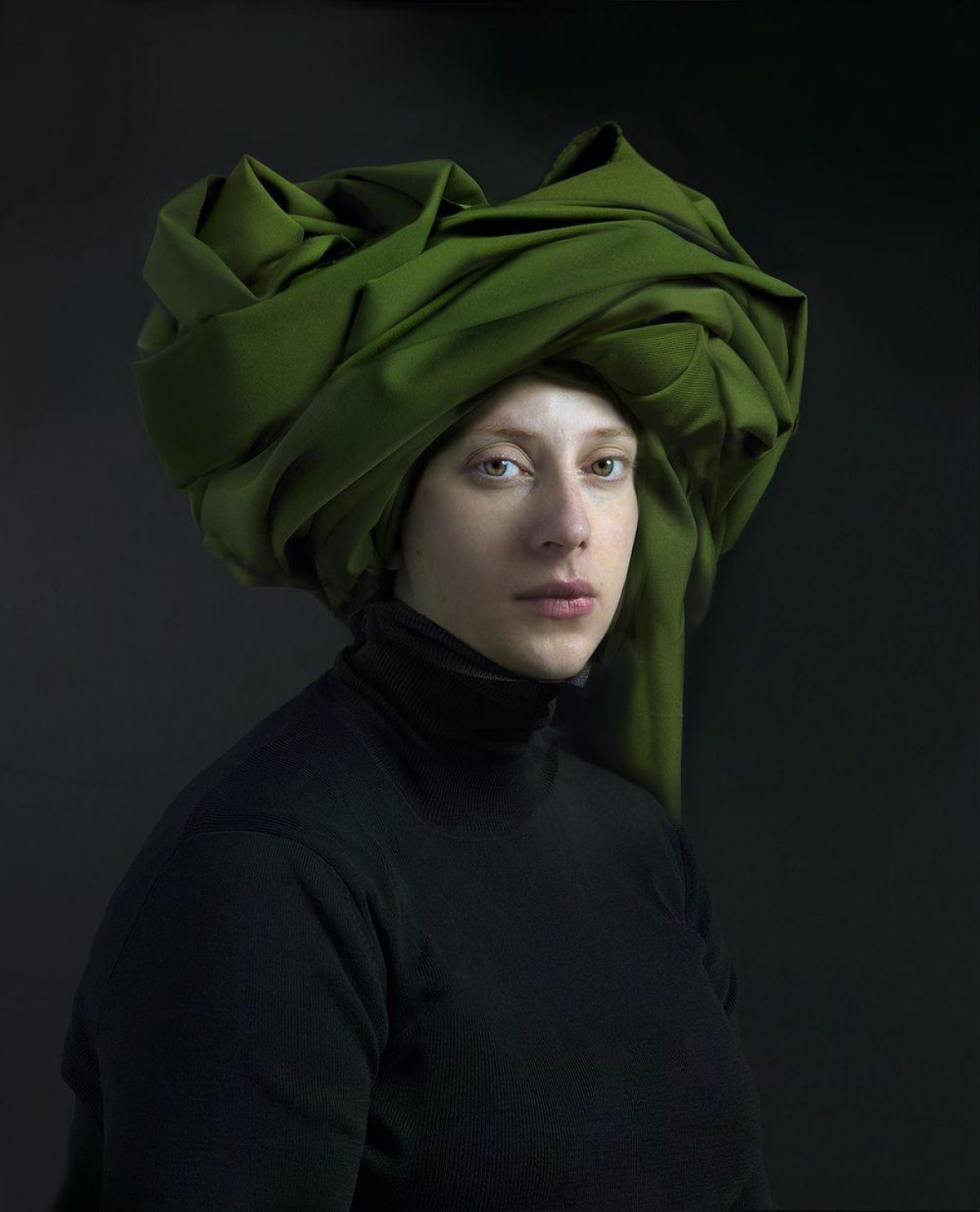
If the early photographs flowed from a simple paternal desire to capture his daughter’s fleeting childhood, a defining shift in Kerstens’s work began with a moment of seeing Paula on horseback, her classical Dutch features in striking consonance with those of women and men portrayed by Old Masters from Jan van Eyck to Vermeer and Rembrandt. His photographs began to reflect the composition, enigmatic intensity, and unmistakable light of Dutch Golden Age portraiture, often with a sly contemporary twist—embossed paper towels suggesting an elaborate lace headdress, a crown of ethernet cables or soda cans, a black veil revealed as a garbage bag. The resulting images bring the history of Western painting into dialogue with contemporary photography, fashion, domestic life, and the ordinary materials of the present.
In a 2020 essay, Kerstens identified Van Eyck’s Portrait of a Man (Self Portrait?)—often known as Man in a Red Turban—as a critical moment in the history of the exchange between the subject’s gaze and that of the viewer. That exchange is central to his own work. Photography and painting, historical convention and contemporary material, solemnity and humor all coexist within the portraits. With Paula’s pale face and direct gaze illuminated against dark backgrounds, she can seem to look across centuries rather than simply toward the camera.
What began as a father photographing his daughter has gradually evolved into a creative partnership. Paula has become increasingly involved in the conception and production of the photographs, and recent works are formally presented under the joint authorship of Hendrik & Paula Kerstens. Their collaboration complicates the traditional relationship between photographer and model: the subject who has grown up before the camera is now also a participant in determining how she will be represented. New photographs continue the visual conversation the two began more than thirty years ago, allowing age, time, collaboration, and the changing relationship between father and daughter to become part of the work itself. Recent works include Coif (2024), Golden Egg Box (2025), and Bonnet (2026).
Kerstens’s photographs have had an unusual influence beyond contemporary photography. Alexander McQueen drew directly upon Bag (2007)—in which a plastic shopping bag becomes an improbable seventeenth-century headdress—for his Autumn/Winter 2009 collection, The Horn of Plenty, and used the photograph as the invitation to the runway presentation. The image has since become one of Kerstens’s most widely recognized works. He has also produced commissioned portraits for The New York Times Magazine, photographing subjects including filmmaker Michael Haneke, artist Marlene Dumas, Philip Seymour Hoffman, and Alec Baldwin.
Kerstens’s work has been exhibited internationally at institutions including the National Portrait Gallery, London; Museum of Photographic Arts, San Diego; Santa Barbara Museum of Art; Museum of Contemporary Art, Toronto; Erarta Museum, St. Petersburg; and Whangarei Art Museum, New Zealand. More recent institutional presentations have emphasized the continuing relevance of the work's dialogue with historical portraiture, including Self-reflective: Hendrik en Paula Kerstens at Museum Hilversum and Great Dutch Master Paintings Revisited at Skokloster Castle and the Royal Armoury in Sweden.
Museum & Institutional Exhibitions
- Great Dutch Master Paintings Revisited, Royal Armoury, Stockholm, Sweden 2023–2024 (Solo)
- Self-reflective: Hendrik & Paula Kerstens, Museum Hilversum, Hilversum, Netherlands 2023 (Solo)
- Black & White, Symboliek in Kunst en Design, TextielMuseum, Tilburg, Netherlands 2019 (Group)
- Lace and Status, Textilmuseum St. Gallen, St. Gallen, Switzerland 2018 (Group)
- Shop It, Haifa Museum of Art, Haifa, Israel 2018 (Group)
- Model and Muse, Museum of Photographic Arts, San Diego, CA 2015 (Group)
- Paula, Erarta Museum, Saint Petersburg, Russia 2013–2014 (Solo)
- Paula, Central House of Artists, Moscow, Russia 2013 (Solo)
- Paula, National Centre for Contemporary Arts, Nizhny Novgorod, Russia 2013 (Solo)