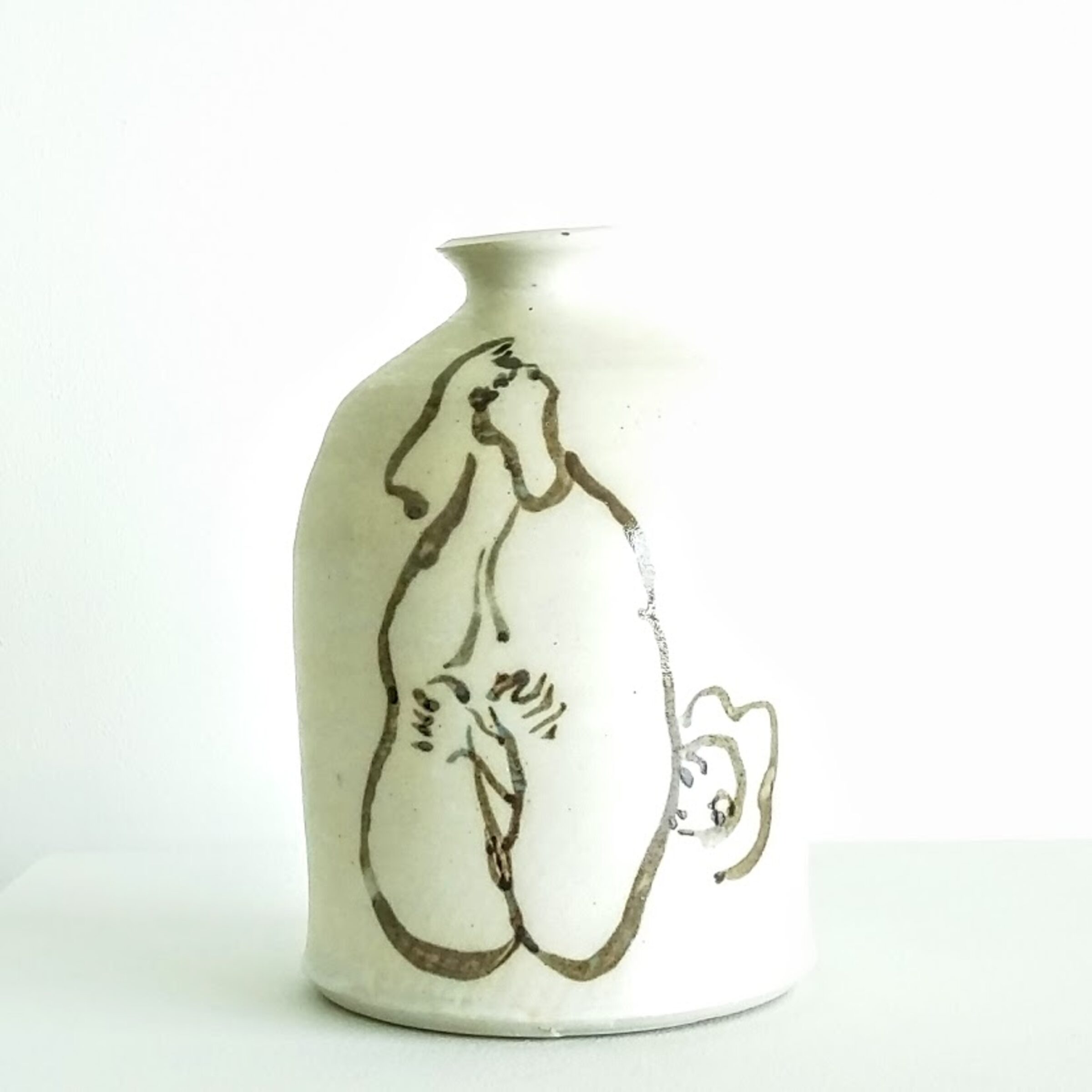
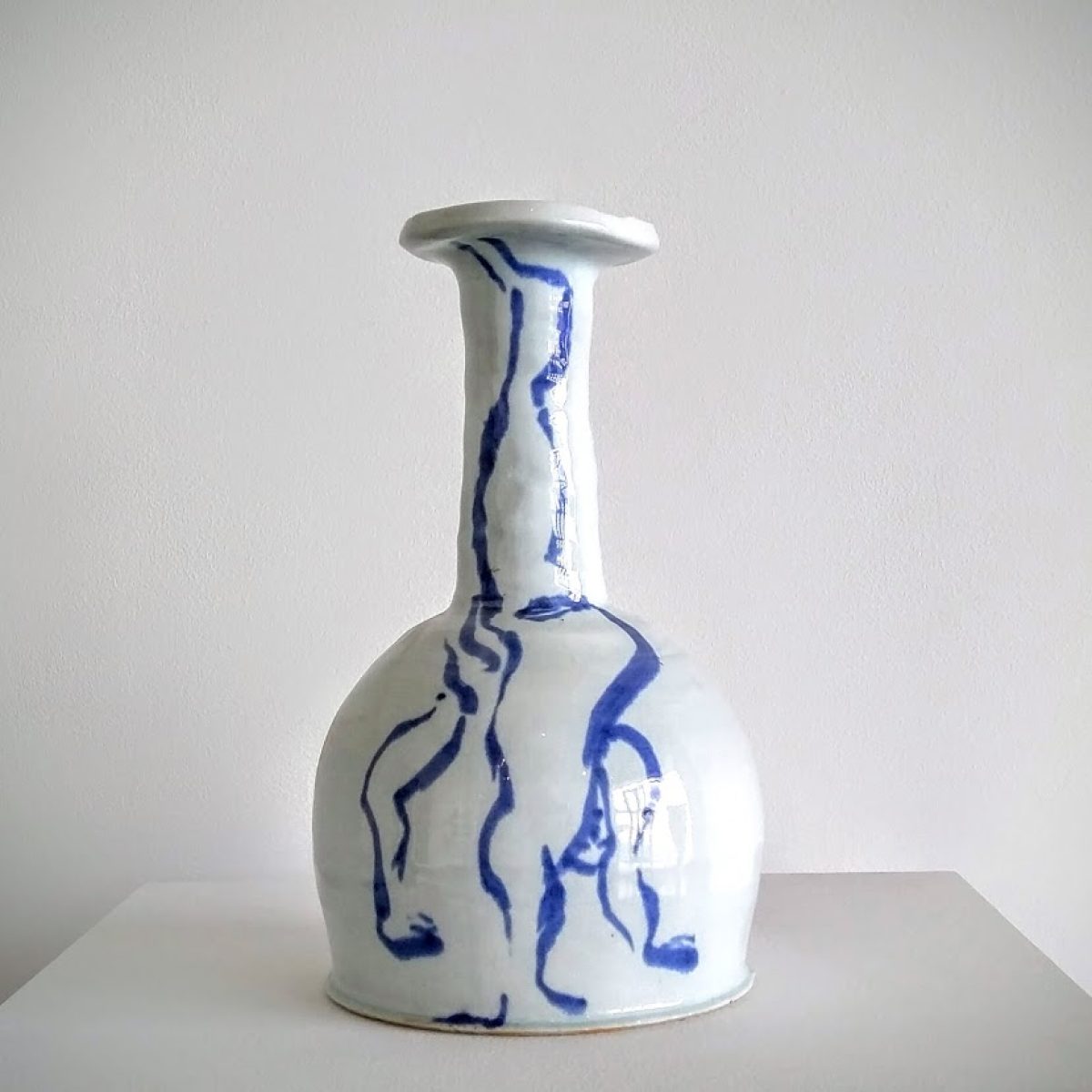
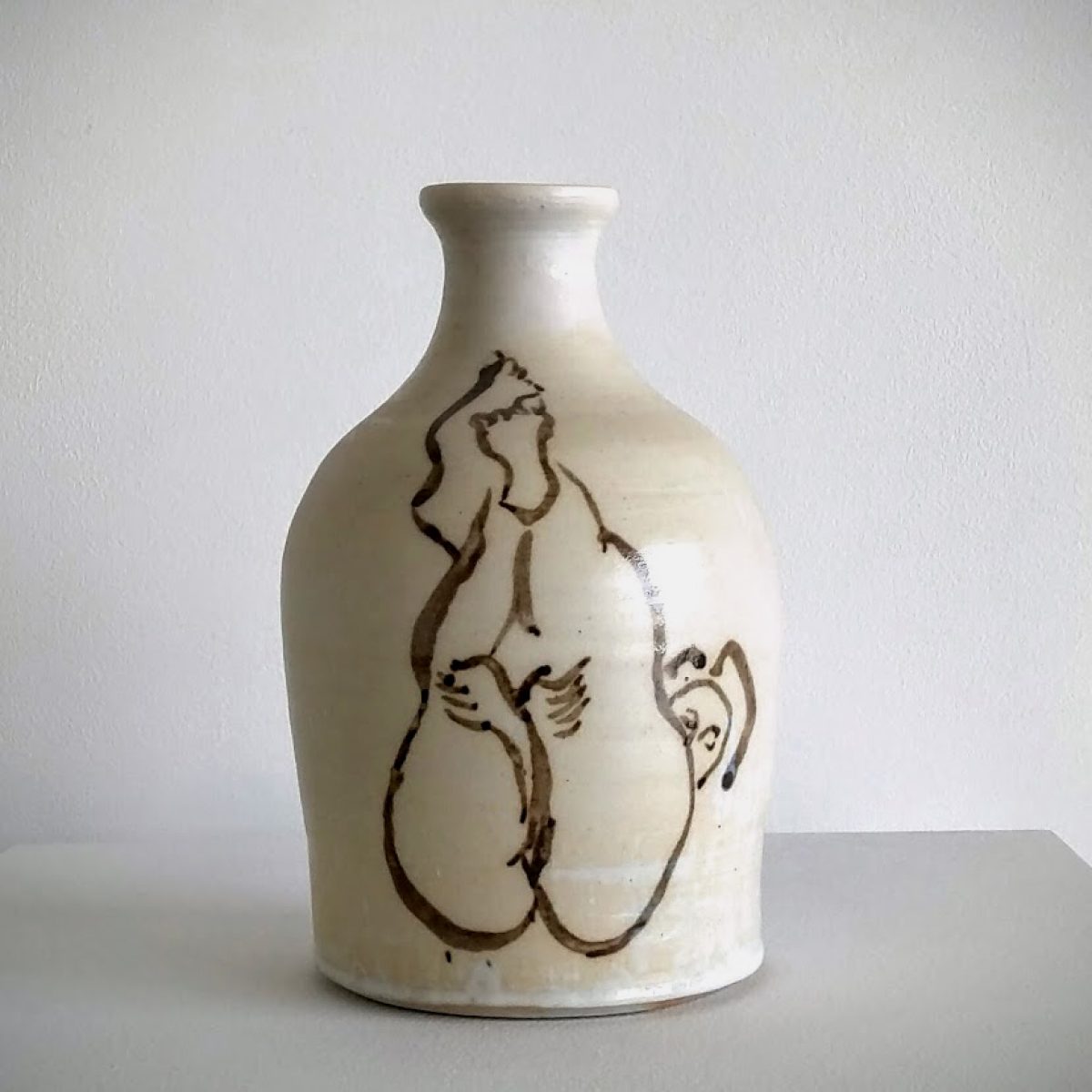
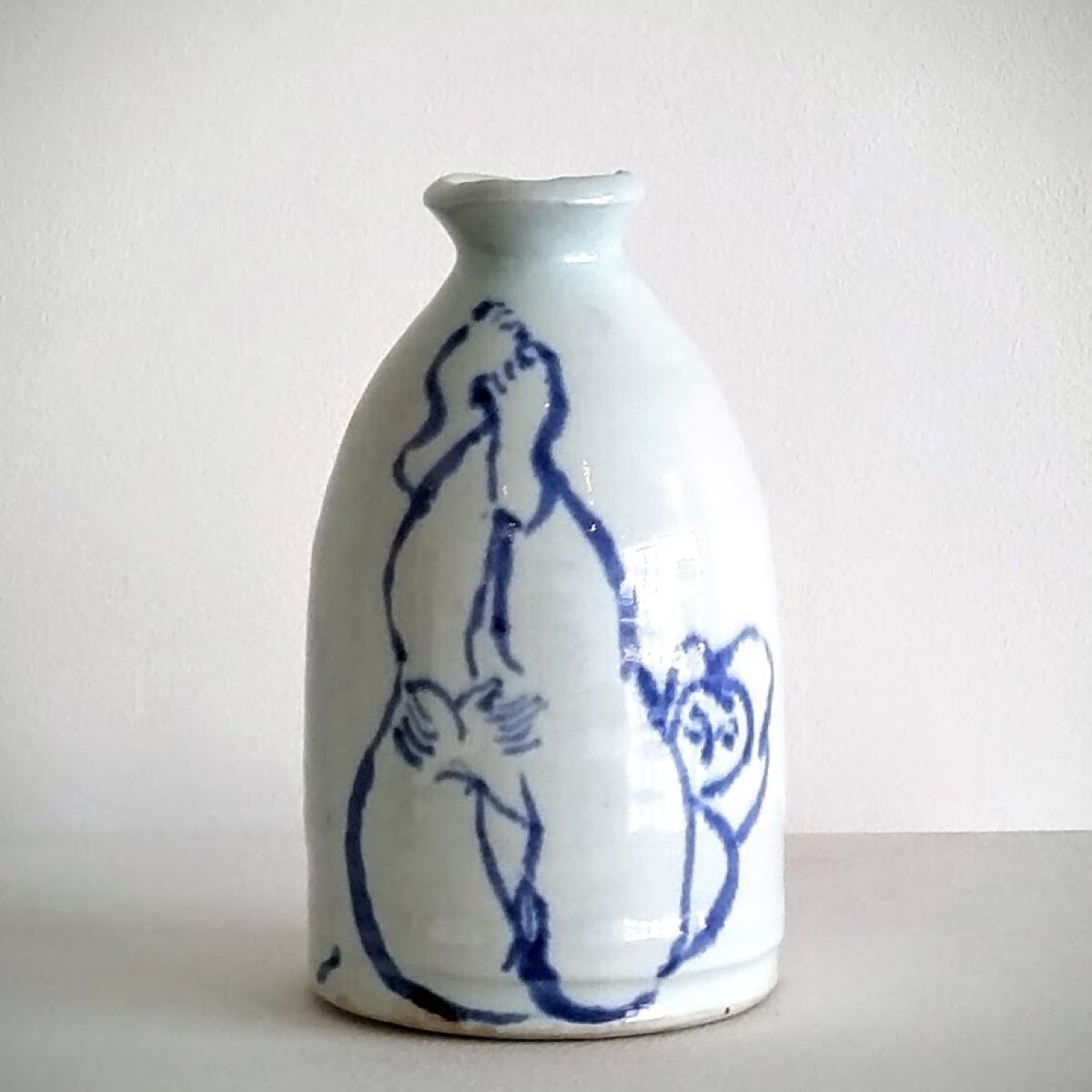
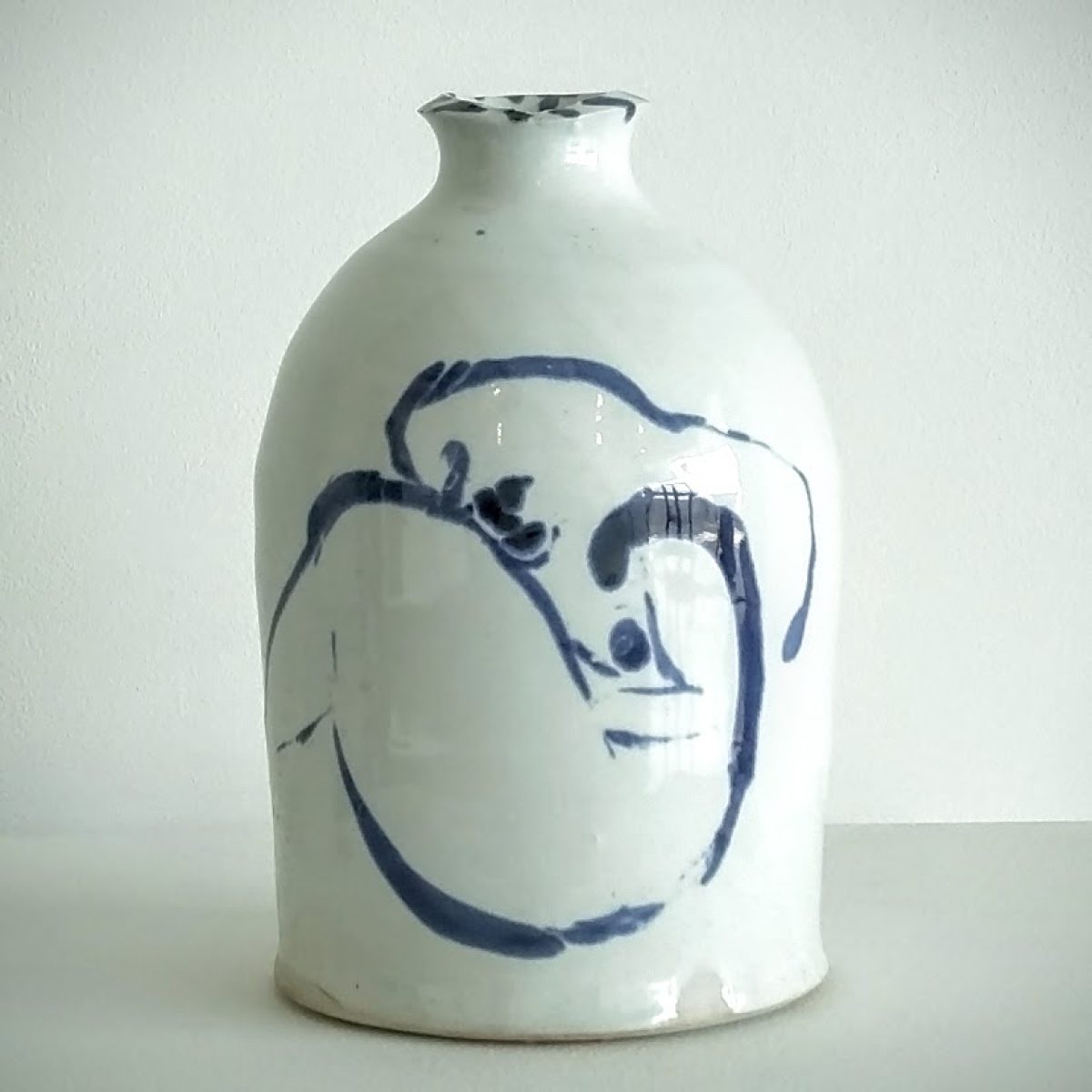
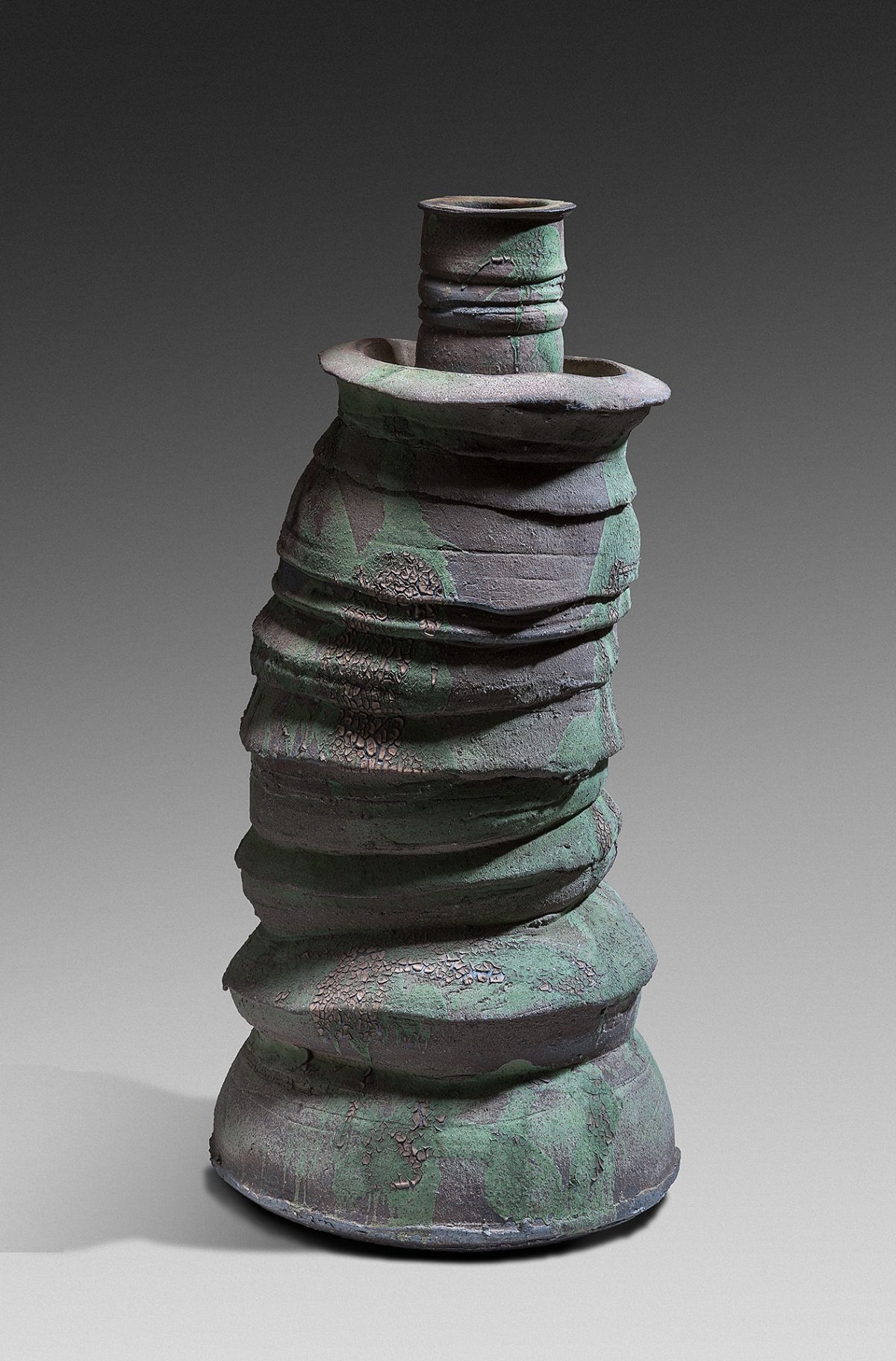
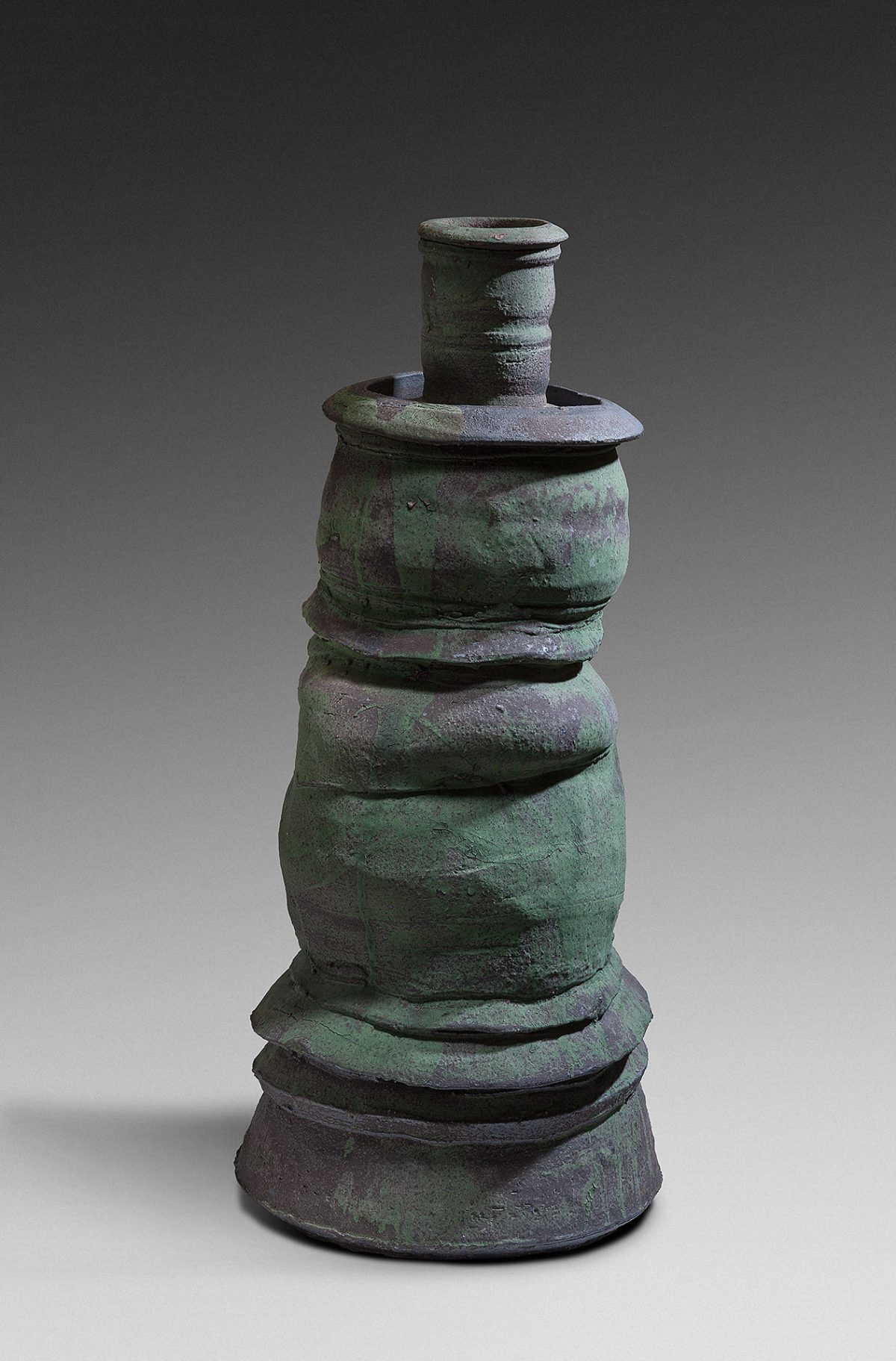
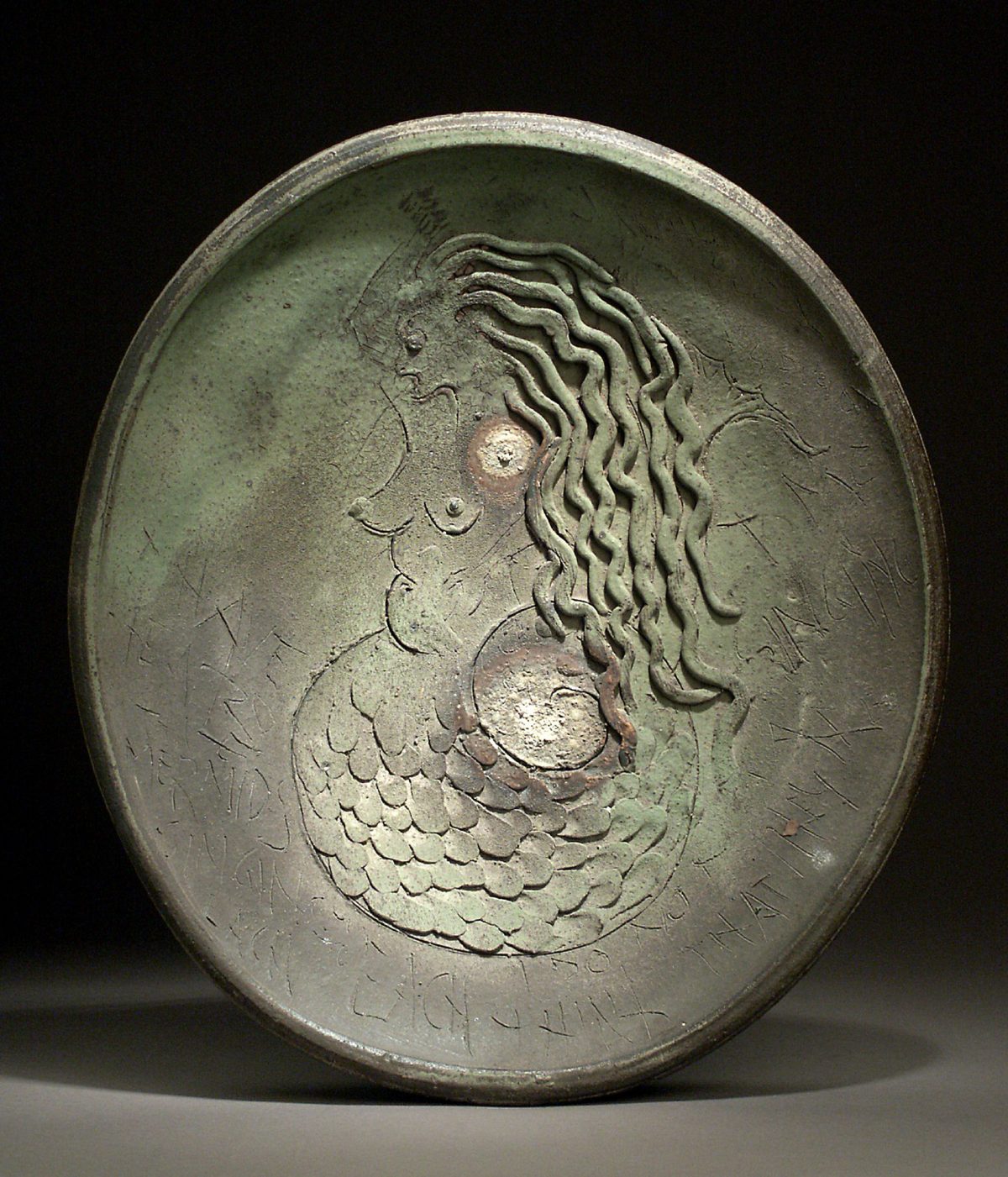
Ken Ferguson (1928–2004) was one of the most influential American ceramic artists and educators of the second half of the twentieth century. Over a career spanning more than five decades, Ferguson helped expand the possibilities of studio ceramics beyond conventional distinctions between functional pottery and sculpture. His vessels combine extraordinary technical command with wit, sensuality, narrative, and an increasingly expressive approach to form.
Ferguson was initially trained within the traditions of functional pottery. He received his BFA from the Carnegie Institute of Technology in Pittsburgh and his MFA from the New York State College of Ceramics at Alfred University, where he studied during a formative period in the development of postwar American studio ceramics. In 1958, he became resident potter and studio manager at the Archie Bray Foundation in Helena, Montana.
In 1964, Ferguson joined the Kansas City Art Institute, where he established and chaired the ceramics department for more than thirty years. Under his leadership, KCAI became nationally recognized as a center for ceramic education and experimentation. Ferguson's influence extended far beyond his own work: generations of students absorbed his insistence on technical rigor, direct engagement with material, and the conviction that ceramics could participate fully in the broader discourse of contemporary art.
Ferguson's early work demonstrated formidable command of the potter's wheel, glazing, and the traditions of functional ceramics. Over time, however, the vessel increasingly became a framework for invention. Teapots, baskets, jars, platters, and other familiar forms were stretched, combined, distorted, and populated with sculptural elements. Hares leap across handles, mermaids emerge from vessels, and spouts and appendages acquire bodily and often explicitly erotic associations.
The hare became one of Ferguson's most recognizable motifs. Sometimes appearing as a handle, sometimes stretched across or emerging from a vessel, the animal allowed him to join the spontaneous gesture of modeled clay with the disciplined architecture of the pot. Other works combine multiple thrown vessels into improbable hybrid structures whose forms suggest bodies, udders, limbs, or sexual organs.
Surface was equally important. Ferguson's richly layered glazes—often earthy, mottled, dripping, crusted, or suggestive of age and weathering—activate the physical forms beneath them. Rather than functioning as simple decoration, glaze becomes inseparable from structure, emphasizing folds, joins, gestures, and the tactile presence of clay.
In 2016, Haw Contemporary presented Legacy of an Icon – Ken Ferguson, an exhibition devoted to his work and influence. The presentation emphasized both Ferguson's stature as a ceramic artist and the profound role his decades at KCAI played in transforming the school into an important center for the medium.
Ferguson's work was exhibited extensively throughout the United States and internationally. In 1995, the Nelson-Atkins Museum of Art organized a major retrospective surveying his career.
His work is held in major museum collections in the United States and abroad, including the Metropolitan Museum of Art, New York; Smithsonian American Art Museum, Washington, D.C.; Victoria and Albert Museum, London; Los Angeles County Museum of Art; Philadelphia Museum of Art; Carnegie Museum of Art, Pittsburgh; Detroit Institute of Arts; Saint Louis Art Museum; Nelson-Atkins Museum of Art; Museum of Arts and Design, New York; Everson Museum of Art; and Racine Art Museum, among many others.
Through the combination of rigorous craft, irreverent imagination, and decades of influential teaching, Ferguson helped dissolve the boundaries separating pottery, sculpture, craft, and fine art. His work demonstrated that a vessel could simultaneously carry the history of ceramics and operate as an intensely personal, expressive, and contemporary object.