Tanya Marcuse

Bio

Tanya Marcuse (b. 1964) is an American photographer whose large-scale, intricately constructed images explore the natural world through cycles of growth, decay, transformation, and renewal. Working at the intersection of photography, still life, landscape, and installation, Marcuse creates elaborate tableaux from plants, animals, insects, fruit, bones, and other organic materials, transforming the observable world into images that move between documentation and invention, beauty and unease, abundance and mortality.

Marcuse's early work established many of the concerns that would continue throughout her career: the body, materiality, time, and photography's peculiar ability to preserve things destined to disappear. Her first major projects included Undergarments and Armor, an extended study of historical garments and protective objects held in museum collections, and Wax Bodies, which focused on anatomical wax models. Both bodies of work examined objects created to contain, represent, protect, or stand in for the human body. Her books Undergarments and Armor and Wax Bodies were published by Nazraeli Press in 2005 and 2012.

In 2005, Marcuse began the ambitious project Fruitless | Fallen | Woven, which would occupy her for fourteen years. The trilogy marked a gradual transformation in both scale and method, moving from relatively restrained photographs of individual fruit trees in Fruitless to the densely populated constructed worlds of Fallen and finally the monumental panoramas of Woven. Fueled in part by the Biblical narrative of the expulsion from Eden, the project considers fertility and barrenness, temptation, mortality, and the continuous passage between growth and decomposition.

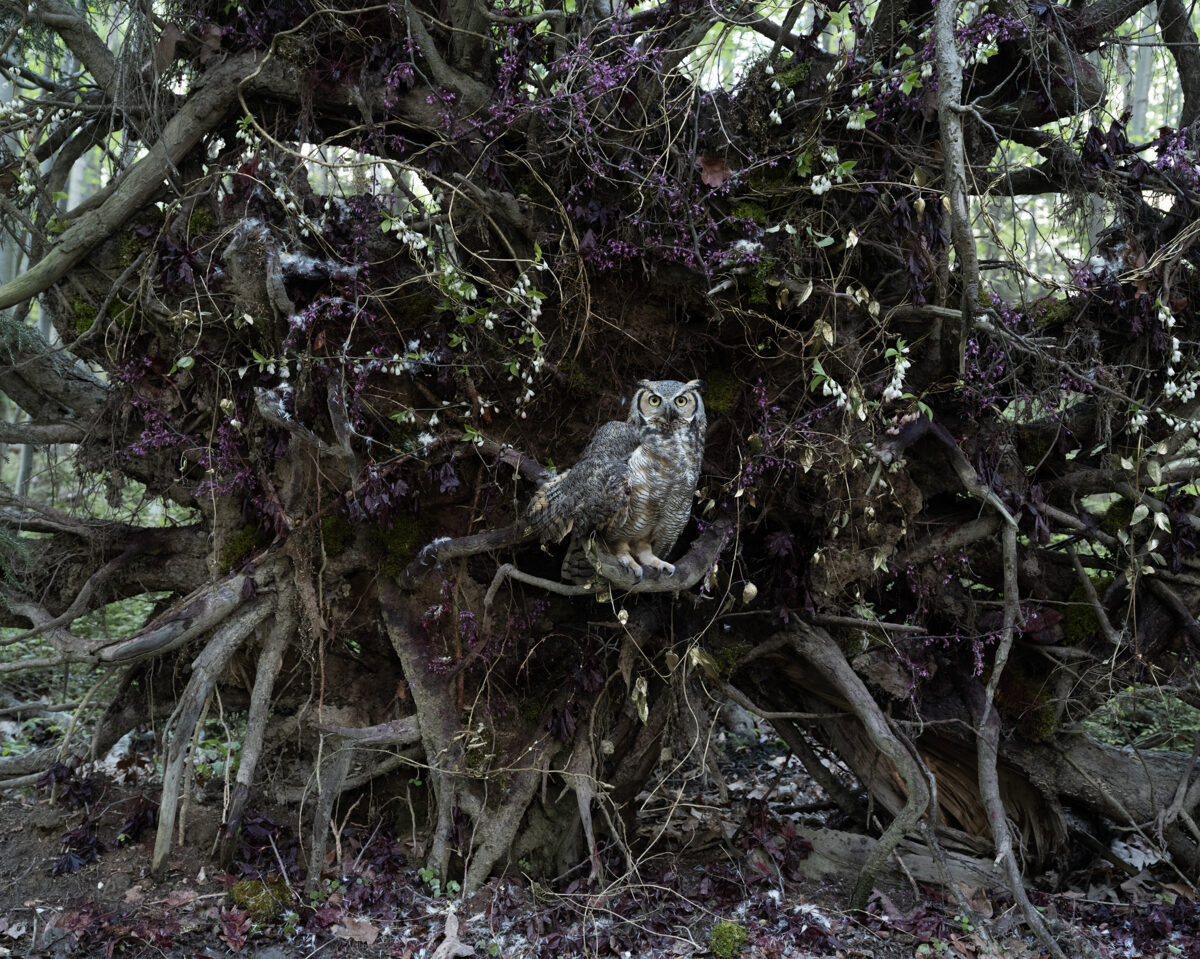
For Fallen, Marcuse began constructing tableaux directly on the forest floor near her home in New York's Hudson Valley. Rotting fruit, flowers, leaves, snakes, insects, mushrooms, feathers, and other organic material accumulate into extraordinarily detailed compositions recalling Dutch vanitas painting, medieval tapestries, and the fantastical worlds of Hieronymus Bosch.

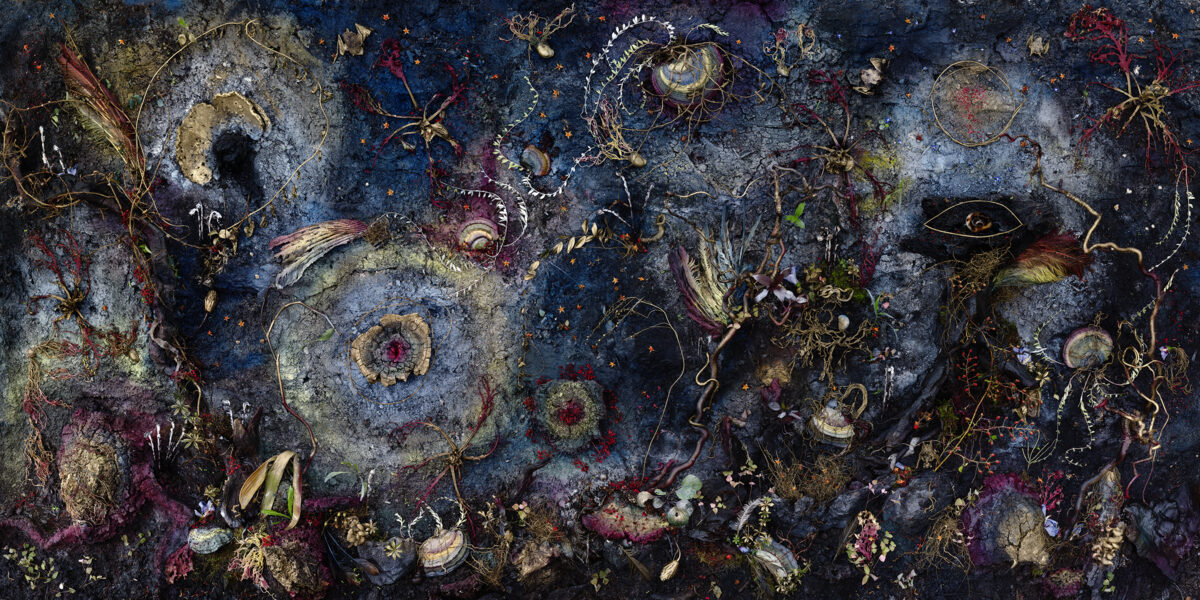
With Woven, Marcuse dramatically expanded the physical and conceptual scale of these constructions. Working in a large outdoor studio, she assembled plants, animals, bones, fruit, insects, and other materials into complex environments before photographing them from above. Some finished photographs extend more than thirteen feet across, allowing viewers to move visually through an almost overwhelming density of detail. From a distance, the works can approach abstraction; at close range, individual creatures, plants, gestures, and episodes emerge from the larger field.

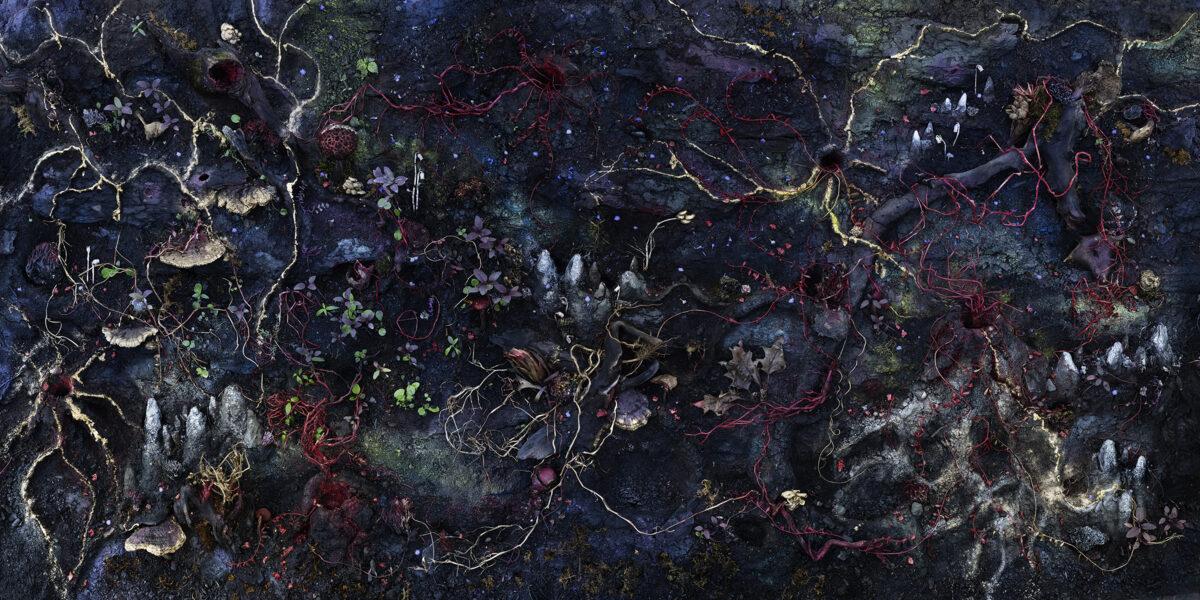
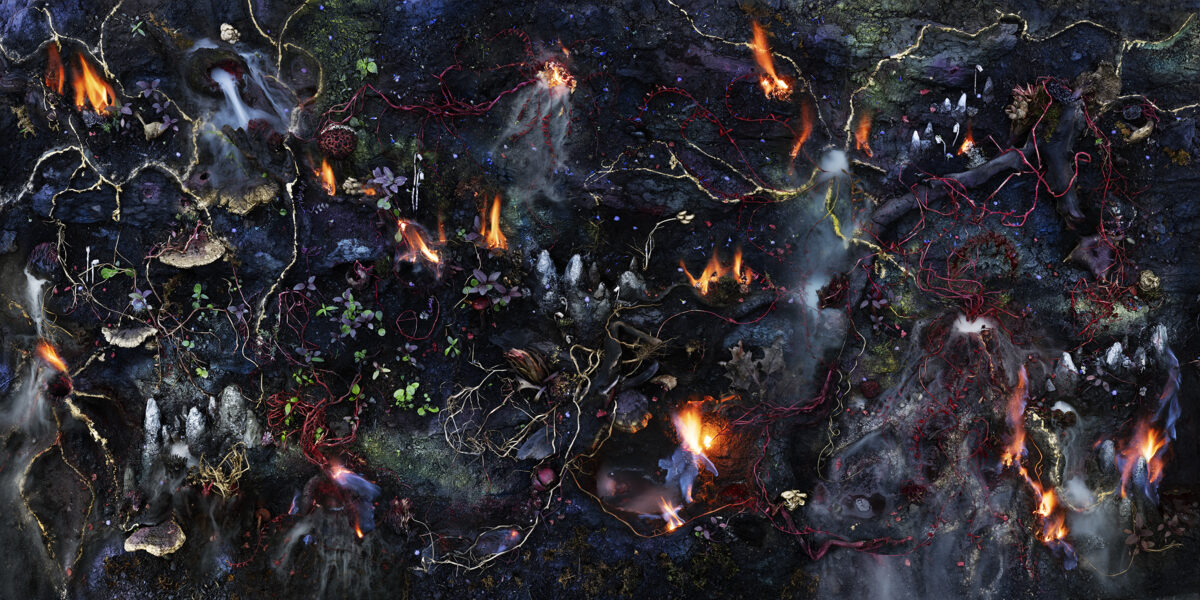
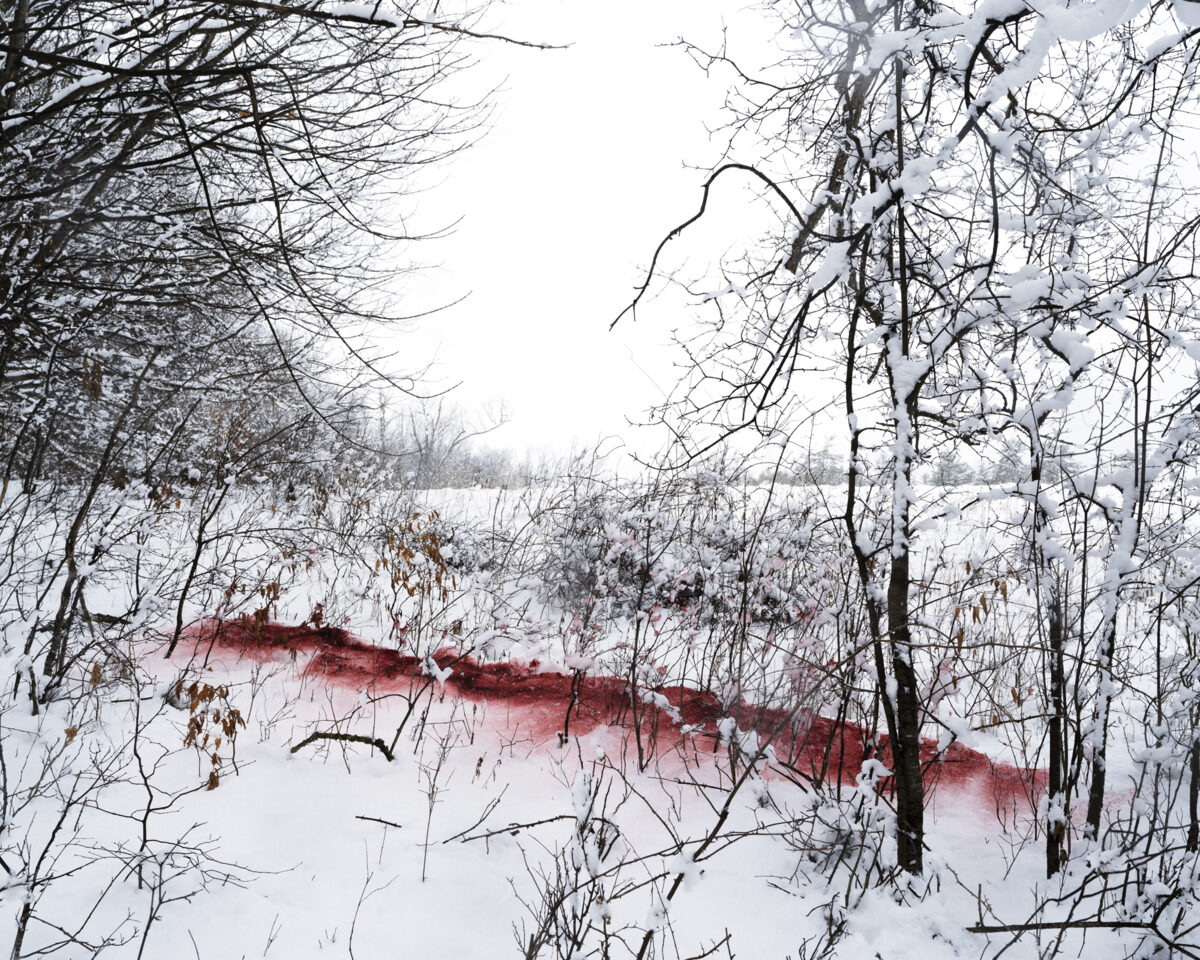
Her ongoing Book of Miracles represents a further expansion of this practice. Inspired in part by the Augsburg Book of Miracles, a lavishly illustrated sixteenth-century manuscript depicting celestial phenomena, floods, fires, monsters, and apocalyptic visions, Marcuse combines studio constructions and field photography to create images that move between observed natural phenomena and fantastical invention. The project draws upon traditions ranging from European Romanticism to abstraction while confronting a natural world increasingly marked by ecological instability.

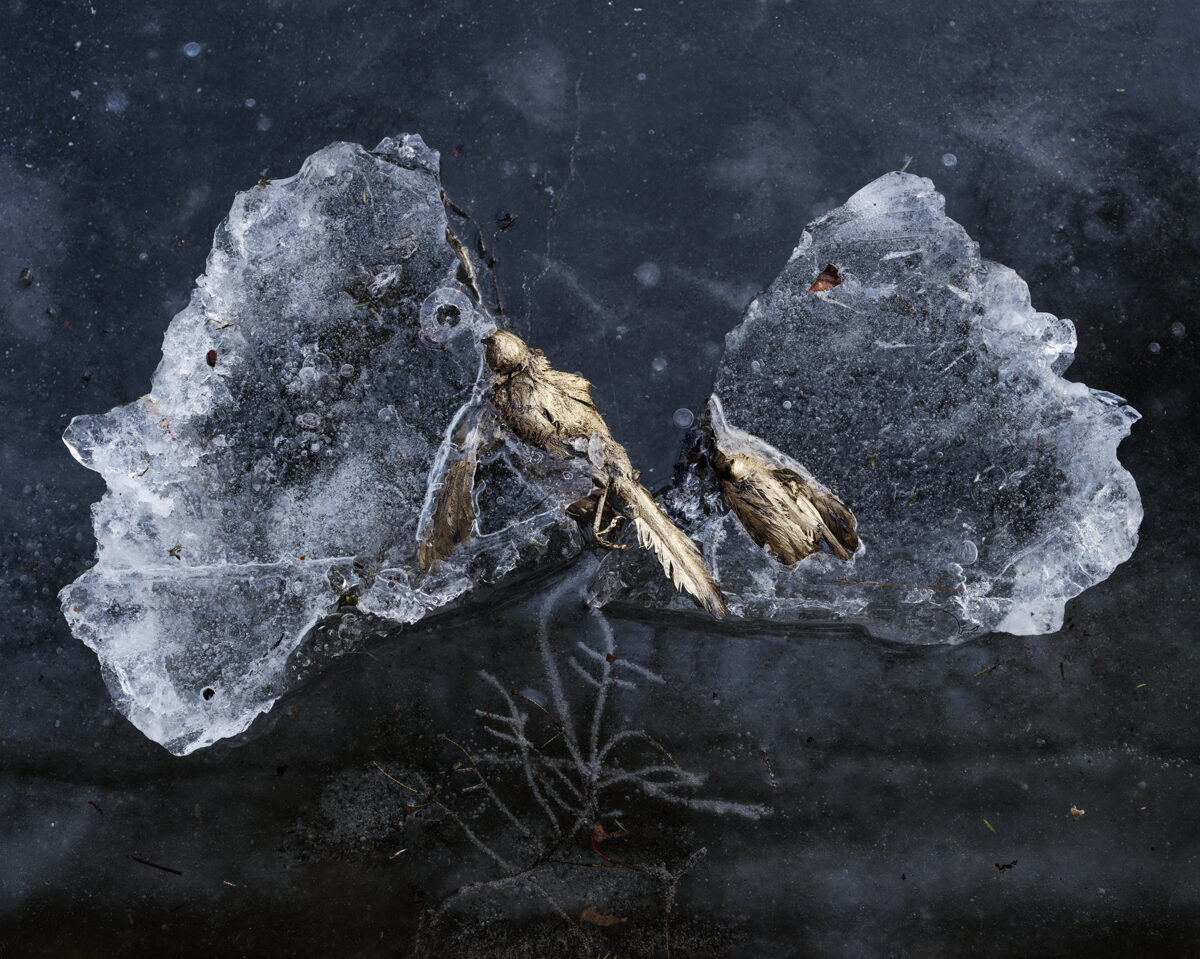
Book of Miracles has also led Marcuse beyond the single photographic image. Portent, a multichannel video work developed from the project, presents subtle but ominous disturbances in the natural world—moving trees, volcanic vapor, ice, flickering light, and other phenomena suggesting forces that remain largely beyond human control. Tanya Marcuse: Portent is presented at The Image Centre in Toronto in 2026, while Book of Miracles is the subject of a 2026–27 exhibition at The Hyde Collection in New York.

Marcuse's work is held in major museum collections including the Metropolitan Museum of Art, New York; National Gallery of Art, Washington, D.C.; San Francisco Museum of Modern Art; George Eastman Museum, Rochester; Baltimore Museum of Art; and Yale University Art Gallery, among others. Recent acquisitions have strengthened this institutional representation: the Metropolitan Museum of Art acquired Fallen No. 439 in 2022, while the National Gallery of Art acquired the monumental Woven No. 4 in 2023, adding it to earlier Marcuse photographs in the museum's collection.

Her work has been exhibited nationally and internationally, with institutional presentations including the George Eastman Museum and Denver Art Museum, alongside numerous gallery and university exhibitions. Her photographs have been published in major books including Undergarments and Armor (Nazraeli Press, 2005), Wax Bodies (Nazraeli Press, 2012), Fruitless | Fallen | Woven (Radius Books, 2019), Ink (Fall Line Press, 2021), Portent (Nazraeli Press, 2024), and Deer (2026).

Marcuse received a John Simon Guggenheim Memorial Foundation Fellowship in 2002 and has also received a Peter S. Reed Foundation Grant and two MacDowell Fellowships. After studying at Bard College at Simon's Rock and Oberlin College, she received a Thomas J. Watson Fellowship, spending a year living and photographing in the Venezuelan rainforest. She subsequently earned her MFA from Yale University, where she received the George Sakier Memorial Prize for Excellence in Photography.

Marcuse lives in New York's Hudson Valley and is Associate Professor of Photography at Bard College, where she has taught since 2012.


Gallery Exhibitions