Bio
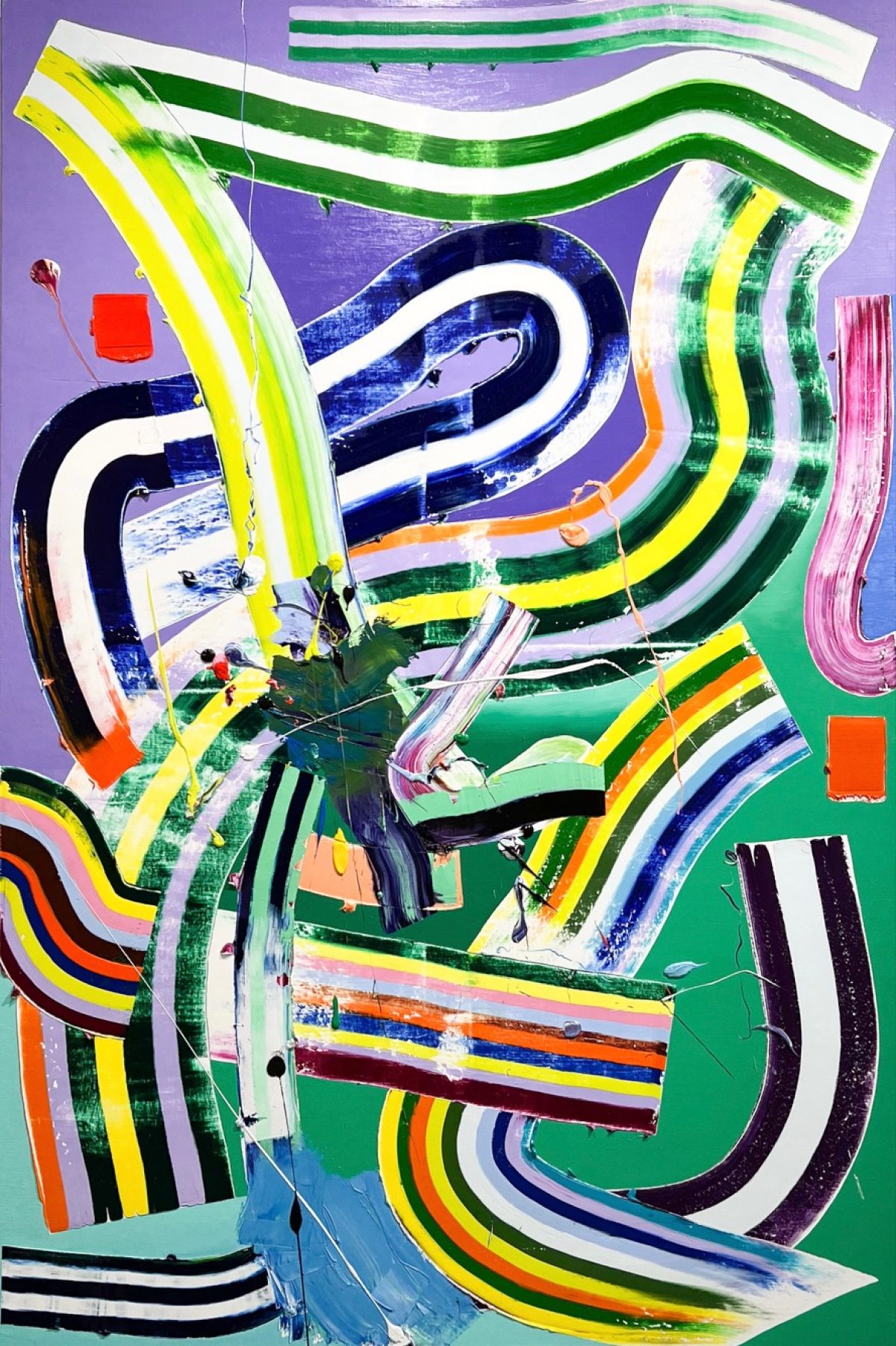
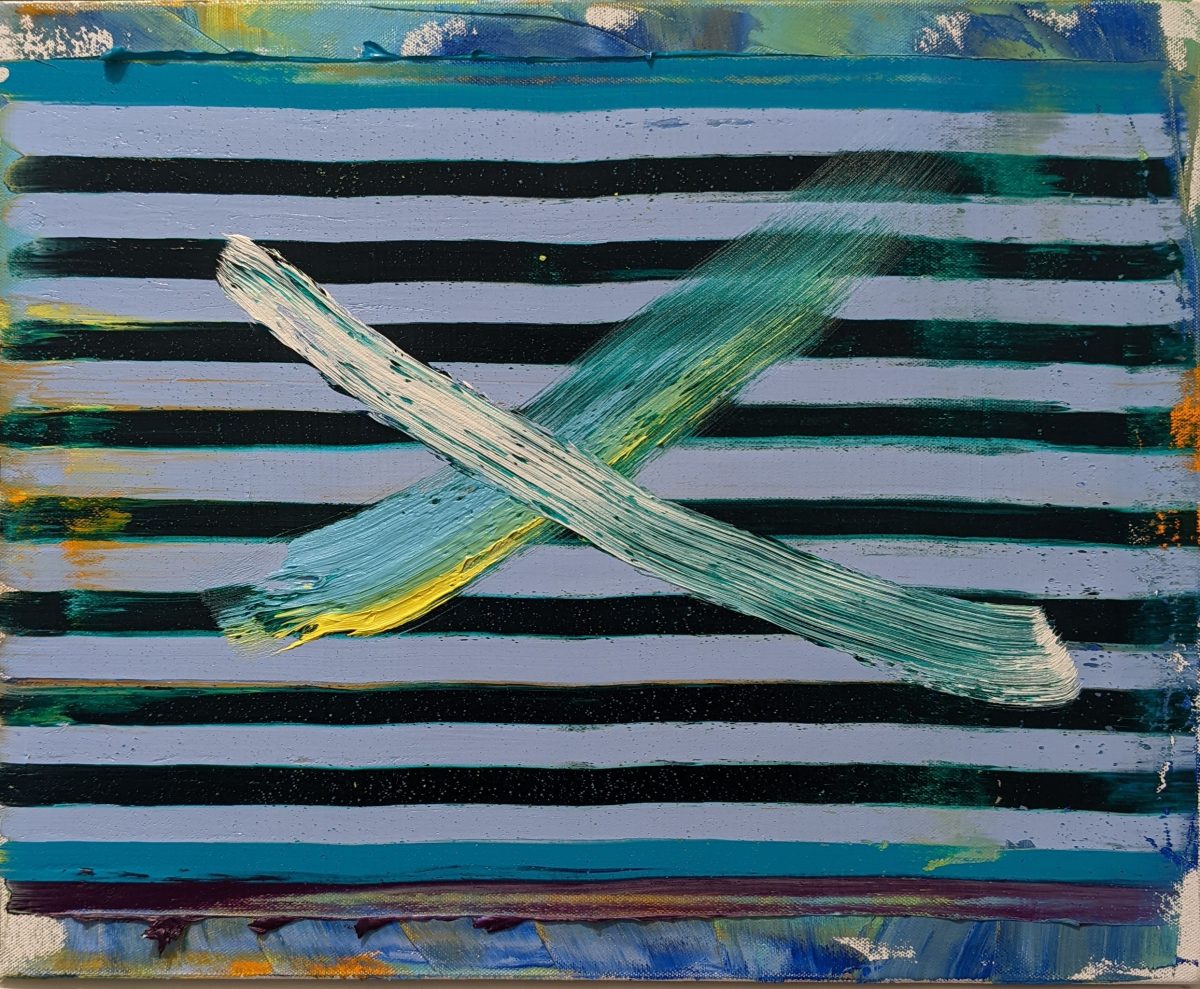
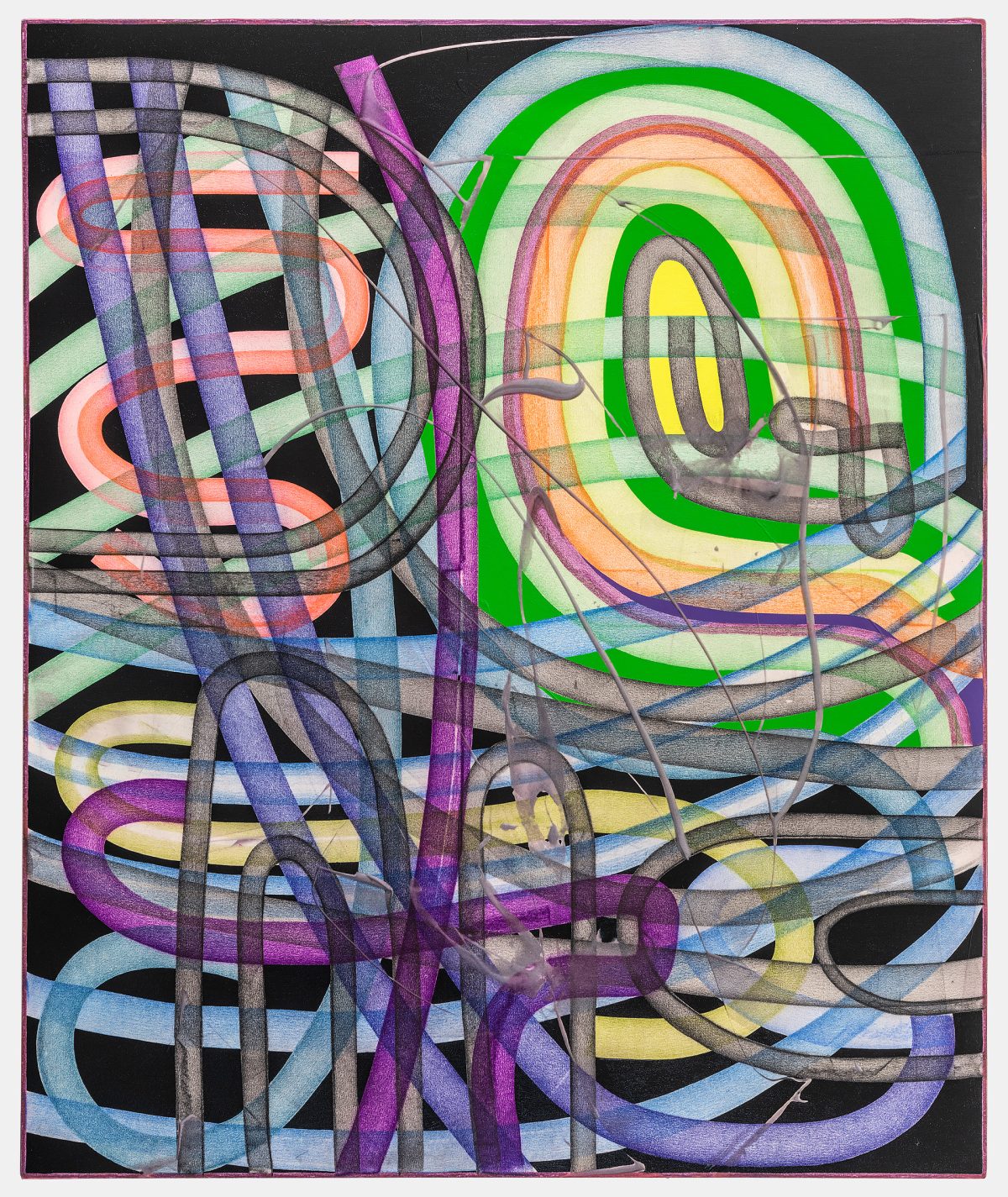
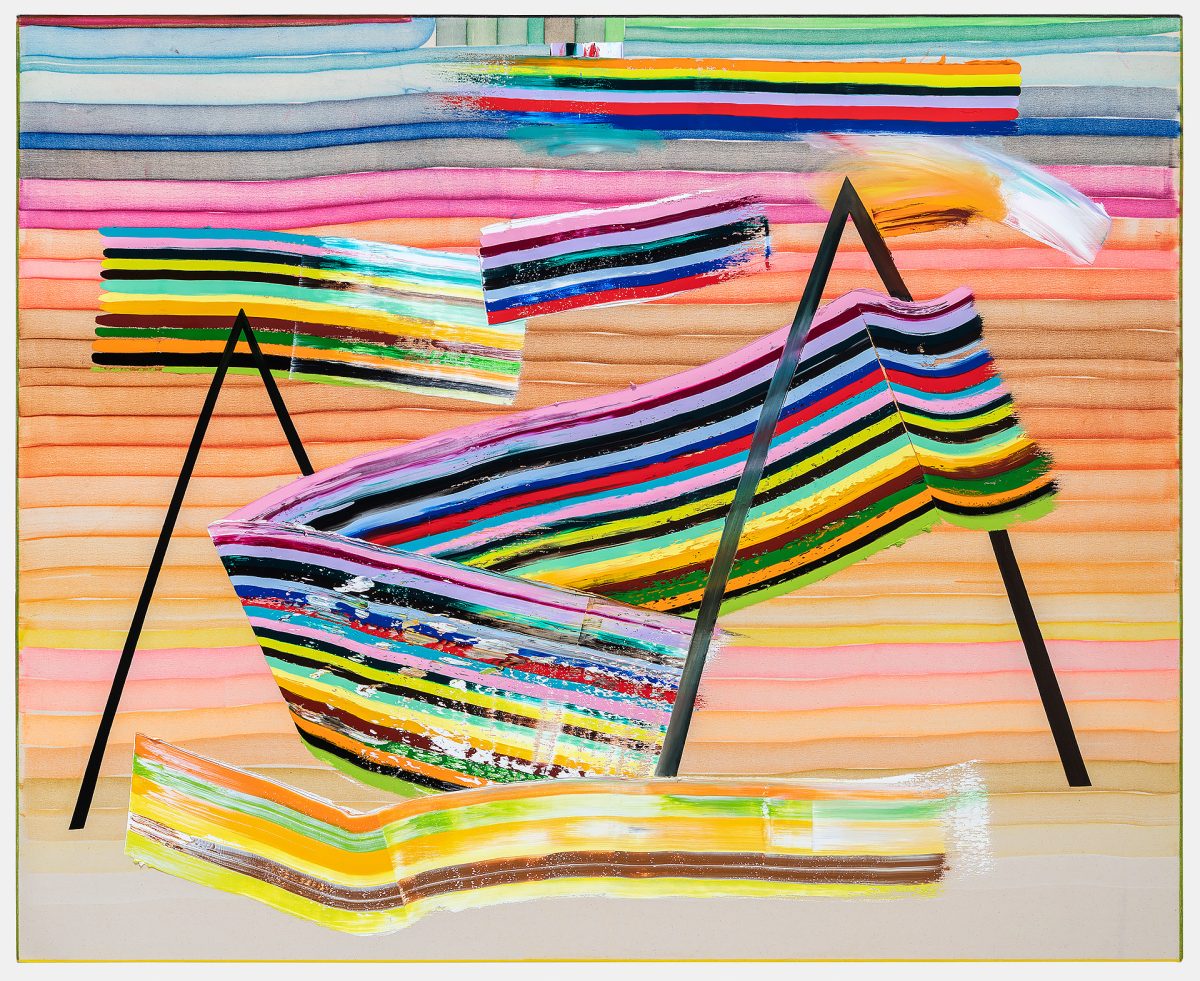
Eric Sall (b. 1976) is an American painter whose large-scale abstractions combine gestural mark-making, hard-edged geometry, pattern, color, and references drawn from popular culture, design, music, and the visual history of painting. Energetic and deliberately unresolved, his paintings bring seemingly contradictory approaches to abstraction into the same pictorial space: improvisation and structure, expression and decoration, drawing and painting, accident and control.
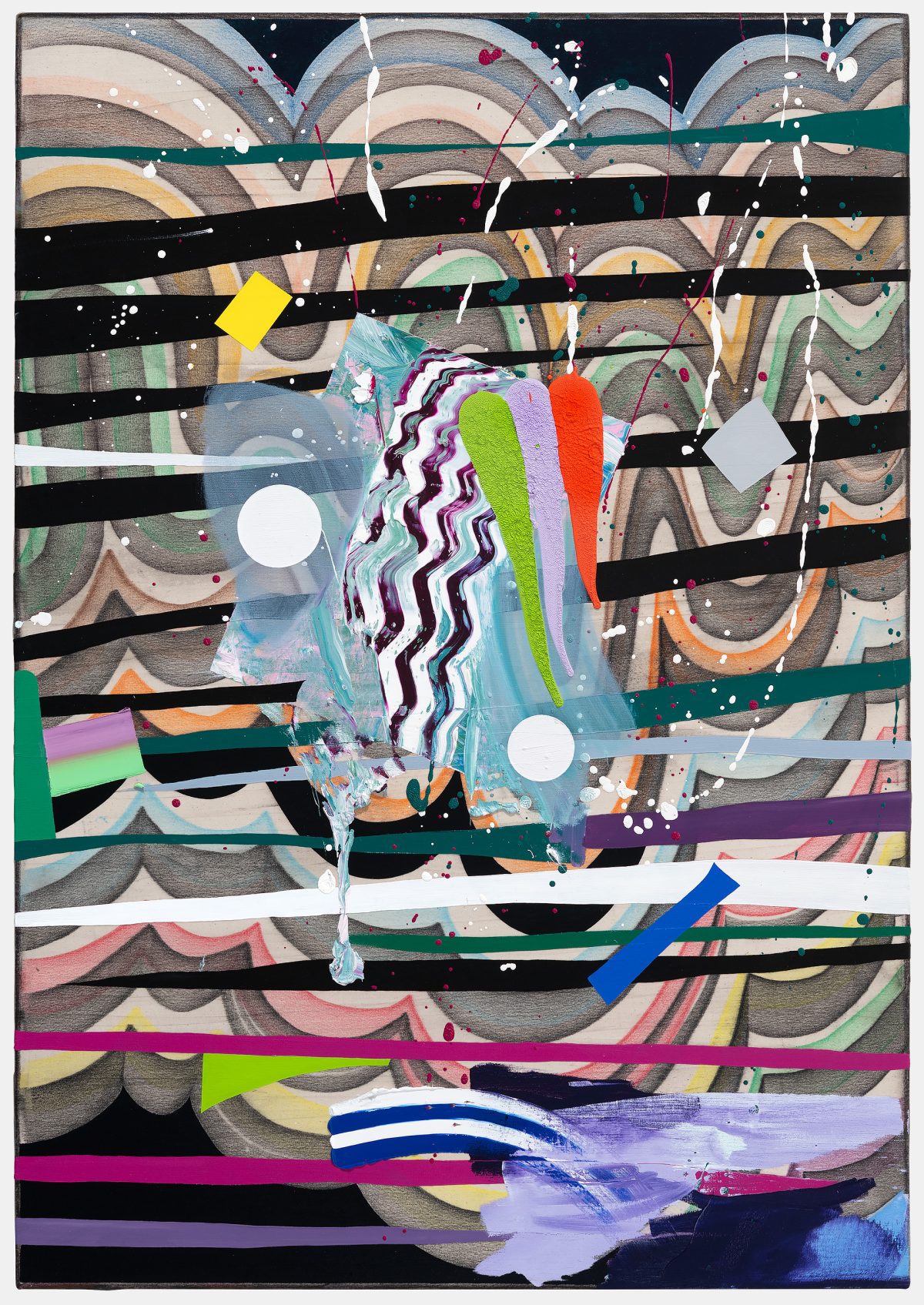
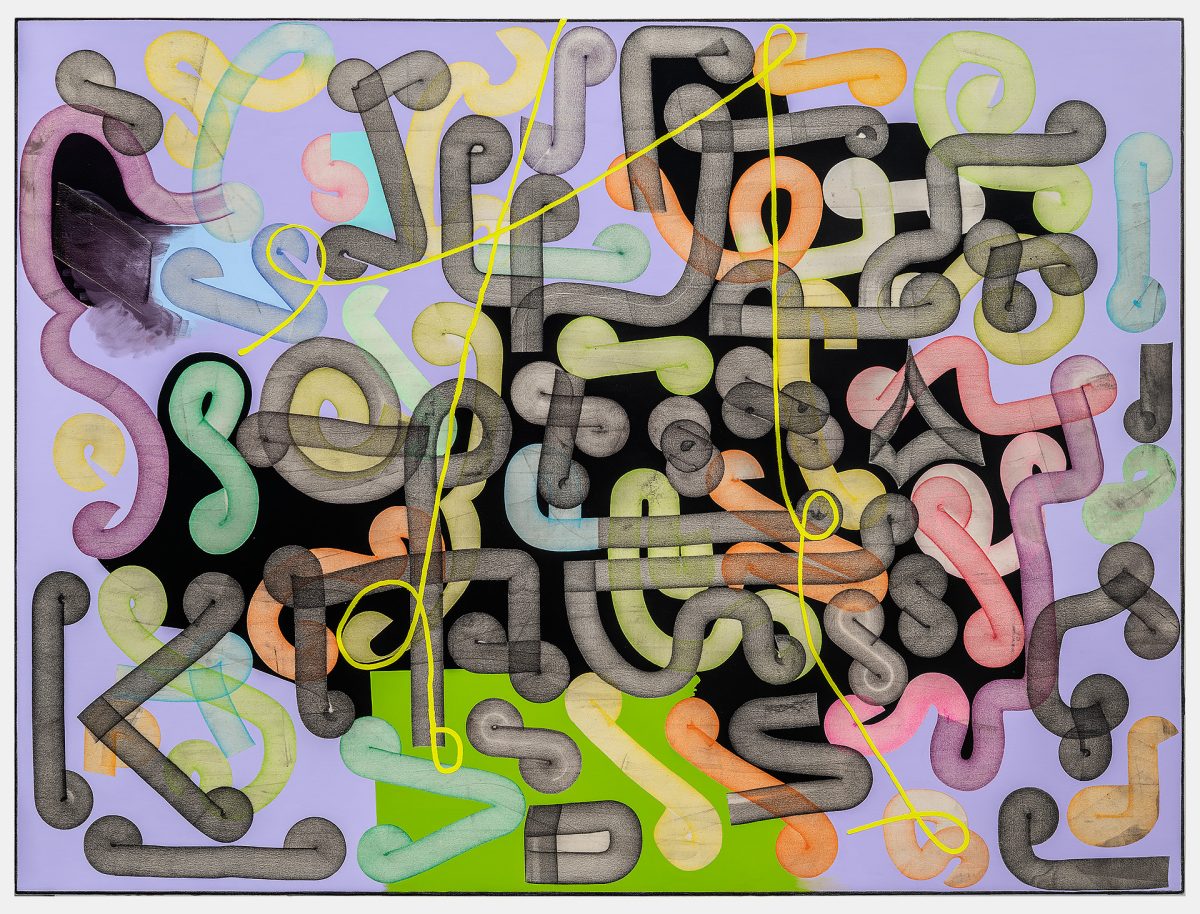
Born and raised in South Dakota, Sall developed his practice through an engagement with both the formal history of abstract painting and the visual culture surrounding him. Rather than adhering to a single language of abstraction, he allows disparate systems to collide. Stripes, diamonds, grids, loops, waves, scribbles, repeated motifs, atmospheric passages, and sharply delineated forms accumulate across his canvases, creating images that can feel simultaneously spontaneous and highly constructed.
Drawing is central to Sall's process. In many paintings, pastel and other dry media are applied directly to raw canvas before layers of paint are introduced. These initial marks function as a kind of underlying map or matrix, establishing structures that may subsequently be obscured, interrupted, or contradicted by painted forms. The resulting surfaces preserve evidence of successive decisions, allowing earlier stages of a painting to remain visible beneath later ones.
Sall's work thrives on these collisions. Loose, gestural passages may sit beside mechanically precise geometry; translucent washes overlap opaque forms; decorative patterns compete with expressionistic marks. Rather than resolving these different visual languages into a unified style, Sall uses their friction as a generative force. His paintings remain open-ended, recording the process of searching rather than illustrating a predetermined idea.
His approach to abstraction is similarly informed by the visual environment outside painting. Textiles, graphic design, architecture, music, cartoons, fashion, signage, and everyday patterns can enter the work alongside references to modernist and postwar abstraction. These sources are absorbed and transformed rather than quoted directly, contributing to paintings that feel familiar without yielding easily identifiable origins.
Movement became an especially explicit element of Sall's practice through a 2018 collaboration between the Philbrook Museum of Art and Tulsa Ballet. During a live performance in the museum's gardens, Sall painted while positioned on a moving platform surrounded by dancers whose black-and-white costumes responded to forms drawn from his paintings. The physical constraints of the performance required him to work rapidly and contributed to an increased use of acrylic paint and a more immediate approach to mark-making. The experience subsequently influenced a body of paintings in which opaque, hard-edged forms interact with gestural and translucent passages of color.
The Philbrook presented these developments in the solo exhibition The Current: Eric Sall in 2020, bringing together the paintings created through the ballet collaboration, costumes and video from the performance, and subsequent large-scale works. The exhibition highlighted Sall's continuing interest in action, risk, movement, popular culture, textiles, and design.
Sall has exhibited widely throughout the United States and internationally. Solo exhibitions have been presented at the Philbrook Museum of Art, Tulsa; Roswell Museum and Art Center, New Mexico; Haw Contemporary, Kansas City; Orth Contemporary, Tulsa; and galleries in New York, Los Angeles, Dallas, Richmond, and elsewhere. His work has also appeared in exhibitions at the Nerman Museum of Contemporary Art, Overland Park; Bemis Center for Contemporary Arts, Omaha; Indianapolis Museum of Contemporary Art; Southeastern Center for Contemporary Art, Winston-Salem; Gilcrease Museum, Tulsa; Brain Factory, Seoul; and other institutions and galleries.
At Haw Contemporary, Sall has presented the solo exhibitions Full Phase (2015), Drawing Paintings, Painting Drawings (2018), A Relative Way (2020), and Warm Fuzzy (2022). He was also among the artists in Haw Contemporary's inaugural exhibition, OPEN, in 2013 and has participated in numerous subsequent group exhibitions at the gallery.
Sall's work is held in public and institutional collections including the Nerman Museum of Contemporary Art; Daum Museum of Contemporary Art; Anderson Museum of Contemporary Art; University of Iowa Museum of Art; Hood Museum of Art at Dartmouth College; and the U.S. General Services Administration, as well as the Saatchi Collection and other public and private collections. The Anderson Museum collection includes Medicated Goo (2003), a monumental ten-foot painting produced during Sall's first Roswell Artist-in-Residence fellowship, while the Hood Museum holds Dripping Dream (2005).
Sall has received significant awards and fellowships throughout his career, including a Joan Mitchell Foundation Painters & Sculptors Grant, a Virginia Museum of Fine Arts Fellowship, a Charlotte Street Fund Award, and an Art in Architecture commission from the U.S. General Services Administration. His residencies include the Marie Walsh Sharpe Space Program in New York, Lower Manhattan Cultural Council Workspace program, Roswell Artist-in-Residence Program, Grant Wood Art Colony at the University of Iowa, and Yale Summer School of Music and Art.
Sall received his BFA from the Kansas City Art Institute in 1999 and his MFA from Virginia Commonwealth University in 2006. He lives and works in Tulsa, Oklahoma.
Gallery Exhibitions
- Warm Fuzzy 4/1/2022 – 5/4/2022
- A RELATIVE WAY 9/11/2020 – 10/17/2020
- something clear (Group Exhibition) 1/31/2020 – 2/29/2020
- Loose Group (Group Exhibition) 1/11/2019 – 2/12/2019
- Drawing Paintings, Painting Drawings 3/30/2018 – 5/5/2018
- Every Street (Group Exhibition) 12/8/2017 – 1/17/2018
- Full Phase 11/6/2015 – 12/30/2015
- 9 (Group Exhibition) 7/18/2014 – 8/28/2014
- OPEN (Group Exhibition) 9/13/2013 – 11/2/2013
Museum & Institutional Exhibitions
- Warm Fuzzy: Volland, Volland Foundation, Alma, KS 2022 (Solo)
- The Current: Eric Sall, Philbrook Museum of Art, Tulsa, OK 2020 (Solo)
- Recall/Respond, Gilcrease Museum, Tulsa, OK 2019 (Group)
- New Now, Philbrook Museum of Art, Tulsa, OK 2018 (Group)
- To the Edge and Beyond, Roswell Museum and Art Center, Roswell, NM 2015 (Solo)
- Abstract · Kansas City, Nerman Museum of Contemporary Art, Overland Park, KS 2011–2012 (Group)
- Borderland Abstraction, Bemis Center for Contemporary Arts, Omaha, NE 2010 (Group)
- Informal Relations, Indianapolis Museum of Contemporary Art, Indianapolis, IN 2010 (Group)
- Light Pollution, Peeler Art Center, DePauw University, Greencastle, IN 2006 (Solo)
- The RAiR Paintings, Roswell Museum and Art Center, Roswell, NM 2003 (Solo)
- 2001 Charlotte Street Fund Exhibition, H&R Block Artspace, Kansas City Art Institute, Kansas City, MO 2001 (Group)